TL;DR:
Night vision amplifies ambient visible light to provide realistic structural detail, while thermal imaging detects radiant body heat to instantly spot targets across open paddocks and dense scrub in total darkness. For Australian 4WD camping, feral pest control, and rural property management, the gold-standard workflow combines a handheld thermal monocular for rapid long-range detection with a high-candela long-range torch for positive target verification under compliant state regulations.
Australian Field Scenario & Equipment Matrix
| Scenario | Model | Peak Throw / Candela / Lumens | Weight (with Battery) | Charging Format | Key Trade-off |
|---|---|---|---|---|---|
| Open Paddock Pest Scanning | TOPDON TS004 Pro | 594m Detection Range (19mm Lens) | Approx. 350g | USB-C Rechargeable | High thermal heat sensitivity; cannot see through vehicle windscreens. |
| Long-Range Target Confirmation | Olight Javelot Turbo 2 | 1,500m Throw / 1,800 Lumens | 423g | Magnetic MCC3 / USB-C | Exceptional beam piercing power; requires manual scanning compared to passive thermal. |
| Camp Utility & Task Lighting | Olight ArkPro Series | 205m Spotlight / 1,500 Lumens Flood | Approx. 101g | Magnetic Dock / USB-C | Maintains night-adapted vision via red light; lower battery runtime on max turbo output. |
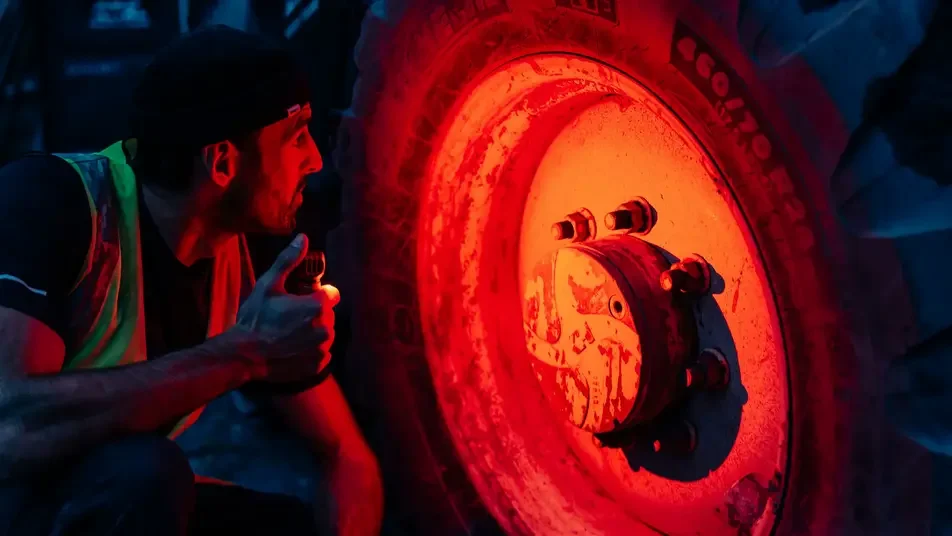
When comparing night vision vs thermal for hunting, night vision amplifies ambient visible light or active infrared illumination to reveal realistic surface textures and facial features. Conversely, thermal imaging registers emitted heat differences across the long-wave infrared spectrum, exposing living animals through scrub, fog, and pitch-black darkness where night vision cannot detect them.
Understanding the operational differences between night vision vs thermal vs infrared for hunting is critical before investing in high-end field optics. Australian hunters operate across demanding environments, ranging from dense Victorian alpine scrub to expansive western New South Wales cattle stations under 40°C summer heat. Selecting the right optical workflow requires balancing sensor resolution, optical focal length, ACCC consumer standards, and state wildlife regulations.
Table of Contents
- 1. Quick Answer: Night Vision vs Thermal Imaging
- 2. How Does Night Vision Work?
- 3. How Does Thermal Imaging Work?
- 4. Detection vs Identification: What Each Does Better
- 5. Fog, Rain, Scrub, Glass and Water Compared
- 6. Auxiliary Lighting for Night Vision: Red Light and Low-Beam Sources
- 7. Cost, Resolution and Battery Life
- 8. What Rules Should You Check in Your State?
- 9. Frequently Asked Questions
Quick answer: night vision amplifies available light to show detail; thermal detects heat to show warm bodies, even in total darkness
The debate surrounding night vision vs thermal for hunting comes down to the physics of light versus heat. Traditional and digital night vision devices gather existing photons—from the moon, stars, or artificial infrared illuminators—and amplify them onto an eyepiece screen. This process produces an image that resembles daylight, preserving facial features, structural silhouettes, and vegetation details.
Thermal optics do not capture visible light. Instead, they sense heat energy emitted by animate and inanimate objects, processing micro-temperature differentials into digital contrast palettes such as White Hot or Black Hot. Consequently, thermal reveals a bedded feral pig or fox hidden behind light foliage instantly, even on moonless nights inside shaded gullies.
How does night vision work?
Night vision operates primarily across the visible spectrum and the near-infrared band (roughly 400 to 900 nanometres). In analogue optoelectronic systems, ambient photons strike a photocathode plate, converting light particles into electrons. An internal microchannel plate amplifies these electrons before they excite a phosphor screen, generating an amplified monochrome green or white-phosphor view.
Digital night vision uses highly sensitive CMOS sensor chips. When light levels drop near zero, digital systems require supplementary active illumination from an 850 nm or 940 nm infrared torch to project an invisible beam across the field, allowing the sensor to form an intelligible image in compliance with ANSI/NEMA FL1 testing standards.
How does thermal imaging work?
Thermal imaging functions entirely within the long-wave infrared spectrum, typically between 7.5 and 14 micrometres. Rather than using optical glass lenses, thermal devices rely on specialised germanium glass elements that transmit infrared wavelengths directly onto an uncooled microbolometer sensor core.
The sensor measures minute heat differences—quantified as Noise Equivalent Temperature Difference (NETD). Sensors rated under 40 millikelvins (mK) capture subtle heat signatures, converting temperature variations into distinct electronic pixels. Because every living creature naturally dissipates thermal energy, these devices operate independently of ambient lighting conditions across remote Australian outback environments.
Detection vs identification: what each does better
In tactical and hunting terminology, target acquisition divides into three phases: detection, recognition, and positive identification. Thermal imaging excels at detection. A feral animal hundreds of metres away appears as an unmistakable glowing hotspot against cold ground, dramatically cutting down glassing time across expansive pastoral leases.
However, thermal can struggle with positive identification at extended ranges. A warm blob at 300 metres might be a feral pig, a native wombat, or a neighbour's working dog. Night vision or a focused high-candela white spotlight provides structural clarity, revealing ear shapes, snout geometry, fur coloration, and background backstops prior to taking an ethical shot.

Because of these complementary traits, seasoned Australian hunters pair handheld thermal spotters like the TOPDON TS004 Series for wide-area scanning with high-throw vehicle or rifle lights like the Javelot Turbo 2 for precise target confirmation.

TOPDON TS004 Thermal Imaging Monocular
Designed for rapid field scouting across rugged terrain, the TS004 series features high thermal sensitivity (<40mK NETD), a 50Hz refresh rate, and up to 594 metres of detection distance on the Pro variant. Encased in rugged silicone with IP67 waterproofing and an 11-hour runtime, it penetrates dense Australian brush effortlessly. Backed by local warranty and compliant with Australian consumer guarantees.
- Resolution: 256x192 (TS004) / 384x288 (TS004 Pro)
- Detection Range: 410m (13mm lens) / 594m (19mm lens)
- Display: 0.32-inch 800x600 OLED with 5 colour palettes
- Drop resistance: 2.0 metres; IP67 submersible
Fog, rain, scrub, glass and water compared
Atmospheric and physical obstacles affect optical spectrums in distinct ways across Australian landscapes:
- Fog and Atmospheric Moisture: Water droplets scatter short visible and near-IR wavelengths, creating blinding backscatter for night vision and IR torches during early morning coastal roll-clouds or alpine mists. Long-wave thermal radiation passes through suspended airborne moisture far more effectively.
- Heavy Scrub and Foliage: Camouflage patterns defeat night vision cameras by breaking up outlines. A warm animal radiating heat through branch gaps shows up immediately on thermal sensors.
- Glass Windows: Germanium-based thermal optics cannot see through standard vehicle glass; the windscreen reflects ambient heat, acting like a mirror during spotlighting from 4WD cabin windows. Night vision and standard searchlights penetrate glass without impedance.
- Standing Water: Thermal devices register the surface temperature of water rather than seeing submerged targets due to thermal reflection and high infrared absorption.

Olight Javelot Turbo 2 Hunting Torch
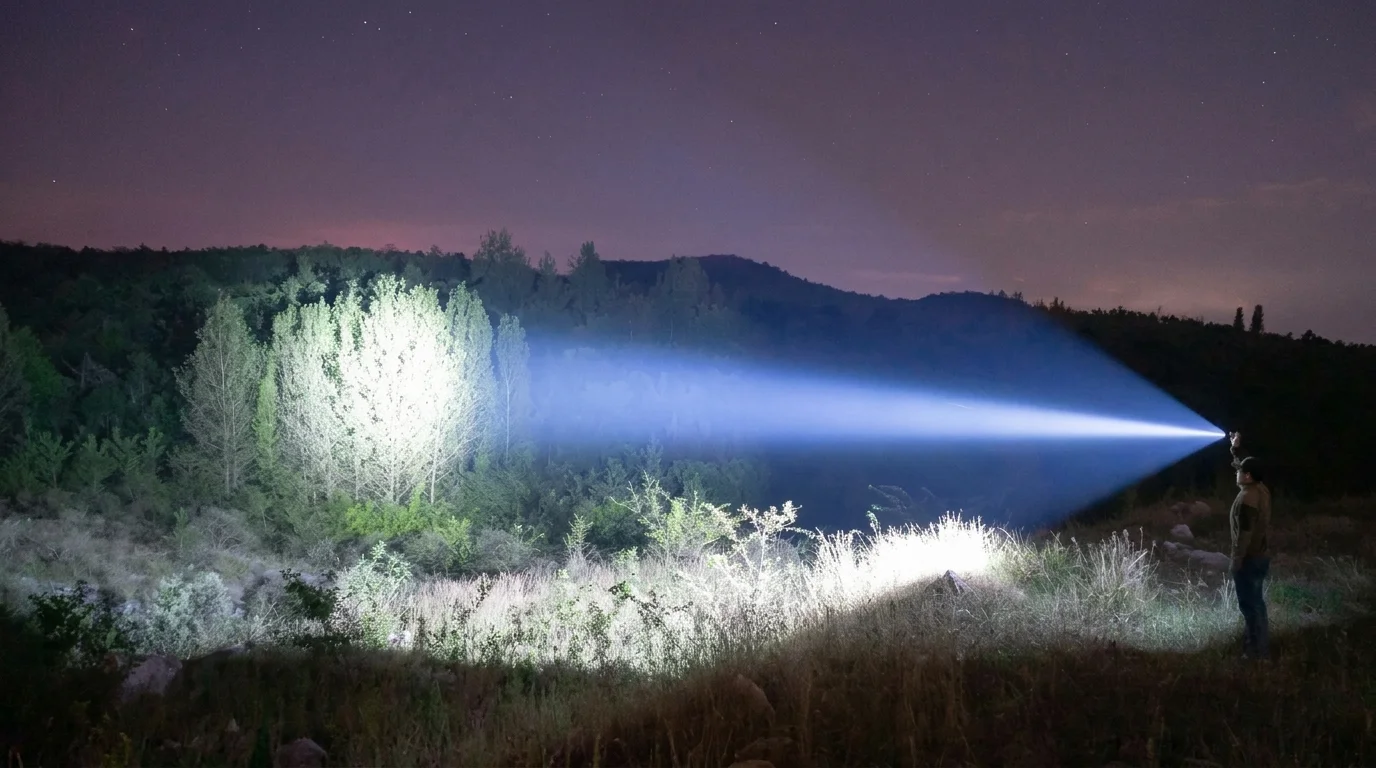
When thermal monoculars identify an unknown heat signature at extreme distances, the Javelot Turbo 2 delivers 1,800 lumens and a focused 1,500-metre beam throw for unmistakable visual target confirmation. Features a wireless remote switch, dual-switch tail interface, and 5,000 mAh replaceable pack, priced competitively for the Australian rural market.
- Beam Distance: 1,500 metres; Max Output: 1,800 lumens
- Mounting: Compatible with X-WM03 magnetic weapon mount
- Control: Wireless remote switch operative up to 8 metres
- Battery: 5,000 mAh pack with up to 272 hours runtime
Auxiliary lighting for night vision: why red light and low-beam sources matter
Operating digital or analogue night vision requires disciplined light management. Stepping away from an amplified ocular leaves human eyes temporarily desensitised to ambient darkness, as rod cells require up to 30 minutes to rebuild rhodopsin photopigments.
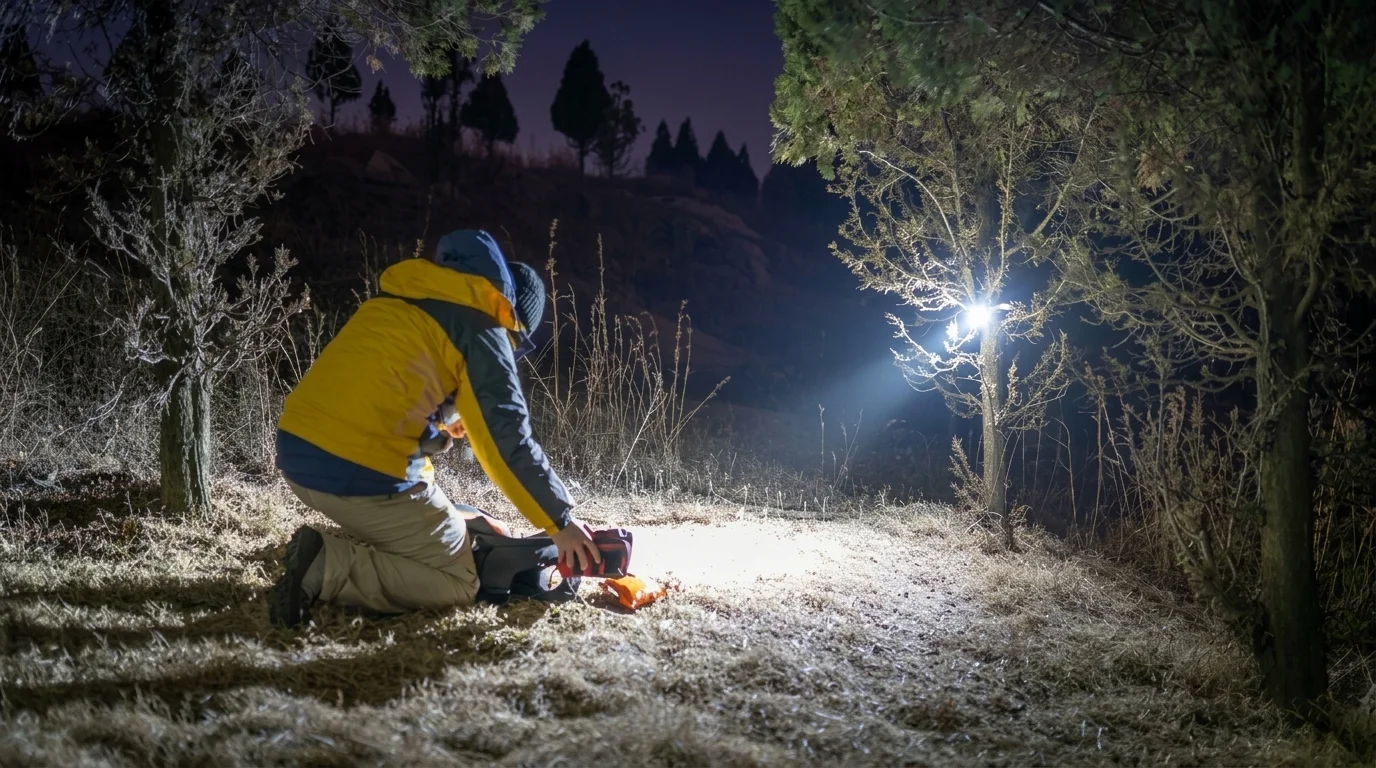
Utilising compact task lights with low moonlight modes or dedicated red-light options preserves biological dark adaptation during gear adjustments, ammunition loading, and paddock gate management. Furthermore, red light reduces reflection signatures across dense scrub, preventing peripheral glare from washing out digital ocular displays.

Olight ArkPro Multi-Source Torch
The flat unibody ArkPro provides hands-free close-quarters utility during nighttime hunting expeditions and 4WD camp setups. With configurations featuring a dedicated red light or combined floodlight, spotlight, and laser indicators, it offers versatile utility without overwhelming your night-adapted vision.
- Multi-source layout: Floodlight, Spotlight, UV, and Laser/Red options
- Form Factor: Flat anti-slip aluminum unibody with two-way clip
- Output: Up to 1,500 lumens flood; 205m spotlight beam
- Charging: Magnetic dock and USB-C direct input
Cost, resolution and battery life
Digital night vision setups remain an accessible entry point, but they require high energy draw to power internal CMOS image signal processors and external infrared illuminator torches, often restricting field life to 3 to 5 hours on standard cells.
Thermal optics carry a higher initial sensor cost due to germanium optical elements and microbolometer wafer fabrication. However, modern models achieve superior power efficiency; the TOPDON TS004, for instance, provides up to 11 hours of continuous scanning from its integrated rechargeable battery pack, meeting Australian consumer reliability standards under ACCC guidelines.
What rules should you check in your state?
In Australia, regulations surrounding thermal imaging and night optical devices vary strictly between private land pest management and public land hunting. Handheld thermal monoculars used solely for spotting are broadly legal across states, but mounting electronic optics directly to a firearm faces distinct statutory controls.
In Victoria, the Game Management Authority establishes specific hunting methods and equipment rules, detailing where thermal scopes or spotlighting are restricted when taking recognized game species versus pest animals on private land (Source: Victorian Game Management Authority: Deer Hunting Methods). In New South Wales, the Department of Primary Industries oversees strict licensing conditions for recreational hunting on declared public land, specifying rules on optical enhancements and spotlighting (Source: NSW Department of Primary Industries: Hunting Rules). Hunters must also observe state-level firearm modifications outlined under regional legislation such as the NSW Firearms Registry (Source: NSW Police Force: Firearms Registry).
Frequently Asked Questions
Does a red light spook feral pigs during night hunts in Australia?
Feral pigs have reduced sensitivity to longer wavelengths in the red light spectrum compared to white light. Using a dedicated red light source or low moonlight mode from compact tools like the Olight ArkPro helps preserve target concealment during close-range stalk approaches without causing immediate flight responses.
How long does the TOPDON TS004 Pro run on low mode or continuous scanning?
The TOPDON TS004 Pro delivers up to 11 hours of continuous thermal scanning capability on a full charge, making it ideal for extended night operations across remote Australian rural properties without needing field battery swaps.
Can thermal imaging monoculars see through glass windows on a 4WD?
No. Standard vehicle glass absorbs and reflects long-wave infrared radiation, turning vehicle windscreens and side windows into thermal mirrors that block detection readings from subjects situated behind the glass.
Why do Australian hunters pair a thermal monocular with a high-intensity spotlight?
A handheld thermal monocular like the TOPDON TS004 scans broad landscapes rapidly to detect hidden body heat, while a focused white spotlight or long-range torch like the Olight Javelot Turbo 2 provides the natural visual detail needed for positive species identification and verifying backstop safety before firing.