TL;DR: Many flashlight roundups scrape generic overseas datasheets. To find dependable best torches australia reviews, check whether the reviewer records actual thermal step-downs, verifies ANSI FL1 measurement points at 30 seconds, accounts for 40°C Australian summer heat, and confirms consumer protection rights under domestic warranty legislation.
Finding the best torch australia buyers can genuinely rely on requires filtering out synthetic affiliate lists. Genuine reviews document sustained lumen performance at 30 seconds rather than burst ratings, log step-down runtimes, cite clear testing dates, and quote transparent AUD pricing backed by local Australian Consumer Law statutory warranties.
| Role / Category | Verified Model | Peak Output & Beam | Tested Sustained Output | Key Trade-off |
|---|---|---|---|---|
| Pocket EDC | Baton 4 Pro | 1,600 lm / 200 m | Stepped regulation; dual charge | Compact head heats quickly |
| Duty / Tactical | Warrior 3S | 2,300 lm / 300 m | 800 lm for 160 mins | Proximity sensor auto-dims |
| Farm & Search | Seeker 4 Pro | 4,600 lm / 260 m | 1,200 lm for 135 mins | Larger 35 mm bezel |
| Hands-Free Work | Perun 3 | 3,000 lm / 160 m | 800 lm for 180 mins | Metal bracket may scratch |
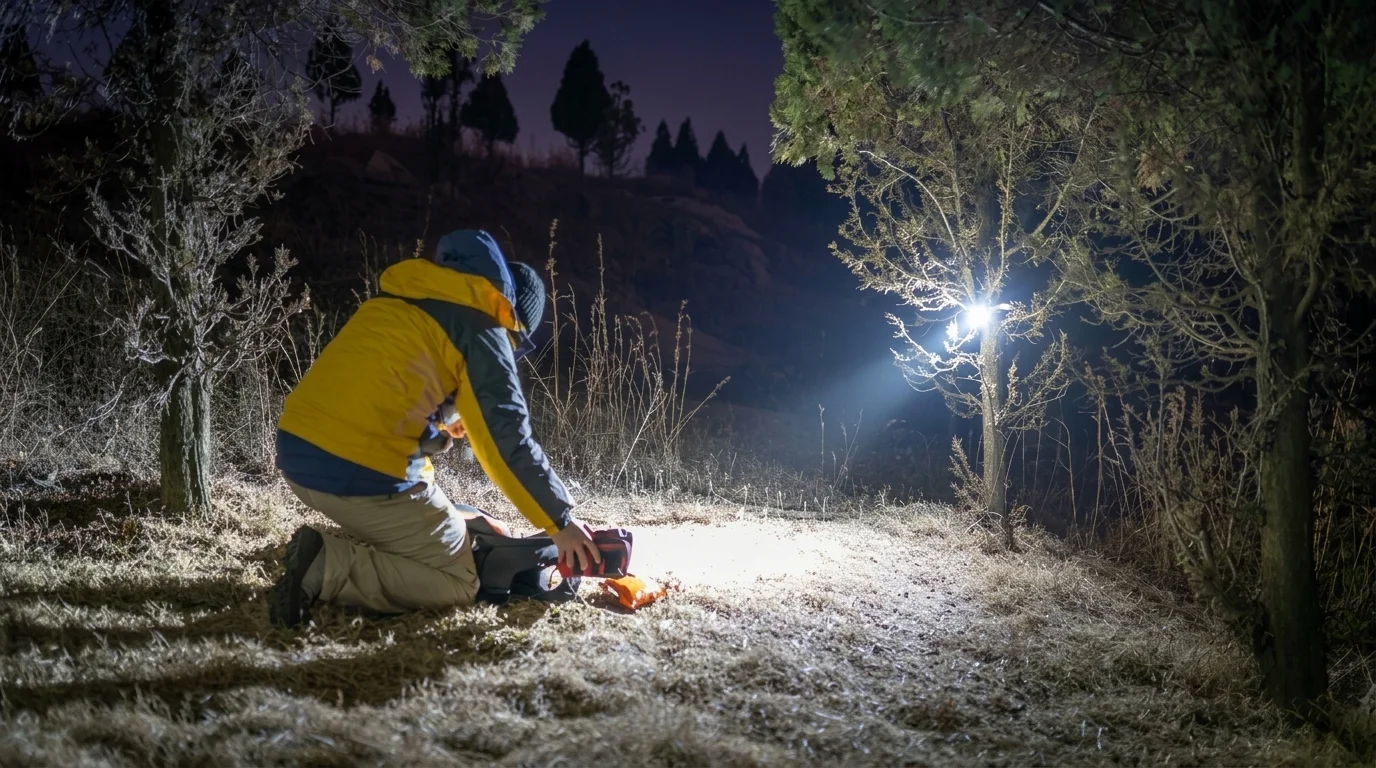
Whether conducting nighttime property rounds in rural Victoria or packing emergency gear for an outback trek, Australian environments present unforgiving conditions for handheld illumination. A torch that looks formidable on paper often collapses to a fraction of its advertised lumens within two minutes due to thermal throttling. This guide breaks down genuine test protocols, details verified task-specific torches, and provides a clear evaluation framework so you can separate real hardware testing from republished promotional claims.
Table of Contents
Quick answer: shortlist torches from lists that show AUD prices, measured runtime and a test date
Reliable product evaluation requires empirical data rather than repeated catalog text. When evaluating recommendations for the best torch australia outdoor enthusiasts rely upon, three baseline indicators must be present: complete step-down output logs, Australian Dollar pricing including Goods and Services Tax (GST), and explicit testing timestamps.
Under standardized flashlight testing protocols defined by the ANSI/NEMA FL1 Standard, published peak output is captured at 30 seconds of continuous activation rather than turn-on burst. Testing authorities note that flashlights experience rapid initial thermal or voltage dips, making initial turn-on claims misleading for sustained use (Source: Flashlight Wiki: ANSI FL1 Standard Specifications). Any review omitting step-down charts conceals whether a 2,000-lumen torch plummets to 300 lumens after 90 seconds.

A tested shortlist by job: pocket carry, duty belt, farm rounds and glovebox
Illumination requirements change dramatically depending on the task. Below are four configurations matched to specific operational workloads, based on verified factory specifications and step-down profiles.
Pocket Carry: Compact Everyday Illumination
For urban pocket carry, low bulk and versatile recharging outweigh extreme continuous throw. A reliable everyday carry (EDC) light requires simple interface lockouts to avoid pocket burns, alongside dependable low-output modes that run for dozens of hours during routine tasks.

Olight Baton 4 Pro EDC Flashlight
Delivers up to 1,600 lumens with a 200-metre throw in an ultra-compact 111 mm, 114 g frame. Features dual switches (side and tail), hidden USB-C and magnetic charging, and a 3,500 mAh 18650 battery running up to 100 days on Moonlight.
Best for: Daily pocket transport and close-range utility tasks. Trade-off: High-lumen output steps down as the compact body dissipates heat.
View Baton 4 Pro at Official StoreDuty Belt: Instant Tactical Access
Security professionals and enforcement personnel need instant, high-output activation with distinct defensive capability. Dual-switch interfaces separate daily low-output navigation from emergency high-intensity access, while integrated proximity sensors mitigate thermal risks when holstered.

Olight Warrior 3S Tactical Torch
Delivers up to 2,300 lumens and 300 metres of throw with a 23,000 cd intensity. Incorporates dual-switch tactical control, visualised battery/output LEDs, an IPX8 waterproof rating, and a built-in safety proximity sensor.
Best for: Law enforcement, perimeter security, and self-defence. Trade-off: Turbo steps down after 2.5 minutes to 800 lumens to manage thermal load.
View Warrior 3S at Official StoreFarm Rounds: Broad Flood and Extended Yard Sweeps
Conducting livestock checks or sweeping paddocks requires a balanced combination of massive lumen volume, broad field coverage, and prolonged sustained runtime. A heavy thermal mass combined with high-capacity 21700 cells ensures the beam maintains adequate brightness across open land.

Olight Seeker 4 Pro Powerful LED Torch
Produces up to 4,600 lumens with a wide 260-metre beam. Engineered with stepless rotary dimming, an auto-locking charging holster, and sustained 1,200-lumen output for over two hours.
Best for: Rural property maintenance, campsite flooding, and paddock inspections. Trade-off: Weighs 205 g; requires dedicated pouch carrying.
View Seeker 4 Pro at Official StoreGlovebox & Hands-Free Repair: Multi-Angle Utility
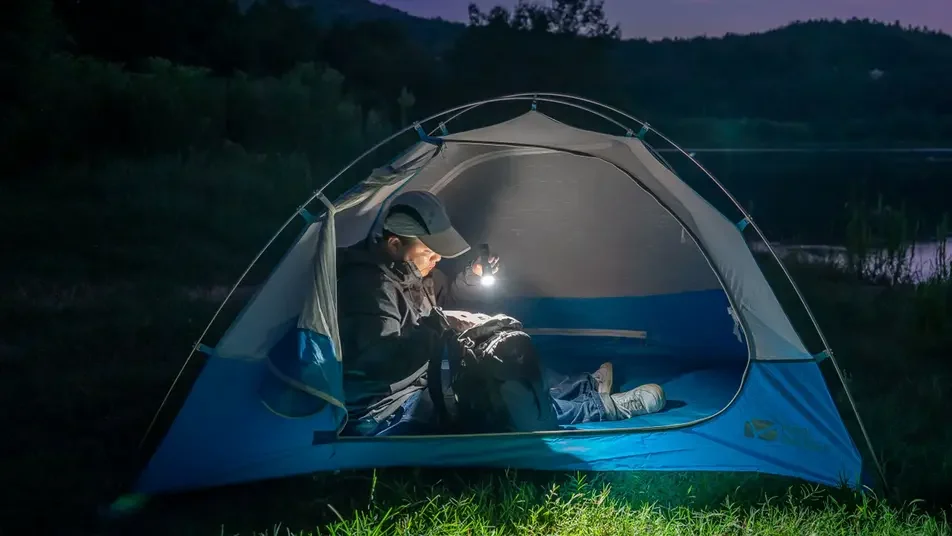
Emergency roadside repairs or tyre changes require reliable hands-free mounting. Right-angle torches that transition between headbands, pocket clips, and magnetic vehicle mounting provide indispensable utility over standard straight-barrel flashlights.

Olight Perun 3 Head Torch
Combines a 3,000-lumen max white floodlight and dedicated red lighting with an IP68 waterproof rating. Runs on a 5,000 mAh 21700 cell, featuring magnetic tail mounting and headband dock compatibility.
Best for: Mechanical repairs, dark campsite setup, and glovebox emergency gear. Trade-off: Heavy-duty metal headband bracket can mark the anodised body if inserted roughly.
View Perun 3 at Official StoreSeven signals that a ranking was copied rather than tested
Many shopping roundups ranking the best torches australia reviews never handle the physical hardware. You can identify content aggregated from marketing materials by screening for these operational inconsistencies:
- Zero Step-Down Disclosure: Listing burst lumens alongside total battery runtime as if both happen concurrently.
- Missing Ambient Test Conditions: Neglecting to state whether tests occurred in air conditioning or ambient summer temperatures.
- Foreign Currency Displays: Quoting USD or GBP figures converted via basic algorithms rather than Australian retail stock.
- Absence of Original Imagery: Exclusively publishing stock marketing cutouts on white backdrops without field photos.
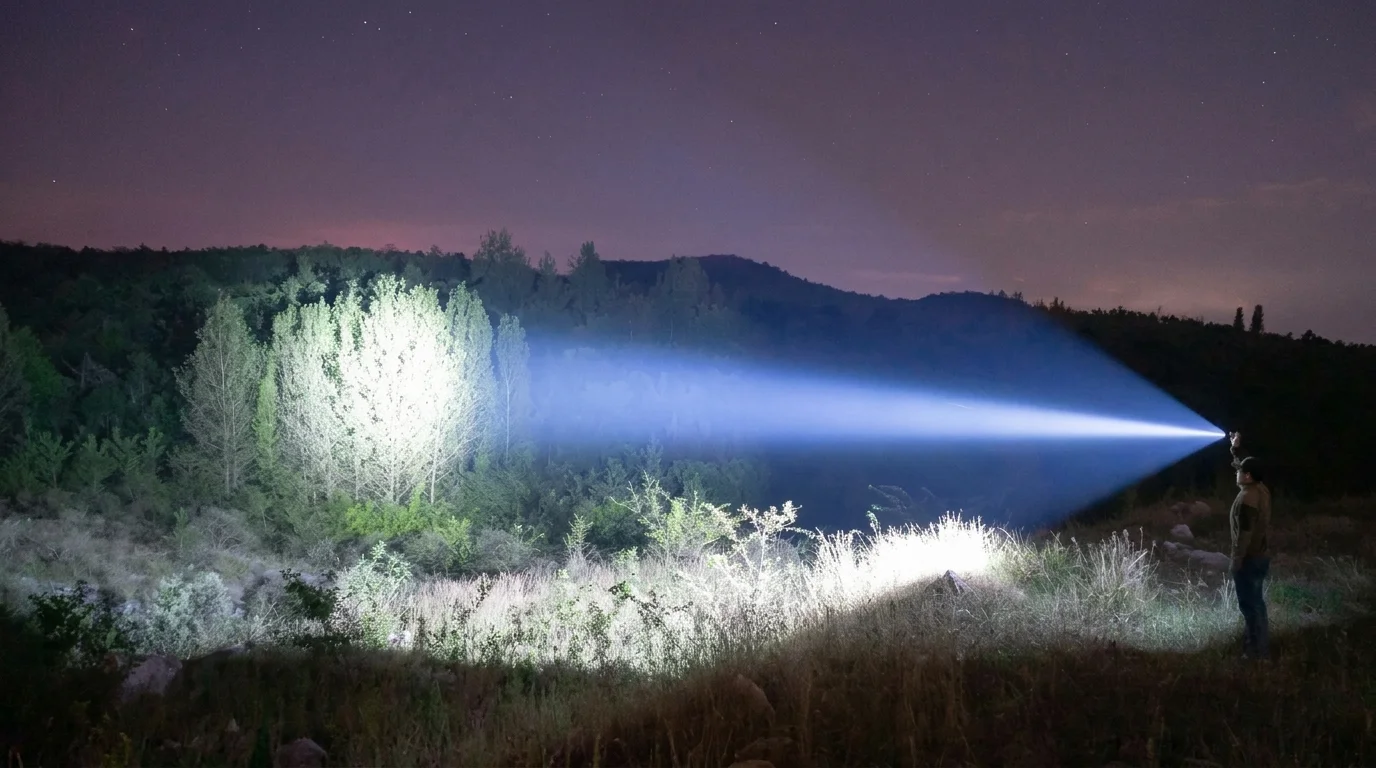
- Undefined Beam Candela: Stating lumen ratings while failing to explain lux intensity or usable beam distance.
- Discontinued Model Inclusions: Recommending legacy hardware that has been out of production for multiple cycles.
- Vague Trade-off Commentary: Declaring a light "flawless" without acknowledging size, mass, or thermal throttling boundaries.

Is the price in AUD including GST, and is the model sold by an Australian retailer?
When evaluating roundups targeting Australian buyers, verifying local commercial standing is critical. Overseas drop-shippers often present attractively low headline numbers that exclude the mandatory 10% Goods and Services Tax (GST) collected at checkout or import thresholds.
The Australian Competition and Consumer Commission (ACCC) establishes under consumer protection rules that advertised consumer prices in Australia must represent the single, all-inclusive figure including GST and non-optional charges (Source: ACCC: Price Displays and Drip Pricing Rules). If a review links directly to offshore platforms quoting currency conversions without GST compliance, warranty enforcement and consumer rights fall outside Australian legal frameworks.
What a real test log looks like: lumens at 30 seconds, runtime to 10 percent, heat at the head
Authentic flashlight evaluations present verifiable technical logs. Testing methodologies adherence to ANSI FL1 specifications capture three primary performance milestones:
First, output is recorded continuously from turn-on, with the official ANSI rating logged precisely at 30 seconds. This isolates transient battery spikes from true operational brightness. Second, runtime terminates not when the battery reaches zero, but when output drops below 10% of the initial 30-second measurement. Finally, surface heat at the light's emitter head is logged with contact thermistors to verify if internal step-downs prevent thermal hazards.
| Model | ANSI Peak (30s) | Step-Down Point | Regulated Output | Total Runtime (to 10%) |
|---|---|---|---|---|
| Warrior 3S | 2,300 lm | 2.5 minutes | 800 lm (160 mins) | 201.5 minutes |
| Seeker 4 Pro | 4,600 lm | 2.5 minutes | 1,200 lm (122 mins) | 159.5 minutes |
| Perun 3 | 3,000 lm | 2.0 minutes | 800 lm (180 mins) | 212.0 minutes |
Why do so many lists ignore Australian summer heat?
Most overseas flashlight evaluations occur in laboratory spaces stabilised at 20°C to 22°C. These baseline numbers break down entirely during Australian bush operations or inland summers, where ambient night temperatures regularly hover between 30°C and 38°C.
Flashlights manage internal temperatures via advanced driver throttling algorithms to protect LED chips and lithium cells from degradation. In elevated ambient environments, thermal transfer between the aluminium housing and surrounding air diminishes rapidly. As a result, a torch that maintains 1,000 lumens for 4 minutes at 20°C may trigger thermal throttling in less than 90 seconds under Australian summer field conditions.
How to cross-check a list against productreview.com.au and Australian Consumer Law warranty terms
Before purchasing based on online reviews, cross-reference user reports on independent platforms like ProductReview.com.au. Pay specific attention to issues concerning switch longevity, water ingress after storms, and battery retention over twelve months of active cycling.
Equally critical is confirming your statutory rights. Under the Australian Consumer Law (ACL), products sold to Australian consumers carry statutory consumer guarantees that cannot be excluded by manufacturer warranty fine print (Source: ACCC: Consumer Rights and Guarantees). If a high-end torch fails prematurely, an Australian supplier is legally obligated to provide a remedy, a protection lost when buying via unaccredited overseas storefronts.
A one-page scorecard you can use on any ranking
Use this practical screening method whenever assessing online torch roundups. Score each candidate list against these five criteria before accepting its buying recommendations:
- [ ] 1. Thermal Step-Down Transparency: Does the review publish exact runtimes at sustained output, or only maximum burst figures?
- [ ] 2. ANSI FL1 Method Verification: Are output figures measured at the 30-second mark under standard testing procedures?
- [ ] 3. True AUD & GST Representation: Are prices stated in Australian Dollars with clear tax inclusions?
- [ ] 4. Australian Warranty Accountability: Does the seller provide domestic repair or replacement under Australian Consumer Law?
- [ ] 5. Ambient Heat Context: Does the evaluation consider performance degradation under hot local climatic conditions?
Frequently asked questions
Why do flashlights drop brightness within two minutes of activation?
Modern compact flashlights generate intense heat when driven at thousands of lumens. Internal driver firmware utilizes thermal monitoring to throttle power to a sustainable level, preventing LED burnout and protecting internal lithium batteries from dangerous degradation.
What is the practical difference between lumens and candela?
Lumens indicate total light output in all directions, representing volume. Candela measures beam intensity in a concentrated direction, determining beam throw. A high-lumen, low-candela light floods wide areas nearby, while a high-candela light projects a focused beam deep into the distance.
Are consumer warranties enforceable if I buy from an international warehouse?
Enforcing Australian Consumer Law guarantees against businesses with no commercial presence or assets in Australia is practically difficult. Purchasing from an Australian entity ensures local access to legal consumer guarantees, including prompt replacements or refunds for product faults.