TL;DR: Mainstream international headlamp reviews often misjudge Australian conditions. Tests conducted in cold European or North American test benches ignore how a 30°C to 35°C evening triggers aggressive thermal step-downs. For navigating dense Australian bush, swap out pencil-beam spotlights for wide-spill floods like the Olight Perun 3, or ditch sweaty elastic headbands entirely using clip torches like the Olight Oclip 2 Pro.
| Scenario | Model | Peak Throw / Candela / Lumens | Weight | Charging Format | Key Trade-off |
|---|---|---|---|---|---|
| Overgrown tracks & all-night bushwalking | Olight Perun 3 | 160 m / Balanced / 3,000 lm max | 150 g (with battery) | MCC3 Magnetic Dock / USB-C | Metal bracket can mark body over time |
| Humid summer treks & strap-free carry | Olight Oclip 2 Pro | Flood / Spot / 530 lm max | 75.5 g | USB-C / Magnetic | Compact form limits runtime on high |
| Multi-source navigation & camp tasks | Olight ArkPro | 205 m / Dual / 1,500 lm max | 115 g | USB-C / Magnetic | Flat profile requires careful pocket seating |
To choose the right torch from standard headlamp reviews, Australian bushwalkers must reweight testing criteria around ambient heat, high humidity, and dense scrub. Northern Hemisphere lab reviews prioritise sub-zero lithium performance and tight pencil beams. In contrast, Australian tracks demand sustained lumens under warm thermal regulation, wide flood beams to spot trip hazards, and breathable clip designs.
Table of Contents
Quick answer: reweight overseas scores for heat, humidity and beam spread on narrow tracks
When reading international headlamp reviews, an Australian walker must systematically adjust the headline figures. A product awarded top marks for throwing light 200 metres across an open valley can be blindingly impractical when pushing through scrub where broad peripheral vision is vital. Furthermore, overseas battery runtimes calculated in air-conditioned 20°C laboratories fail to account for how Australian summer nights accelerate thermal regulation.
To find the right gear, discount maximum beam distance by roughly 30% if your primary use involves enclosed trails, and reallocate that priority toward beam width and colour clarity. Focus on sustained lumen output rather than short burst figures, and evaluate physical mounting options that prevent heat and moisture build-up directly against your forehead (For Australian pricing standards, see ACCC: Price Displays and Drip Pricing Rules).
How typical lab scores are built: brightness, runtime, comfort, weather
Standard outdoor gear test protocols evaluate headlamps across four main pillars: peak brightness, total runtime according to standardized runtime decay curves, headband comfort, and weather resistance. While standard protocols deliver reproducible benchmarks, they do not mirror field conditions across remote Australian tracks.
Most lab test standards measure beam throw until output drops to a minuscule fraction of original power, often counting dim, unusable light as active runtime. Comfort scores are typically assigned after brief trials indoors, ignoring how wide elastic webbing absorbs sweat during humid evening climbs. Water ingress ratings like IPX4 are common baselines in mild climates, yet they fall short when exposed to sudden sub-tropical deluges or river crossings (For details on industry testing standards, see Flashlight Wiki: ANSI FL1 Standard Specifications).
Which criteria should Australian walkers weight differently?
Navigating the Australian bush introduces environmental factors rarely accounted for in temperate-climate reviews:
- Thermal Management Over Peak Lumens: An aluminum body that sheds heat efficiently prevents the LED driver from throttling output prematurely.
- Spill Width and Peripheral Vision: Spotlights create high-contrast shadows where snakes, protruding roots, and hanging spider webs hide just outside the narrow hotspot.
- Moisture & Dust Ingress: Fine red bulldust in the interior and sudden coastal downpours necessitate at least IP66 or IP68 ratings rather than light splash protection.
- Alternative Mounting Systems: Heavy elastic headbands can trap excessive sweat across the forehead; chest clips, pocket mounts, and pack-strap holders provide vital airflow.
Cold-battery tests vs 35°C nights: thermal step-down and heat dissipation
Many gear editors focus heavily on sub-zero battery performance for snow sports. In that environment, the cold reduces electrochemical efficiency, requiring specialized cold-resistant chemistry. However, across much of Australia, nighttime ambient temperatures frequently stay between 25°C and 35°C during peak hiking seasons.
When a compact light operates at high output in warm ambient air, internal thermal management circuitry steps down output to protect the emitter. Plastic-bodied lights cannot conduct heat away quickly, forcing them to drop to low modes within minutes. Models constructed from aerospace-grade aluminum utilize the entire housing as a heatsink, keeping your sustained lumens higher and more consistent throughout hot night hikes.

Do flood beams beat spot beams on overgrown tracks? (Why Perun 3 excels)
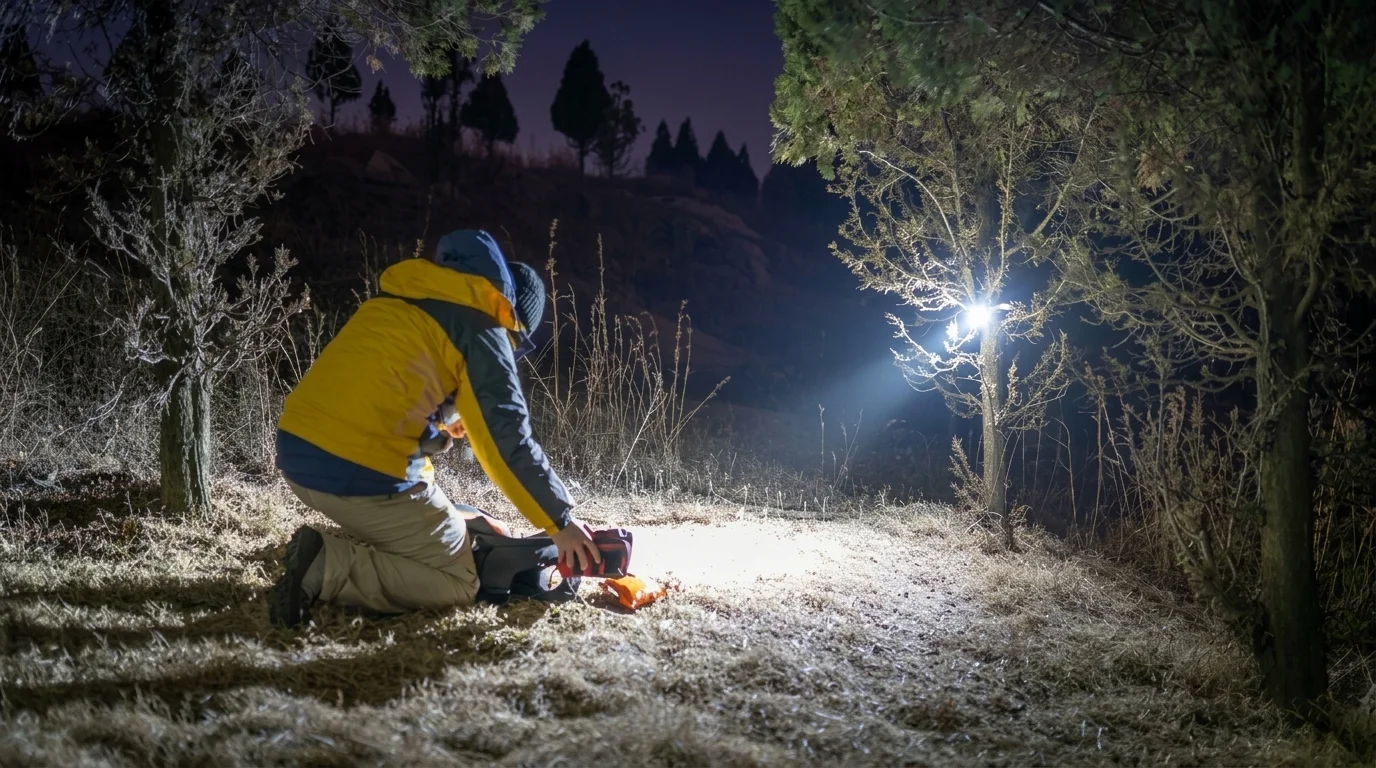
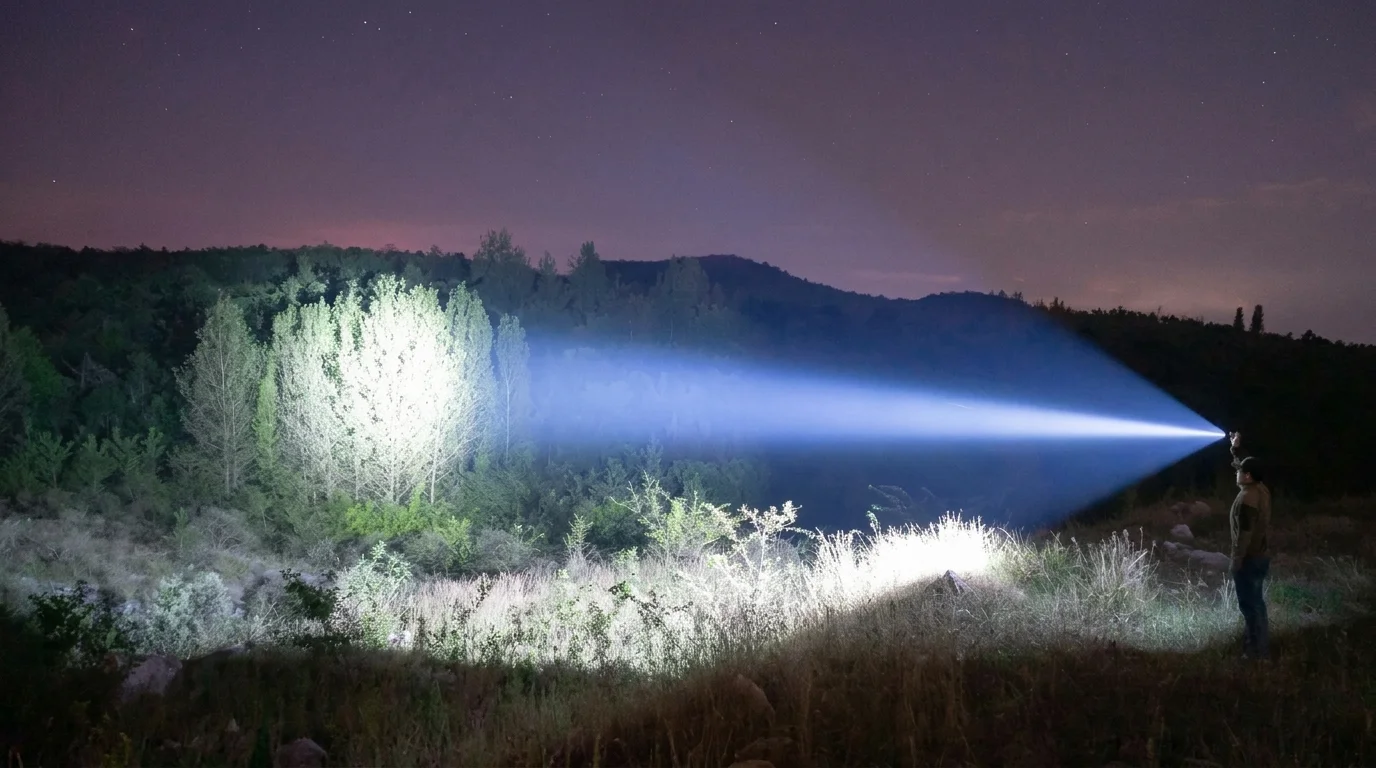
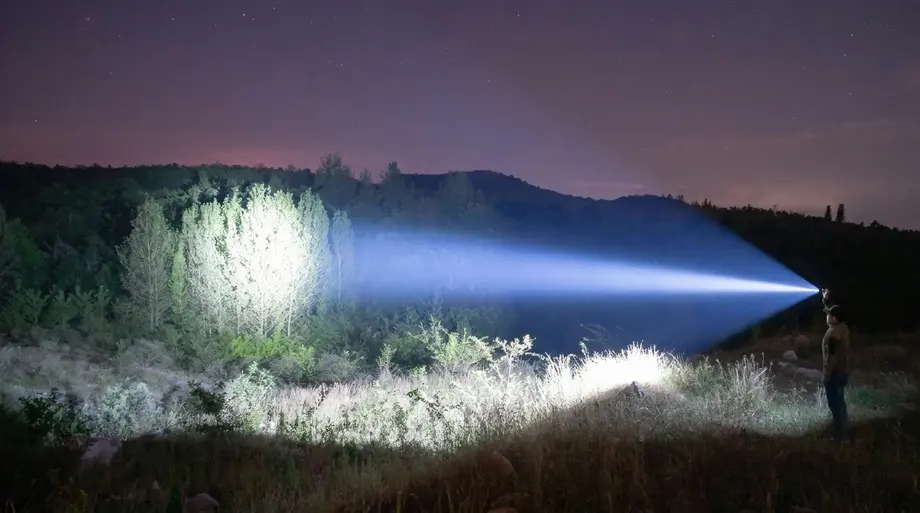
On an overgrown trail, a concentrated spotlight creates tunnel vision. The intense central hotspot bounces light off nearby eucalyptus leaves, causing visual backscatter that constricts your pupils and leaves surrounding hazards in total darkness. A wide, smooth flood beam illuminates your immediate footwork and peripheral surroundings without blinding flare.
The Olight Perun 3 delivers an optimal optical profile for these rugged tracks. Operating with a high-capacity 21700 battery, it delivers a broad flood of up to 3,000 lumens on Turbo and a sustained 600-lumen High mode lasting 300 minutes before stepping down. Its aluminum right-angle structure dissipates heat effectively, while the IP68 waterproof rating withstands tropical rain. Note that the metal headband mounting bracket can scratch the anodized body over time when clicked in and out repeatedly.

Engineered for Tough Australian Scrub
Delivers a wide-spill beam pattern backed by a 5000 mAh 21700 cell, offering red-light protection and rugged IP68 immersion resistance for challenging backcountry terrain.
- Max 3,000 lumens output with 160 m balanced flood throw
- High mode runs at 600 lumens for up to 300 minutes
- Includes white and red modes with glove-friendly side button
- Supplied with headband, pocket clip, lanyard, and magnetic tail
Ultralight alternatives: compact clip lights for humid night walks
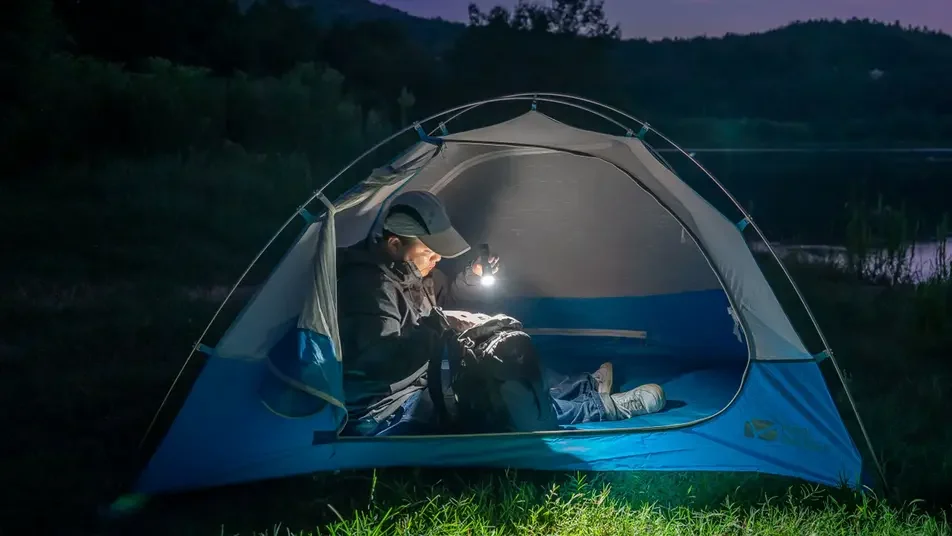
Wearing an elastic headband on humid summer nights can be uncomfortable, often collecting sweat that drips into your eyes. Many experienced Australian hikers prefer versatile clip lights mounted to shirt plackets, sternum straps, or hat brims to keep their forehead completely clear.
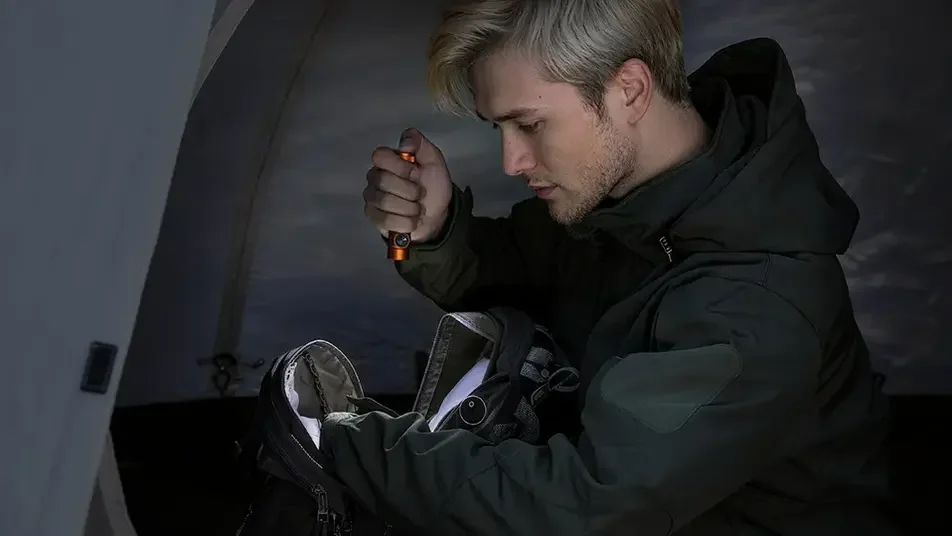
The Olight Oclip 2 Pro provides a lightweight hands-free option weighing just 75.5 grams. Featuring a 115-degree head tilt, 360-degree rotating clip, and IP66 water resistance, it fastens cleanly to a pack harness to cast up to 530 lumens of flood illumination or 400 lumens of focused spotlight directly in front of your walking line.

Strap-Free Comfort for Humid Climates
Eliminates sweaty forehead bands by clipping directly to pack straps or apparel, offering multi-angle beam adjustments with flood, spot, and red outputs.
- 530 lm flood, 400 lm spot, and night-vision red light
- 115° tilt head with 360° rotating heavy-duty clip
- Lightweight 75.5 g profile with IP66 weatherproofing
- Rechargeable via USB-C or magnetic charging options
For multi-day navigation, having spot and flood modes alongside UV capability provides reliable versatility. The Olight ArkPro flat EDC light features independent flood (up to 1,500 lm) and spotlight channels (up to 800 lm and 205 m reach), IPX7 sealing, and a flat profile that slides securely into shoulder pockets or clips to belts.

Dual Beam Precision and Flat Carry
Combines an expansive floodlight, long-range spotlight, UV mode, and green pointer in a flat unibody design that sits comfortably against clothing or pack straps.
- 1,500 lm pure floodlight plus 800 lm / 205 m spotlight
- Integrated 365nm UV source and green laser pointer
- Slim 16 mm thickness weighing 115 g with dual-way clip
- Dual charging via USB-C or magnetic interface with IPX7 rating
A reweighting worksheet you can apply to any review
Use this scoring model to re-evaluate numerical ratings found in generic headlamp reviews (For information on Australian consumer guarantees, see ACCC: Consumer Rights and Guarantees):
| Review Criterion | Standard Weight | Australian Weight | What to Check |
|---|---|---|---|
| Max Beam Distance | 30% | 10% | Distance matters across open plains, but tight beams create glare in bush scrub. |
| Beam Spread & Spill | 15% | 35% | Wide optical profile illuminates trail edges to reveal roots and wildlife. |
| Sustained High Output | 20% | 25% | Check thermal step-down times in warm weather, not just peak turbo burst. |
| Ingress Protection | 15% | 20% | Look for IP66 to IP68 ratings to protect against torrential rain and bulldust. |
| Cold Weather Performance | 20% | 10% | Unless alpine winter trekking in NSW/VIC, prioritize heat dissipation. |
Frequently asked questions
Why do high-output headlamps dim quickly during Australian summer nights?
Headlamps feature internal thermal protection that scales down power when internal temperatures cross safety limits. On hot nights between 25°C and 35°C, the air cannot absorb heat from the light quickly, causing the safety circuit to throttle lumen output much faster than in cold lab tests.
Is a flood beam or spotlight better for walking in the Australian bush?
A wide flood beam is generally superior for bush tracks. Spotlights reflect harsh glare off nearby eucalyptus leaves and foliage, causing glare while obscuring trail edges. Broad flood beams provide wide ground visibility, helping you spot uneven terrain and wildlife early.
Can clip-on torches adequately replace traditional headlamps on warm hikes?
Yes. Attaching a compact clip light like the Olight Oclip 2 Pro to a backpack strap or shirt placket delivers hands-free forward lighting without trapping sweat across your forehead. It also lowers the beam angle, casting clear ground shadows over rocks and roots that might wash out from forehead level.