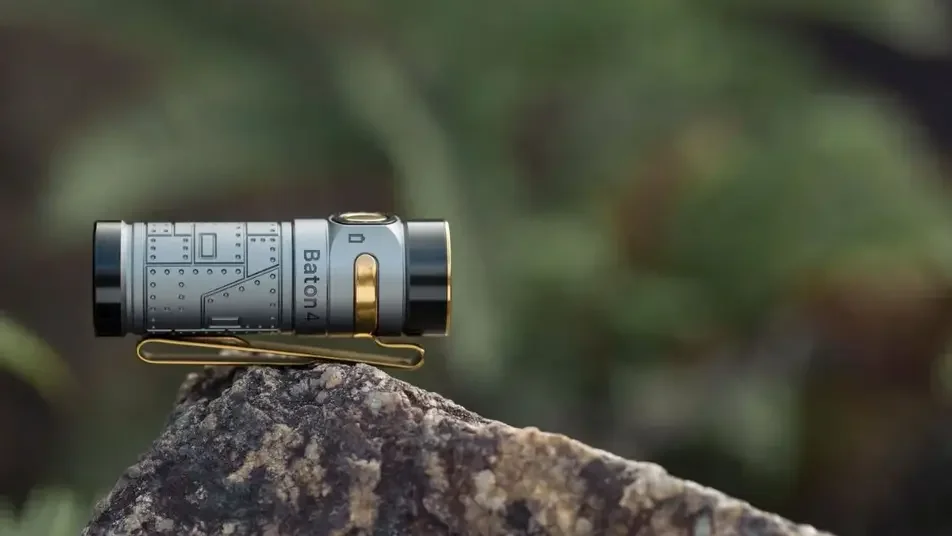
TL;DR: The true head torch with best battery life is not the one claiming hundreds of hours on an unreadable 5-lumen trickle, nor the one boasting 3,000 lumens that plummets within two minutes. Real endurance requires checking regulated runtime at practical bushwalking outputs (100–200 lumens) using high-capacity lithium cells.
| Model / Setup | Battery System | Usable Hiking Output | Tested / Rated Sustained Runtime | Best Application |
|---|---|---|---|---|
| Olight Perun 3 | Customised 21700 (5,000 mAh) | 120 lumens (Medium) | 25 hours flat | Multi-day bushwalking, nocturnal track navigation |
| Oclip 2 Ultra + Headband | Integrated Li-ion (600 mAh) | 100 lumens (Medium Flood) | 3.5 hours | Camp cooking, close-up chore lighting, emergency backup |
| Standard 3×AAA Headlamp | 3× Alkaline AAA (approx. 1,000 mAh) | 100 lumens (Declining) | Under 1.5 hours before dropping below 30 lm | Short casual urban walks, glove-box spares |
Selecting a lighting tool for extended trips across the Australian backcountry often leaves outdoor enthusiasts frustrated by deceptive marketing metrics. Manufacturers frequently plaster headline runtimes alongside peak lumen numbers that never operate simultaneously. This comprehensive guide breaks down runtime curves, ANSI/PLATO FL 1 standards, thermal step-downs, and driver regulations so you can confidently pick the head torch with best battery life for wilderness tracks.
Table of Contents
- Quick answer: compare runtime at 100–200 lumens and check whether output is regulated
- How to read an ANSI runtime graph
- Regulated vs unregulated output: flat lines and slow fades
- Which brightness do you actually use on a track?
- Built-in battery or swappable cells for multi-day trips?
- Mode discipline on the track: how do you save runtime without walking blind?
- Frequently asked questions
Quick answer: compare runtime at 100–200 lumens and check whether output is regulated
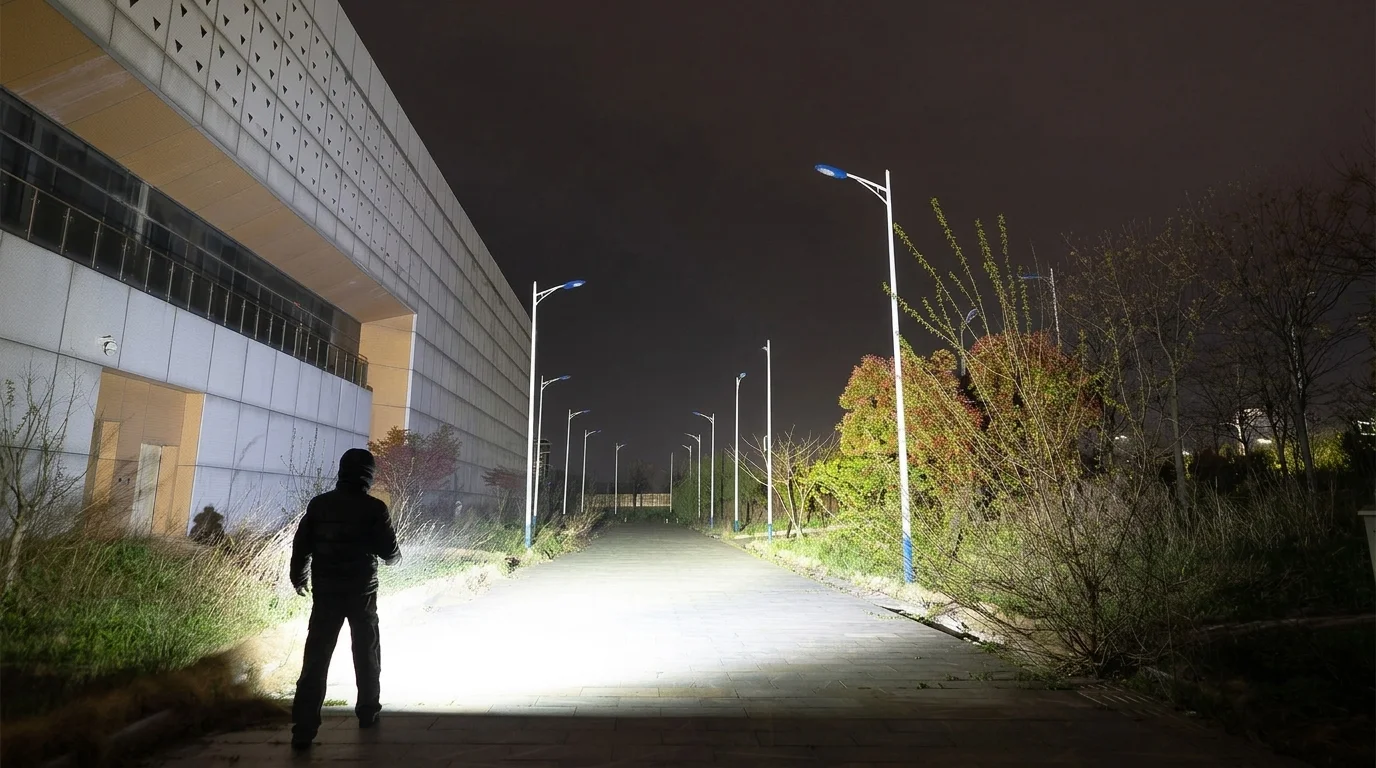
To identify the genuine Perun 3 head torch with best battery life, ignore maximum lumen claims and lowest-mode runtime claims immediately. Outdoor trail navigation requires a sustained output window of 100 to 200 lumens to illuminate trail markers, tree roots, and snakes. The most reliable benchmark is discovering how many uninterrupted hours the device maintains inside this specific luminous range without severe thermal dimming.
Equally critical is driver regulation. A poorly engineered headlamp will start at 200 lumens and immediately slip down a sloped voltage curve, leaving you walking in semi-darkness after two hours. Conversely, an advanced headlamp featuring a constant-current buck or boost driver holds a flat, regulated output curve, providing clear visibility across the entire night.
How to read an ANSI runtime graph
Under the standardised ANSI/NEMA FL 1 testing protocol, flashlight runtime is defined as the elapsed duration from 30 seconds after initial activation until the light output diminishes to exactly 10% of its initial measurement. This technical definition creates significant loopholes in packaging claims that mislead consumers searching for a practical head torch with best battery life.
(Source: Outdoor Industry Association ANSI FL1 Standards Guide)
For example, if a headlamp turns on at 1,000 lumens, it is permitted to step down automatically to 105 lumens after just three minutes due to thermal buildup. If it continues to glow at 100 lumens for six more hours before crossing the 100-lumen threshold (10% of 1,000), the brand can legally advertise a "1,000-lumen, 6-hour headlamp" on retail blister packs. Evaluating the Oclip 2 Ultra head torch with best battery life specifications reveals transparent step-down notation (such as 580~300~100 lumens over 1+57+5 minutes), showing precisely when automated thermal protection engages.
Regulated vs unregulated output: flat lines and slow fades
When plotting luminous output over hours on a Cartesian graph, illumination profiles divide into two distinct operational topologies: unregulated direct-drive slopes and regulated flat-line ceilings. In cheap unregulated circuits, output tracks the chemical discharge curve of the cell directly. The beam starts brightly, but steadily dims every minute, forcing your pupils to dilate continuously to compensate for missing lumens.
A quality constant-current driver draws increasing amperage from the battery as internal cell voltage drops from 4.2V down to 3.0V. This design keeps photon emission perfectly level. When assessing a head torch with best battery life, a flat line offers reliable safety because track clarity remains completely predictable until the circuit signals a low-voltage battery step-down.
Which brightness do you actually use on a track?
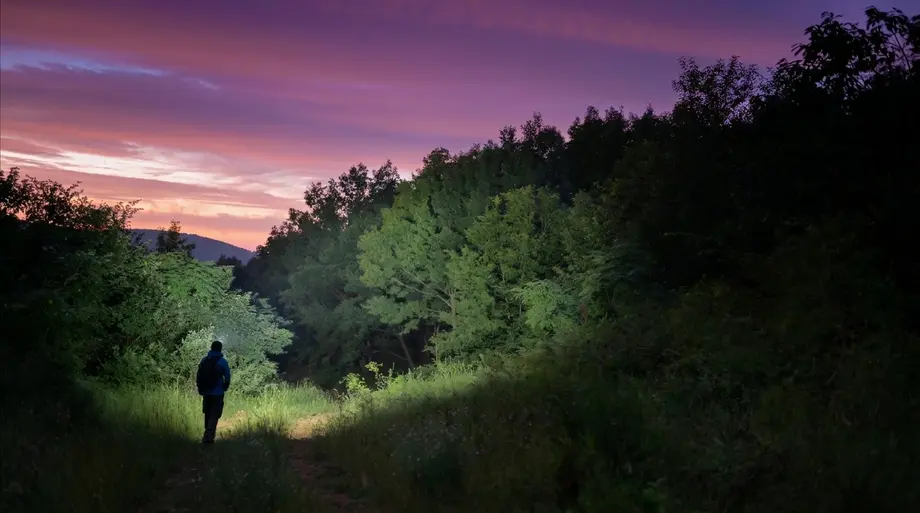
Bushwalking across Australian environments, from the rocky escarpments of the Blue Mountains to overgrown trails in Southwest Tasmania, requires balanced light distribution rather than raw blinding power. Safety guidelines emphasise stable illumination that highlights depth without blinding reflections off wet eucalyptus leaves or limestone steps.
(Source: NSW National Parks and Wildlife Service Bushwalking Safety Guidelines)
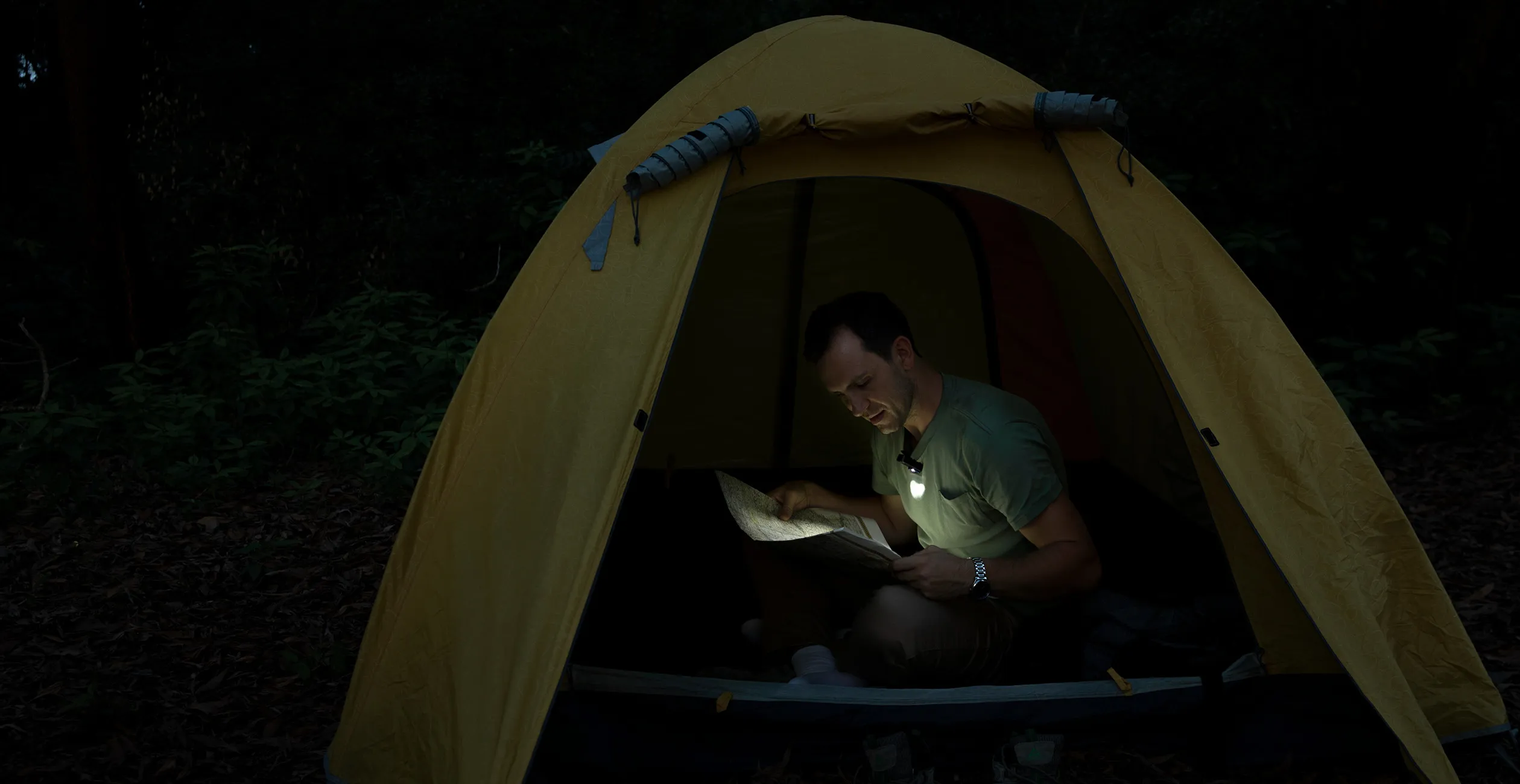
 Lower output tiers and auxiliary red beams extend runtime while protecting adapted night vision during stationary chores.
Experienced hikers find that 5 to 15 lumens handles campsite tasks, gear sorting inside a shelter, and map review. Moving along an established, open fire trail demands between 30 and 60 lumens. Tackling technical single-track with uneven boulders, creek crossings, and root networks functions best around 100 to 200 lumens. Turbo modes exceeding 1,000 lumens are best reserved for short bursts of 30 seconds to locate distant route markers. A truly capable Oclip strap head torch with best battery life setup provides stable intermediate levels that stretch operating durations across multiple nights.
Built-in battery or swappable cells for multi-day trips?
Weight, charging infrastructure, and trip duration determine whether an integrated sealed battery or an interchangeable high-capacity cell serves you better. Sealed ultralight lamps charge via USB power banks, but carrying swappable 21700 or 18650 cells delivers superior total watt-hour capacity per gram on extended wilderness routes.

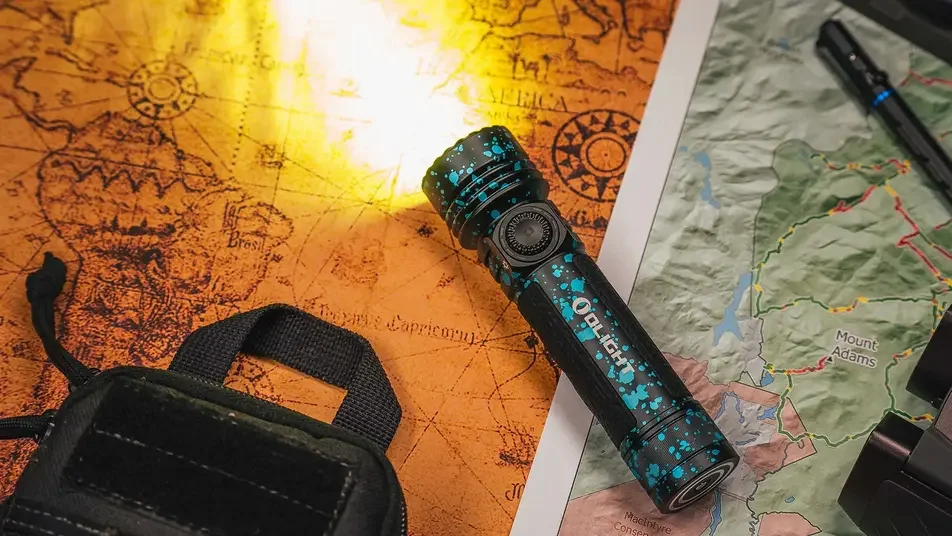
- Massive 5,000 mAh 21700 battery delivering up to 20 days on Moon mode
- Regulated 120-lumen Medium mode sustained for 25 continuous hours
- Max 3,000-lumen output and white/red secondary light sources
- IP68 waterproof rating with 1.5-metre impact resistance
A single 5,000 mAh 21700 cell stores approximately 18 watt-hours of energy. In contrast, three AAA alkaline batteries yield roughly 4.5 watt-hours under slow drain, which collapses down to less than 2.5 watt-hours under high discharge currents. By upgrading to modern high-density lithium hardware like the Oclip Pro head torch with best battery life compatible setups, you carry fewer spare cells while getting reliable cold-weather performance in alpine huts across Kosciuszko National Park.

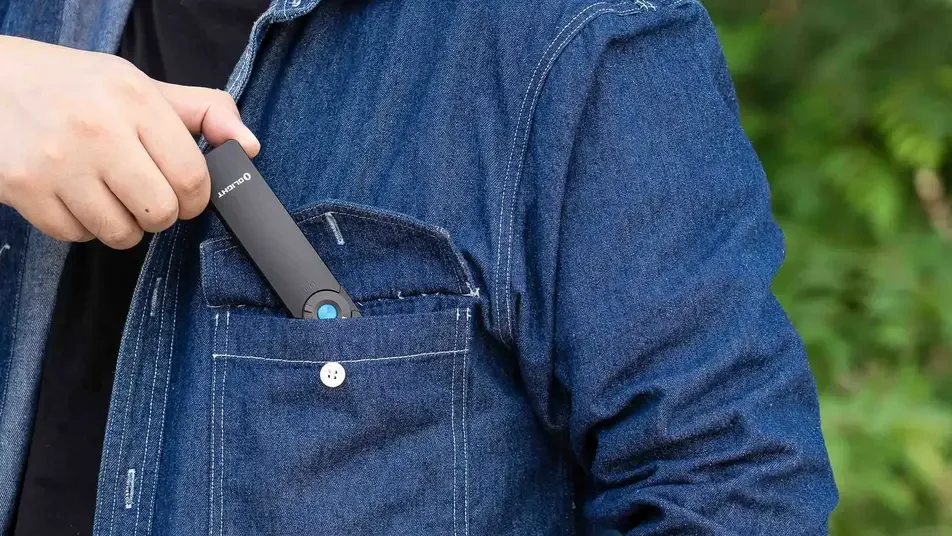
- Weighs only 79.5 g with 4-in-1 floodlight, spotlight, UV, and red light
- 144-hour maximum runtime on 1-lumen Moon mode
- 360-degree clip rotation and 115-degree head tilt angle
- Dual charging via USB-C or magnetic charging docks
Mode discipline on the track: how do you save runtime without walking blind?
Managing your battery reserve across multiple nights on the trail relies heavily on personal gear habits. Energy consumption increases non-linearly with perceived brightness: driving an LED to produce 600 lumens uses far more than four times the energy required for 150 lumens, due to dropped semiconductor efficiency and heat generation.
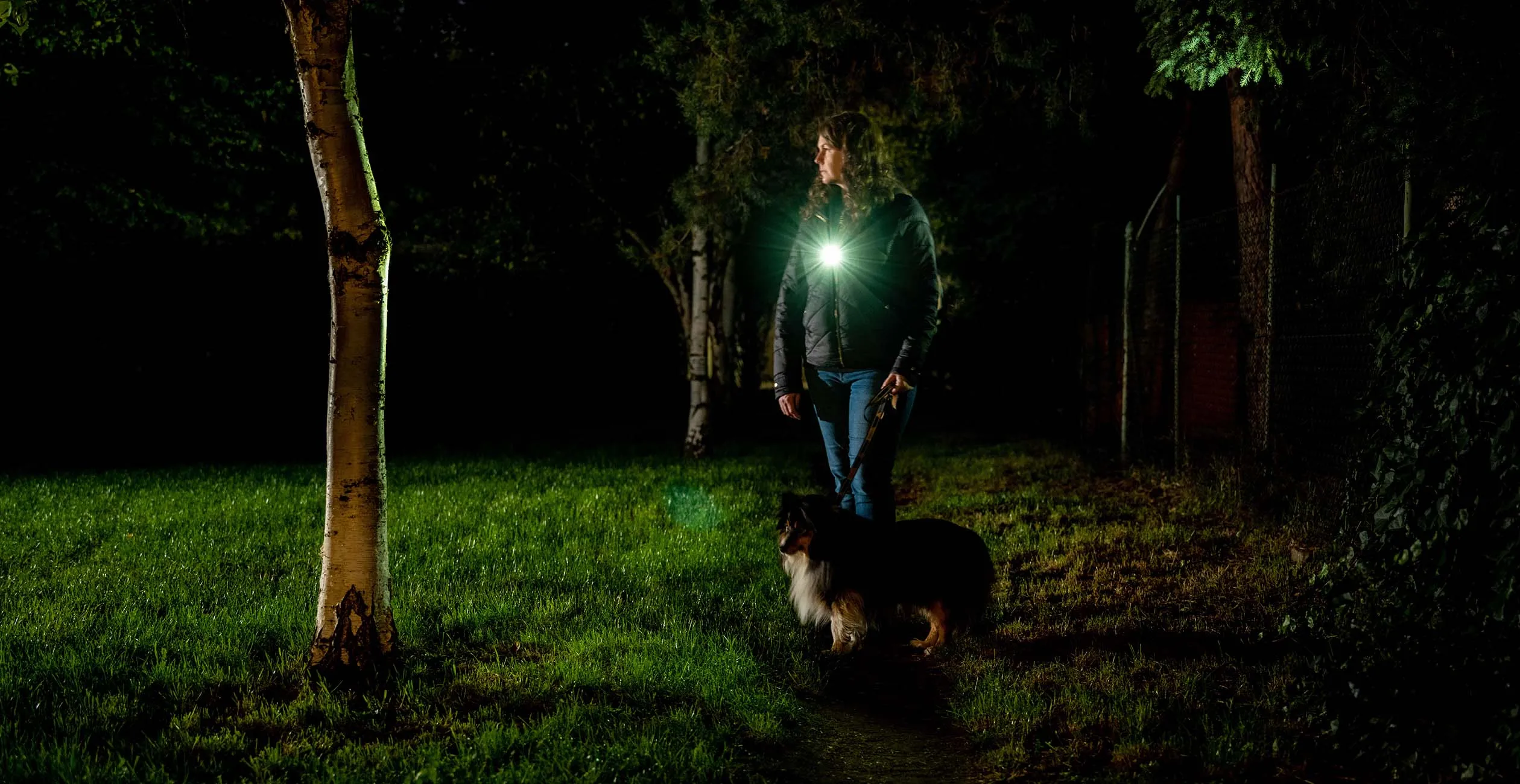
Research into human visual adaptation demonstrates that human eyes take upwards of 20 to 30 minutes to adjust fully to dark conditions. Firing high-intensity bursts temporarily destroys biological night sensitivity, forcing you to stay in battery-draining brighter modes just to maintain spatial awareness.
(Source: Safe Work Australia Ergonomics and Visibility Principles)
Employing a versatile system such as the Oclip Ultra head torch with best battery life allows you to toggle down to dedicated red light during food preparation or socialising around camp. You can also deploy an auxiliary clip like the Oclip Pro S head torch with best battery life on your sternum strap to spread light across your immediate footstep zone, conserving primary headlamp reserves for complex trail navigation.
Frequently asked questions
Which head torch has the best battery life?
Among modern compact outdoor illumination systems, the Olight Perun 3 stands out as a genuine head torch with best battery life in terms of sustained, usable hiking brightness. Powered by a high-capacity 5,000 mAh 21700 lithium-ion battery, it delivers a flat, regulated 120 lumens for 25 continuous hours on its Medium setting, completely outlasting typical AAA and 18650-powered headlamps without output decay.
Which headlamp has the longest battery life?
If absolute runtime on minimal output is your metric, the Perun 3 provides 20 full days (480 hours) of continuous operation on its 5-lumen Moonlight mode. For ultralight companion models, the Oclip 2 Ultra yields up to 144 hours on its 1-lumen setting. These moonlight modes give outdoor enthusiasts essential night-navigation backup without draining primary cell reserves.
What is the best battery-powered headlamp?
The best battery-powered headlamp combines active thermal regulation, an IP68 weather-resistant housing, and high energy density cells. Swappable 21700-based models deliver the most reliable balance of runtime stability, sub-zero cold tolerance, and beam punch for multi-day Australian adventures where recharging outlets are unavailable.