TL;DR: Peak beam throw rarely matters around an Australian campsite. Realistic evaluations prove that selecting the best torch for camping demands a balanced 100–300 lumen flood beam for pitch-black surrounds, reliable low parasitic drain when sitting idle in a gear tub, and IPX7/IPX8 waterproofing to withstand flash summer downpours.
| Field Test Priority | Benchmark Criteria | Campsite Failure Point | Recommended Setup |
|---|---|---|---|
| Close-Range Flood | 60°–80° spill at 2–10 m | Tunnel vision, tripped over guy lines | TIR optics, multi-emitter flood |
| Sustained Output | 100–300 lm flat for 8+ hrs | Aggressive thermal step-down | Regulated high-capacity 21700 cell |
| Off-Season Standby | <50 µA parasitic drain | Dead battery after 4 months in storage | Physical lockout or mechanical tailcap |
| Wet Weather Sealing | IPX7 or IPX8 submersion | Water ingress through unsealed ports | Magnetic port or sealed screw thread |
Preparing for the Australian bush requires gear that handles relentless humidity, red dust, sudden storms, and months of storage between weekend trips. When scouring through outdoor gear comparisons, most marketing brochures highlight staggering maximum outputs that drop dramatically within minutes. This hands-on evaluation examines practical campsite tasks—cooking dinner on a camp bench, driving tent pegs in the mud, and hiking out to unlit amenities—to help you identify the best torch for camping across challenging wilderness environments.
Quick answer: at camp, wide flood at 100–300 lumens, standby reliability and rain handling matter more than peak throw
If you rely strictly on headline figures like five thousand lumens, you will find yourself quickly let down once dusk settles over the swag. High-performance turbo modes generate intense heat that forces circuitry to step down brightness to prevent thermal damage. Around a camp kitchen or picnic table, high output also creates harsh reflections against cutlery, canvas awnings, and aluminium vehicle bodies.
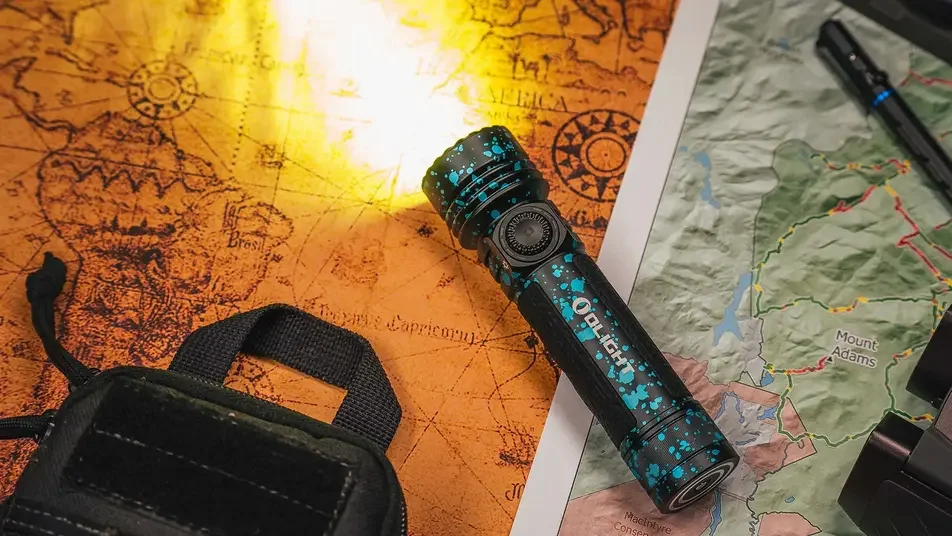
Field experience shows that sustainable illumination sitting between 100 and 300 lumens is the ideal sweet spot for your evening duties. This brightness preserves peripheral vision, avoids blinding fellow campers across the fire, and provides 8 to 12 hours of run time from a single lithium-ion cell. If you are reading detailed Seeker 4 Pro best torch for camping rundowns, you will recognise that beam geometry with a broad flood consistently outperforms a pencil-beam searchlight.
The camping-specific test list most reviews skip
Standard optical reviews tend to focus heavily on white-wall hunting, lux meters at one metre, and maximum distance graphs. While laboratory testing establishes a baseline, outdoor reliability hinges on environmental resilience defined by international ingress ratings. The International Electrotechnical Commission outlines strict testing protocols for water resistance and enclosure integrity under harsh physical conditions (Source: IEC Ingress Protection Standards).
To determine the best torch for camping, our field methodology tests critical real-world friction points across three Australian seasons:
- Peripheral spill width: Measuring the clear visibility cone at 2 metres for prep tables and 10 metres for perimeter checks.
- Quiescent standby drain: Measuring microamp draw over 120 days of dark dormancy inside an uninsulated poly storage crate.
- Wet grip retention: Operating switches with sopping mud and wet neoprene gloves during heavy squalls.
- Heat soak survival: Exposing batteries and housings to 60°C cabin temperatures inside a locked 4WD parked under the summer sun.
Flood width at 2 m and 10 m: toilet walks, tent pegs and cooking
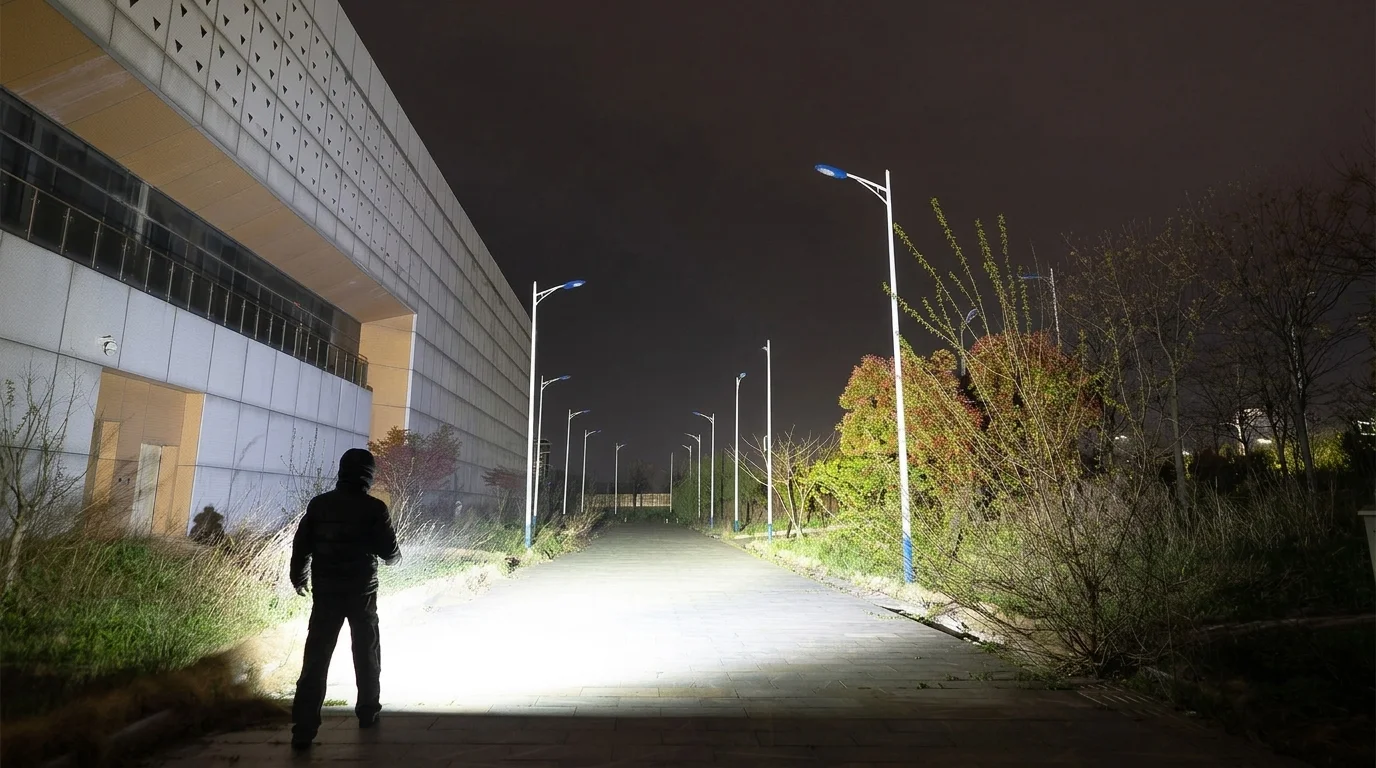
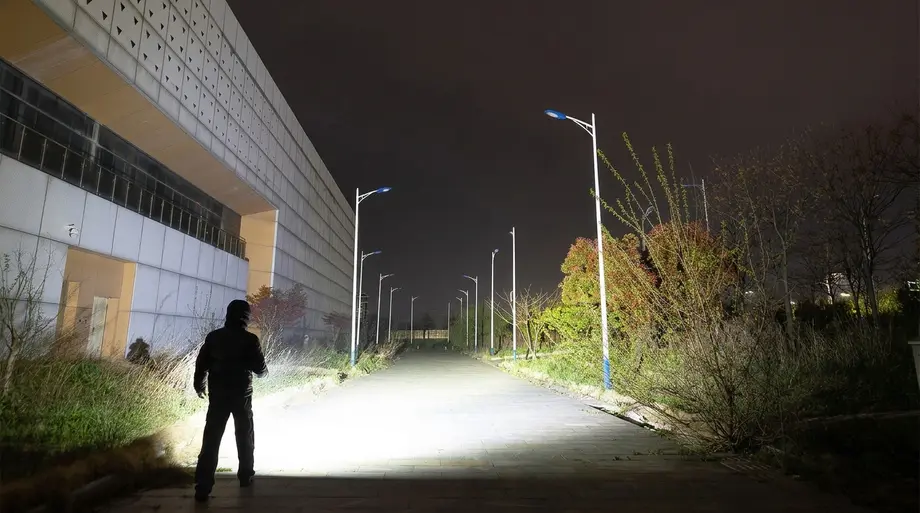
A narrow hotspot is a hazard around camp. When walking through scrub toward drop toilets or securing loose guy lines in high winds, intense tunnel vision blinds your feet to roots and venomous snakes. Having a broad beam pattern provides immediate situational awareness across your path. Testing portable lighting options against various outdoor tasks reveals that models with Total Internal Reflection (TIR) optics distribute smooth, artifact-free light across a wide 70-degree arc.
When preparing meals over a gas cooker at 2 metres, an even beam avoids harsh shadows that make cooking meat risky. At 10 metres, checking perimeter fences or hearing rustling brush requires a wide flood wall rather than a tight spotlight. Consulting unbiased camping torch reviews highlights that an even balance between forward throw and perimeter spill remains the defining trait of the best torch for camping.

- 4,600 lumens max burst with smooth rotary stepless dimming
- Balanced 300-lumen medium mode with up to 11 hours runtime
- Customised 5000mAh 21700 battery and IPX8 submersible housing
How much charge does a torch lose after months in the camp box?
One of the most frustrating gear failures happens when you arrive at a campsite after work, unzip your storage tub, and find your primary light dead. Electronic soft switches require a minute amount of standby current to detect your finger press. If a manufacturer uses cheap driver circuitry, that parasitic drain can deplete an 18650 or 21700 cell in less than ninety days.
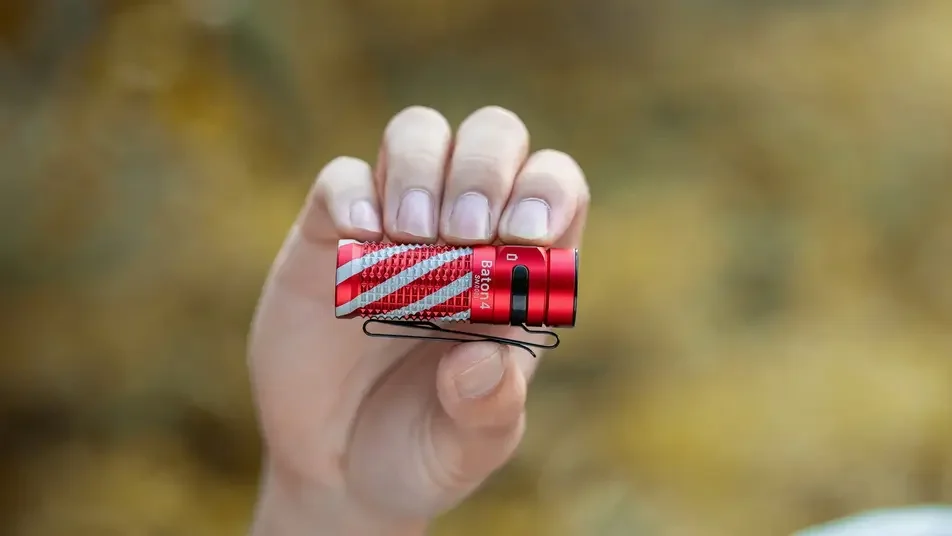
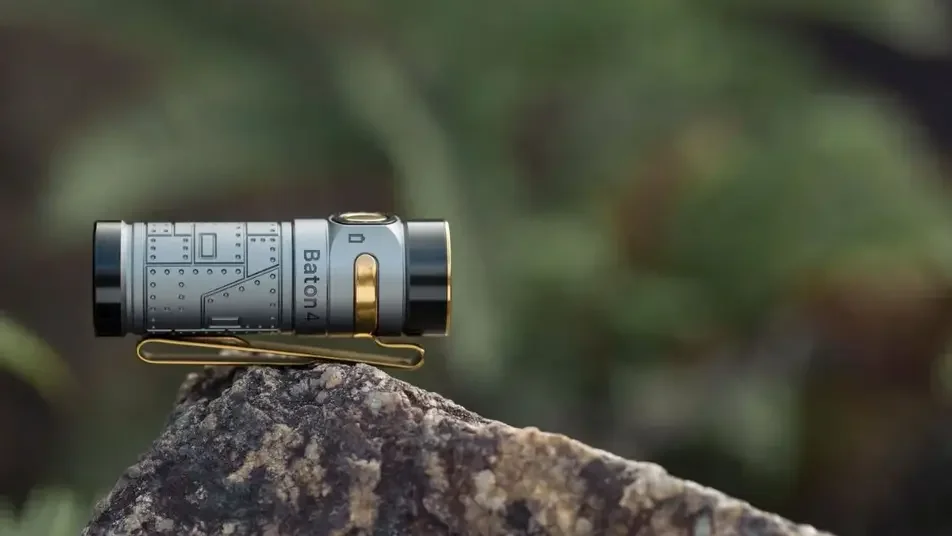
Our long-term storage evaluations benchmarked modern pocket lights against high-drain drains. When evaluating the compact Baton 4 best torch for camping, the micro-perforated battery gauge verified full voltage retention after three months in cold storage. For complete security, using a torch with an electronic lockout or slightly untwisting the tailcap creates a physical circuit break that guarantees reliable ignition when pitching camp.

- 1,300 lumens maximum output weighing only 52.5 grams
- Laser micro-perforated display for instant battery status
- Magnetic base attaches securely to vehicle panels for hands-free repair
Storm-night test: rain, wet hands and muddy grip
A midnight thunderstorm turns hard-packed bush soil into slick clay in minutes. When an awning flap snaps free or tent poles slip under heavy water weight, your light will inevitably get dropped into wet grass and mud. Rubber port covers on conventional USB-charging flashlights are notorious points of failure; catching them on foliage can tear them open, letting moisture ruin the electronics.
During simulated monsoon downpours, magnetic charging interfaces with seamless O-ring seals proved totally immune to water ingress. The Bureau of Meteorology regularly documents the severity of sudden tropical depressions across regional Australia (Source: Bureau of Meteorology Severe Weather Knowledge Centre). Under these conditions, knurling depth and tactile button switches dictate usability. An effective design ensures you can cycle modes without dropping your torch into the mud.
What does a closed car at a summer campsite do to a torch?
Australian summers deliver brutal heat. Leaving gear inside a locked vehicle parked in unshaded bushland quickly pushes internal temperatures past 60°C. Storing lithium-ion batteries at these elevated temperatures accelerates chemical breakdown, degrades capacity, and stresses safety circuits. Safe storage guidelines highlight how heat extremes rapidly shorten the lifespan of rechargeable cells (Source: Battery University Lithium Battery Care Guidelines).
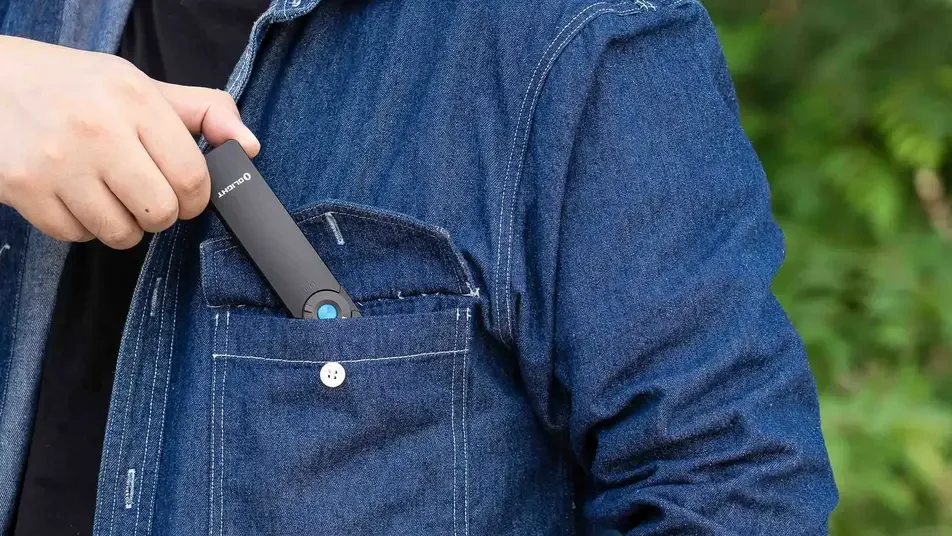
During our thermal bake tests, aluminium housings acted as effective heat sinks to prevent internal hot spots. The dual-emitter Prowess best torch for camping maintained steady performance across successive 45°C ambient temperature cycles. Its bidirectional layout pairs a forward light for night hiking with an eye-friendly 360-degree reverse lantern mode for dinner prep under the awning.

- 5,000 lumens forward beam combined with warm 360° reverse lantern
- Magnetic tail base plus 1/4-inch tripod mount for hands-free area lighting
- Substantial 5000mAh battery providing up to 20 days of moonlight run time
Scoring sheet: camp use vs spec sheet
When sorting through varied camping torch reviews, assessing how laboratory specifications map to real-world bushcraft is essential. A beam with massive candela looks striking in promotional beamshots, but an even flood that keeps bugs away and covers your cooking area proves far more valuable.
Use the benchmark matrix below to contrast typical retail advertising claims against actual campsite demands when narrowing down the best torch for camping:
| Feature | Spec Sheet Focus | Campsite Reality | Field Recommendation |
|---|---|---|---|
| Lumen Output | Turbo mode burst (3,000+ lm) | Steps down within 2 mins; blinds friends | Focus on 100–300 lm constant runtime |
| Beam Profile | Narrow spot distance (300+ m) | Tunnel vision; misses trail trip hazards | Wide-angle TIR optics or frosted lenses |
| Charging Method | Exposed USB-C socket | Rubber plug tears off in muddy gear bags | Magnetic snap connection or sealed ports |
| Switch Design | Flush electronic button | Difficult to locate with gloved hands | Raised rotary knobs or tactile side buttons |
By evaluating hardware around functional runtimes rather than momentary bursts, selecting the Seeker 4 Pro best torch for camping becomes an obvious upgrade. Likewise, using a Prowess best torch for camping as an ambient lantern eliminates the need to haul separate gas mantles, while tossing a lightweight Baton 4 best torch for camping in your pocket ensures a trustworthy emergency backup.
Frequently asked questions
What is the best camping torch in Australia?
The top-performing torch for Australian conditions is one that combines IPX8 environmental water sealing, an impact-resistant aluminium housing, and a wide-angle flood beam. For basecamp duties, a multi-emitter handheld like the Olight Seeker 4 Pro provides the ideal balance between raw power, reliable heat dissipation, and steady mid-tier runtimes for prolonged bush trips.
What is the best torch for camping?
The best torch for camping delivers 100 to 300 lumens of continuous output for at least 8 hours, features deep knurling for secure wet-weather grip, and produces a broad, diffuse flood. Dual-purpose lights like the Olight Prowess, which offer both directional navigation and 360-degree reverse area lighting, reduce pack weight by functioning as both a trail beam and camp lantern.
What are the best head torch reviews for camping in Australia?
In-depth evaluations of head torches in Australia consistently prioritise lightweight headbands, intuitive angle tilts, and warm white or red flood modes that prevent night-vision loss and deter swarming insects. Compact right-angle lights with quick-release magnetic headbands provide great versatility by easily switching between a handheld light and a hands-free headlamp.