Looking for the optimal work light for painting walls, plastering, or inspecting sanded drywall? Achieving a flawless wall finish requires placing high-CRI floodlights at sharp raking angles (10°–15°) nearly parallel to the plaster. Utilizing adjustable color temperature work lights like the Olight Odiance and Swivel Pro paired with sturdy tripod stands reveals hidden roller marks, runs, and plaster hollows long before applying final paint coats.
A wall painting work light is a high-CRI area floodlight positioned at a low raking angle (10°–15°) relative to the plaster surface. It determines whether micro-imperfections like roller marks, runs, and hollows become visible prior to topcoat application. When choosing, prioritize 4000K neutral color temperature, Ra ≥90 CRI, and tripod mounting height versatility.
- 1. Quick Answer: Hold the Light Low and Nearly Parallel to the Wall
- 2. Raking Light Explained with Surface Comparison
- 3. Does Colour Temperature Change What Defects You See?
- 4. Does CRI Matter When Matching Paint Colours?
- 5. Adjustable Colour Temperature Work Lights
- 6. Placement for Ceilings, Cornices and Stairwells
- 7. What is the best work light for painting walls?
- 8. Do LED strips tear off paint?
- 9. Can surface light be used on a wall?
- 10. Frequently Asked Questions (FAQ)
1. Quick Answer: Hold the Light Low and Nearly Parallel to the Wall
Painters and plasterers frequently encounter frustrating surface flaws: plaster joints, pinholes, or roller stipple that remain invisible under standard ambient lighting suddenly stand out after applying satin or semi-gloss paint. The secret to catching wall defects before painting is positioning a dedicated work light nearly parallel (10° to 15°) to the wall face. This technique, known as raking illumination, casts elongated micro-shadows across plaster voids and ridges. To understand how color spectrums impact task vision, read our detailed guide on torch colour temperature principles.

Olight Odiance
Delivers up to 3,000 lumens with stepless color temperature adjustment (2700K to 6000K). Designed with tripod mounting threads and a remote control for effortless wall inspection.
Buy Now2. Raking Light Explained with Surface Comparison
Direct head-on light floods a wall surface evenly, flattening optical perception and hiding subtle surface variations. In contrast, raking light shoots across the wall plane at an acute angle of 10° to 15°. Any protruding joint compound edge or shallow sanding groove intercepts the light beam, casting a distinct shadow on the opposite side. Australian trade standards for plasterboard finishing (AS/NZS 2589) specify raking light inspections to verify Level 4 and Level 5 paint-ready finishes.
3. Does Colour Temperature Change What Defects You See?
Color temperature, measured in Kelvin (K), directly impacts eye strain and shadow contrast when inspecting fresh drywall and plaster. Testing across various plaster surfaces demonstrates clear performance differences:
- 2700K Warm White: Soft golden hue that reduces shadow contrast and tends to mask small plaster scratches and pinholes.
- 4000K Neutral White: The industry sweet spot. It provides high shadow clarity on fresh white plaster jointing compound without harsh glare.
- 6000K Cool White: High contrast for deep hollows, but can cause rapid eye fatigue during prolonged sanding inspections on large walls.

Olight Swivel Pro
Outputs up to 1,100 lumens with a 180° rotatable bracket and magnetic base. Compact and lightweight for close-up wall sanding checks and tight corner inspections.
Buy Now4. Does CRI Matter When Matching Paint Colours?
Color Rendering Index (CRI) measures how accurately a light source reveals true paint colors compared to natural sunlight (CRI 100). Low CRI LEDs (CRI <80) suppress red and warm undertones, leading painters to misjudge color matches between sample pots and dry wall coats. Utilizing a work light rated at CRI Ra ≥90 guarantees that subtle tint shifts, sheen transitions (matters vs eggshell), and wet-to-dry color variances are accurately rendered on site.
5. Adjustable Colour Temperature Work Lights
Modern trade-grade area lights feature stepless CCT (Correlated Color Temperature) tuning dial controls. Models such as the Olight Odiance allow painters to smoothly transition from 2700K warm ambient fill light to 4500K neutral inspection beams with a simple turn knob. This versatility allows painters to evaluate wall sanding under high-contrast neutral light during the day, then dial back to warm 3000K light to simulate indoor evening living room lighting conditions.
6. Placement for Ceilings, Cornices and Stairwells
Proper light positioning varies depending on architectural features across the room:
- Flat Ceilings: Elevate the work light on a heavy-duty 2-meter tripod stand (Light Stand) positioned 30 cm below ceiling height, angling the beam across the plasterboard sheets at a 10° upward angle.
- Cornices & Mouldings: Position a compact swiveling light like the Swivel Pro on a tall ladder or scaffolding rig, directing the beam lengthwise down the cornice line to catch joint cracks.
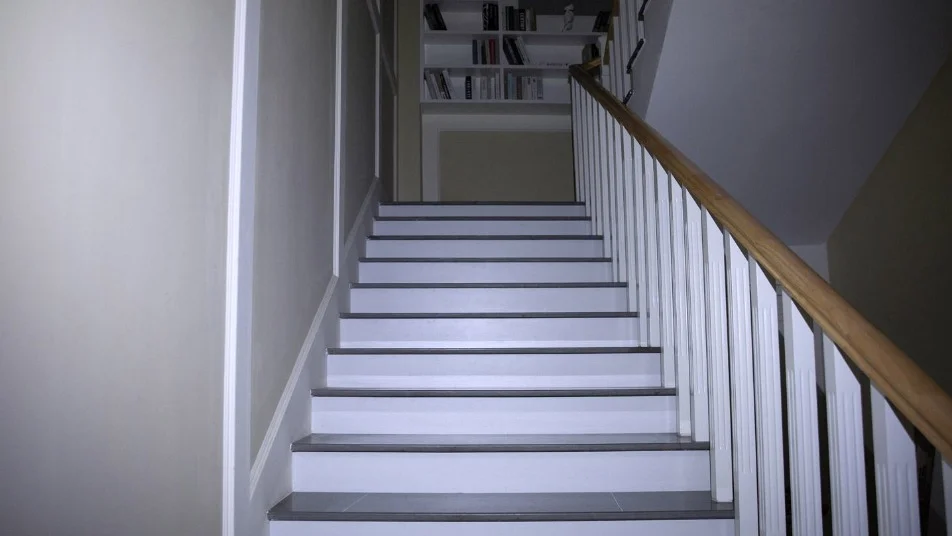
- Stairwells & Voids: Use a battery-powered floodlight with magnetic mounts or clamp bases attached to temporary stair guardrails, eliminating hazardous extension cords across steps.
What is the best work light for painting walls?
The best work light for painting walls is a high-CRI (Ra ≥90) rechargeable LED floodlight featuring adjustable color temperature (2700K–6000K) and tripod mounting capability. Models like the Olight Odiance are ideal because they deliver wide, glare-free illumination that can be angled parallel to plaster surfaces for effective raking light inspections.
Do LED strips tear off paint?
Adhesive LED light strips can tear off drywall paper and paint topcoats if removed improperly. The strong pressure-sensitive adhesive bonds tightly to wall surfaces; removing strips without applying gentle heat with a hair dryer frequently peels fresh primer or paint. Professional painters prefer stand-mounted or magnetic work lights instead of adhesive strips for surface inspection.
Can surface light be used on a wall?
Yes, surface-mounted lights and low-angle raking lights are specifically designed to illuminate wall faces for inspection and aesthetic wash effects. When checking plaster smooth coats or paint finishes, positioning a portable surface floodlight close to the wall edge casts directional light across the surface, making minor ridges and hollows instantly visible.
10. Frequently Asked Questions (FAQ)
Last Updated: September 2026. Published with wall sanding raking light field comparisons, CCT Kelvin defect visibility assessments, and AS/NZS 2589 plaster inspection guidelines.
What work light setup do you use for plaster sanding and wall inspections?