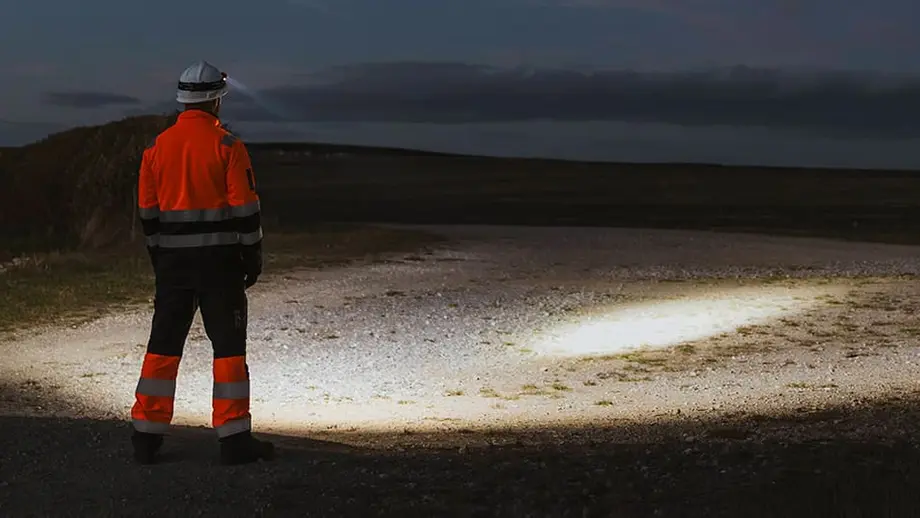
Choose walking lights by where the beam needs to point. Carry an ArkTac or ArkPro if you want to aim by hand. Clip an Oclip 2 Pro to a firm pack strap when the beam can stay aimed ahead. Wear a Perun X when you need light to follow your gaze and both hands to stay free.
| Route or task | Light to start with | How to carry or aim it | Backup to keep within reach |
|---|---|---|---|
| Dog lead in one hand, other hand available | ArkTac white flood for kerbs and picking up after the dog | Aim by hand beside the lead and towards the ground. Put it away before using both hands. | A small light clipped to a firm pocket if you regularly need both hands |
| Commute with a backpack | Oclip 2 Pro low white light on a firm strap | Clip, rotate, then tilt down. Recheck the beam after putting on the pack. | A slim hand torch in an accessible pocket if the strap twists |
| Uneven track or two-handed camp set-up | Perun X white flood in its headband | Tilt down for footing and level the beam for the immediate job. Keep it down when passing others. | A charged hand torch in a pocket for switching lights without taking off the pack |
| Lit footpath with occasional dark steps or keyholes | ArkPro low white flood | Carry flat in a pocket and take it out at the part of the route that needs light. | Reflective clothing for visibility and a charged second light for a long or isolated return |
Start with your hands and where the beam needs to land
The right walking light keeps the patch of path you need lit while your hands do their usual jobs. Grip the lead with the hand you normally use, put on your pack or pick up the gear you usually carry. Now walk a few steps. If your free hand can aim without changing your stride, a hand torch gives you the most direct control. If your hands will be occupied for the whole stretch, start with a wearable light.
The ArkTac suits stops and starts. Its separately selectable white flood and white spot give you a choice between a broad patch near your shoes and a smaller pool of light farther ahead. Start with a low white flood for residential footpaths and raise it as needed to see the ground. When you stop to deal with the lead, you can move the light to the verge without sweeping it into another walker’s face.

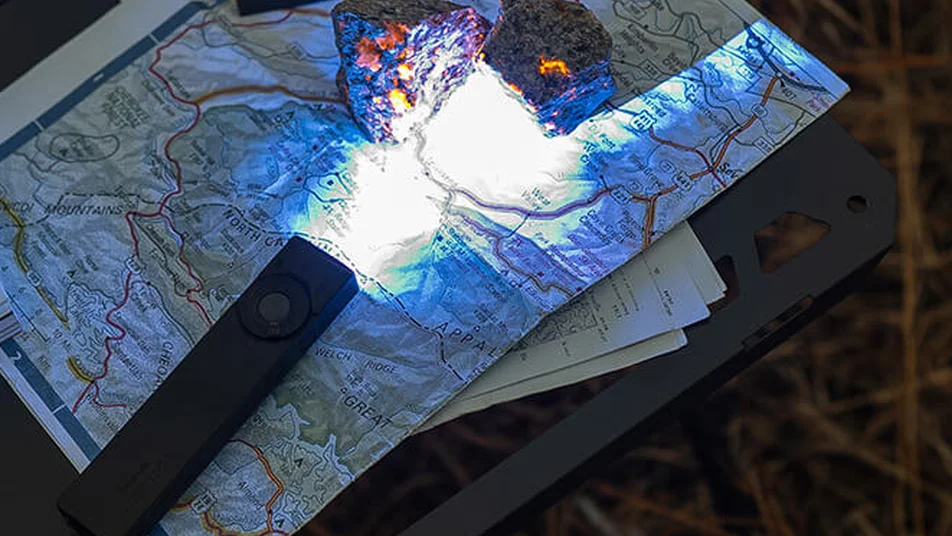
Olight lists separately selectable white flood and spot, plus red and UV sources and USB-C charging. White flood is the useful starting mode for short walking and close tasks.
View ArkTacThink of the last few metres of a dog walk. You may want the beam on a dropped tag, then off while you untangle the lead. A hand-aimed beam is flexible while one hand is available. If you keep wedging the torch under an arm to do the job, that repeated movement is a better reason to add a clip light than any headline lumen number.

When a flat rechargeable torch is easier to carry
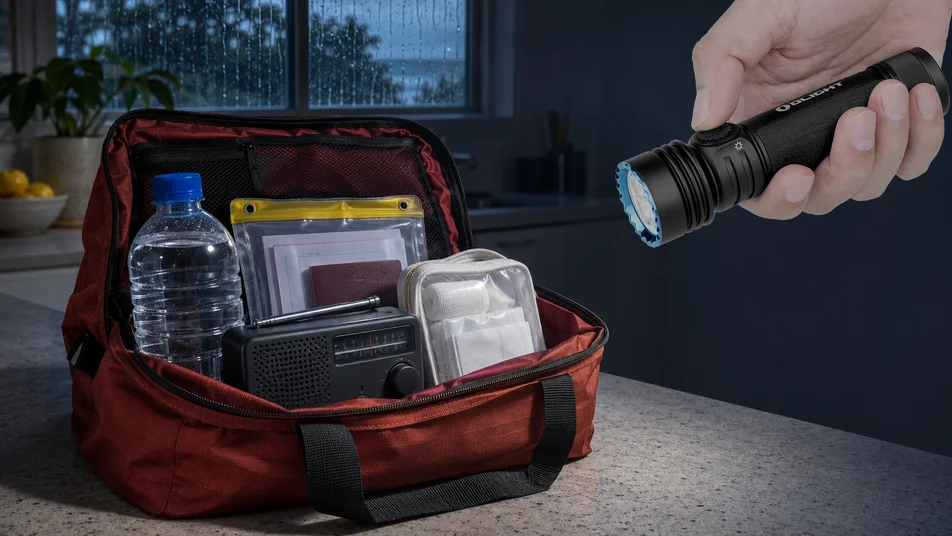
Choose the ArkPro for a mostly lit walk where the torch lives in your pocket between short jobs. Its flat unibody lies low against the pocket lining. Try it in the pocket you actually use with your keys and phone. The practical question is whether you can get it out before the unlit steps, then put it away without rearranging your gear.

Olight specifies a built-in 2,000 mAh battery, USB-C and magnetic charging, and IPX7 water resistance. Treat the charging options as two ways to recharge the same battery.
View ArkProCompare working-mode runtime after you pick the beam you will leave on. Look up the continuous white flood or spot level in the exact model’s manual, and read every segment of a stepped runtime. A short high-output segment followed by lower output is only useful for the whole route if the lower level still shows the path. A larger mAh figure alone cannot answer that question across two torches.

Clip, stick or hang an Oclip 2 Pro where the mounting point works
The Oclip 2 Pro is the Oclip 2-series model for a stable pack strap that points the wrong way. The head tilts through 115° and the clip rotates through 360°. The pack strap can stay where it feels comfortable while you aim a low white beam at the next stretch of footpath. Put the bag on and walk a few steps before settling on the angle.

Olight lists a 115° tilting head, 360° rotating clip, and white flood, spot and red lighting. A firm pack strap is the starting mount for a walk.
View Oclip 2 ProThe clip opens up to 14 mm according to Olight. A padded edge can still be too thick or compress unevenly, so tug the light gently and check for movement before walking. The base and clip magnets can hold to a compatible ferromagnetic surface during a stationary job. A magnet may hold on a steel shelf but slip on its edge, and plastic or aluminium offers no magnetic hold. A secure hanging point works for lighting a small area in camp. A swinging mount makes precise aim harder.

Use the Perun X when the beam needs to follow your eyes
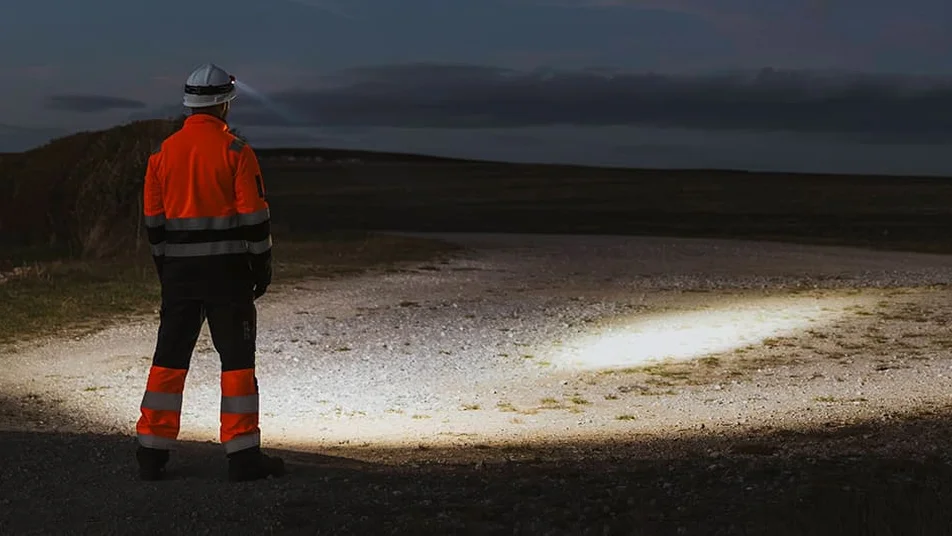
Pick the Perun X for a darker track, dog walk or camp set-up where both hands stay occupied. Its headband aims with your gaze as you look down to check a step or look up to find the gate. Set the angle while standing on level ground, then look straight ahead and make sure the beam lands low enough when someone approaches.

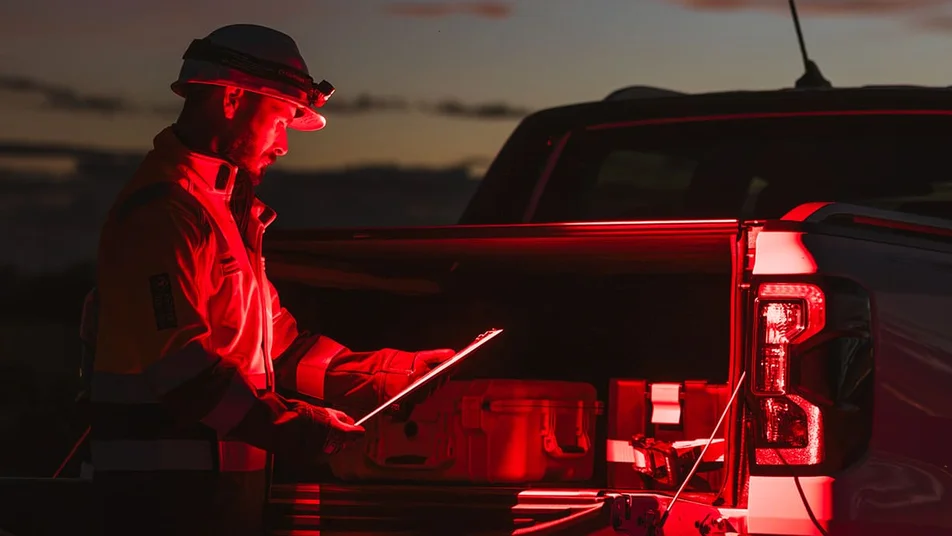
Olight lists a quick-release headband mount, white spot, white flood and red sources, and USB-C charging. Detach the right-angle light when the task needs a beam held in one place.
View Perun XUse the quick release once you’ve stopped and have a secure place to put the band. Then hold the light in your hand, clip it where it won’t twist, or set the magnetic base on a stable steel surface if the job calls for a fixed beam. Hang it only from a secure attachment for a stationary job. Put it back in the bracket and check the fit before resuming the walk.

When to choose ArkPro, ArkTac, a clip or a headband
On a well-lit route, take the ArkPro if comfort in the pocket is the main constraint. Choose ArkTac if you will actively aim from nearby objects to farther ones and want its separate white flood and spot. With either light, the beam moves with your hand. That helps when checking a gutter or number on a gate, but gives you one fewer hand to deal with a bag and a lead.
Choose Oclip 2 Pro when the beam can stay pointed ahead from a firm mount. Choose Perun X when you need the beam to turn with your head. Compare all four in the same task: aim a steady white beam at the same patch of path with each light on a usable setting. Ask whether you can keep the useful patch in view while walking, looking sideways and stopping. Then compare run times at the respective working settings.
Try the setup on a summer commute, in the garage or at camp
On a summer evening commute, clip the Oclip 2 Pro to the pack before leaving the house. Aim down and check that opening your bag does not rotate the strap. On a lead walk through a residential street, use the ArkTac in low white flood for the darker sections and lower it near driveways and oncoming walkers. Use lit footpaths and crossings when available. A torch helps you see and be seen, and bright or reflective clothing helps others see you from more than one angle. (Source: Transport Victoria, pedestrians sharing roads and paths)
At a car campsite, a Perun X headband keeps your hands available while you sort gear. Once you stop at a table or workbench, the Oclip 2 Pro can sit at a fixed angle or the Perun X can come off the headband and onto a secure steel surface. In a garage, test the magnet on the empty shelf first and tug it before moving gear beneath it.
What the specs do and do not tell you
A maximum lumen figure says little about comfort or whether a beam hits the ground where you need it. The headline beam distance is a manufacturer rating, separate from how far you can recognise a kerb edge or a dark dog on a particular path. Rain, glare from signs and the direction of the beam all matter. When you need continuous light to get home, check battery charge and the usable sustained setting.
The ArkPro’s IPX7 rating is a water-ingress rating under specified conditions. It does not establish dust resistance, grip on a wet strap or charging safety with a wet connector. Check the fit and keep the charge point dry. The ACCC recommends compatible charging equipment and a dry, hard charging surface. (Source: ACCC Product Safety, lithium-ion batteries guide)
Set up the mount, charging lead and spare before leaving
Use a headband that holds when you look down or turn. For the clip light, test a firm strap with the same load you carry on the walk. For a pocket torch, try the actual pocket and keep the controls easy to reach. If your route has a long dark section, keep a charged spare where you can reach it even if the main lamp goes out.
For a car-camp weekend, pack the compatible charging lead where it will stay dry. For a single evening walk, charge at home first and learn the control that selects a low white mode. If the route can be walked safely in street lighting, consider whether reflective clothing and your current torch already cover the task.
Choose a main light, a different mount or keep your current setup
Start with the task that takes the longest. If yours is a dark walk with both hands busy, make the Perun X your main light. If a solid pack strap can keep the beam on the right patch of ground, choose the Oclip 2 Pro. For quick, hand-aimed checks, choose ArkTac for the flood-and-spot workflow or ArkPro for a torch that spends most of the walk in your pocket.
Keep the light you already carry if it stays comfortable, holds its aim and lasts for the full dark stretch at the level you use. If it fails one of these checks, change the part that fails first. If it is the carry fit, compare pocket torches using the pocket you wear most days. For beam or mounting differences, compare rechargeable torch options by the task you do most often.
Frequently asked questions
Is a clip torch or a head torch better for walking the dog?
Use a clip torch if a firm strap keeps a low beam on the path while your hands handle the lead. Choose a head torch when the beam must follow where you look, especially on an uneven track. Aim either light down around others.
Can a pocket torch cover a mostly lit evening commute?
Yes. Use a pocket torch for short stretches such as unlit steps, a gate or a garage entry. Keep the light in a pocket you can reach quickly, and use reflective clothing when visibility is low.
What runtime should I look for in a walking light?
Allow for the entire dark part of the walk, including your return and a buffer for delays. Check the manufacturer’s runtime at the white mode you can actually walk with. Count a stepped-down level only if it remains useful for your route.