| What CNET found | What to check at home | What it means for your choice |
|---|---|---|
| UV revealed marks from hairballs and spills that looked clean. | Check a suspected spot against a nearby patch of the same surface. | The UV mode is worth having if hidden marks keep sending you back over the same areas. |
| A flat body, two white beams and Moonlight suit several tasks. | Decide whether you’ll also carry the torch for your evening dog walk. | The case for the Ultra is stronger when one torch handles both jobs. |
| Controls took practice and the brightest settings could scorch materials. | Try the selector and a low white setting before using the torch around pets. | A simpler two-mode torch is easier to pick up for occasional checks. |
What did CNET find with the ArkPro Ultra?
CNET rated the ArkPro Ultra 8.5 out of 10 and it was the only torch among the 15 picks in the US roundup updated on 27 October 2026. Lacoma used the UV mode after cleaning up cat hairballs and other spills. It made some marks easier to see that he’d thought were gone. He suggests using the torch alongside a vacuum or another cleaning method so you can find an area and then deal with it.
The review highlights the sturdy aluminium construction, flat body under 127 mm, two white beams, UV mode, brightness and battery indicators, Moonlight and a magnetic lead that can connect to a power bank. Lacoma also flags a learning curve, possible errors in the instructions he consulted and the risk of scorching materials at higher brightness. These observations come from a US editorial review. Use the Australian listing to check your configuration. (CNET, Tyler Lacoma’s review)
Why the 365 nm UV mode earns its place at home
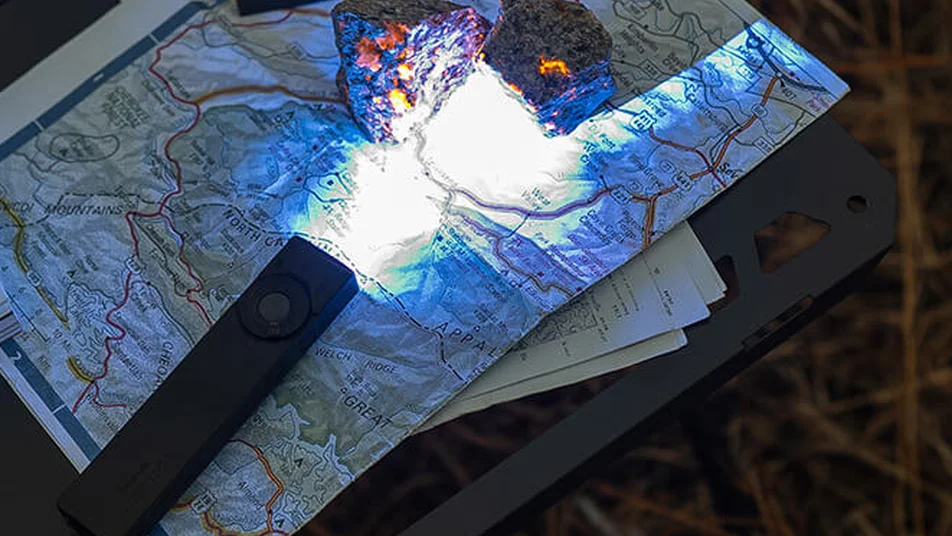
Start with the UV mode on the ArkPro Ultra when you know roughly where the spill happened but can’t make out its edges. The wavelength describes the UV source. The 1,700-lumen figure describes the brightest white flood setting and tells you nothing about what will fluoresce. Choose UV in a dim room and then look at the same area in white light to see the texture and shape of the mark.

Use 365 nm UV on a spot you want to check again. Turn the selector to the wide white beam for the path or the distant spot for a gate.
View the series and select ArkPro UltraA rug can fluoresce differently where the pile is worn, where fibres change colour or where the backing comes through. On floorboards, compare the suspect section with a nearby board with the same finish. Around a tiled feeding station, look at the grout and the tile separately. Fluorescence across a whole run of grout may follow the material. A patch crossing the joint in one place suggests it’s worth a second look.
A black light helps narrow the area. The IICRC notes that some urine marks may fail to fluoresce and that a treated patch of carpet can still glow after cleaning. A brighter patch alone cannot identify a substance or tell you whether to clean again. Use the pattern, location and ordinary-light check together. (IICRC, Animal Stains and Odors)
| What you see | Possible explanation | Next check |
|---|---|---|
| A local patch beside the bowl or pet bed | Dried residue or a mark left by a previous clean | Switch to white light and compare with the adjacent surface. |
| A regular glow along the fabric or stitching | The fibre, finish or previous treatment may fluoresce consistently | Check another section of the same rug or upholstery. |
| A treated carpet patch still glows | Some residues can continue to fluoresce after cleaning | Check the carpet dry in white light before repeating a treatment. |
| An area smells but shows no glow | Some spots are hard to see under UV or lie below the surface | Check care guidance and the underside if the material can be safely lifted. |

A short check before a routine inspection or end-of-lease clean
Walk through in daylight first. Start where the water bowl sits, then check the runner between the back door and living room and the skirting near your pet’s bed. At the end of a lease, lift your own rugs and pet mats so you can see the floor beneath. Leave the rest of the room until you’ve checked those likely spots.
After the cleaned surface is dry, dim the room and work across each area in short passes with the UV directed down. Compare any mark with a similar nearby patch. Switch back to white light, note where any deposit or discolouration actually appears and follow the surface maker’s care instructions. Follow up with a vet if repeated accidents are a change in your pet’s habits.
For an exit inspection, compare visible marks with the condition report and entry photos. NSW uses the condition report to help assess fair wear and tear and possible damage at the end of a tenancy. Residents elsewhere can check their state or territory’s process. Save daylight photos of the condition as well as your own notes. A private UV check can guide your attention even when a mark has no clear origin. (NSW Government, Rental property condition reports)
How the Ultra works on a warm evening dog walk
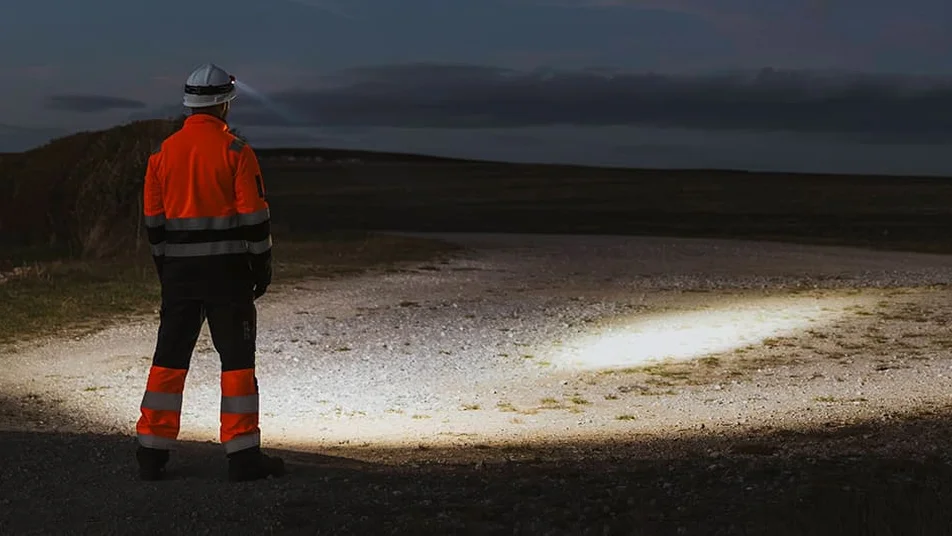
The white flood beam on the ArkPro Ultra lights the verge and your feet when your dog stops suddenly. The spot beam helps check a gate or the turn ahead on an unlit path. Olight lists up to 1,700 lm for flood and 800 lm for spot, with up to 205 m rated for spot. For a short suburban walk, start low and aim down, especially near other walkers, dogs and traffic.
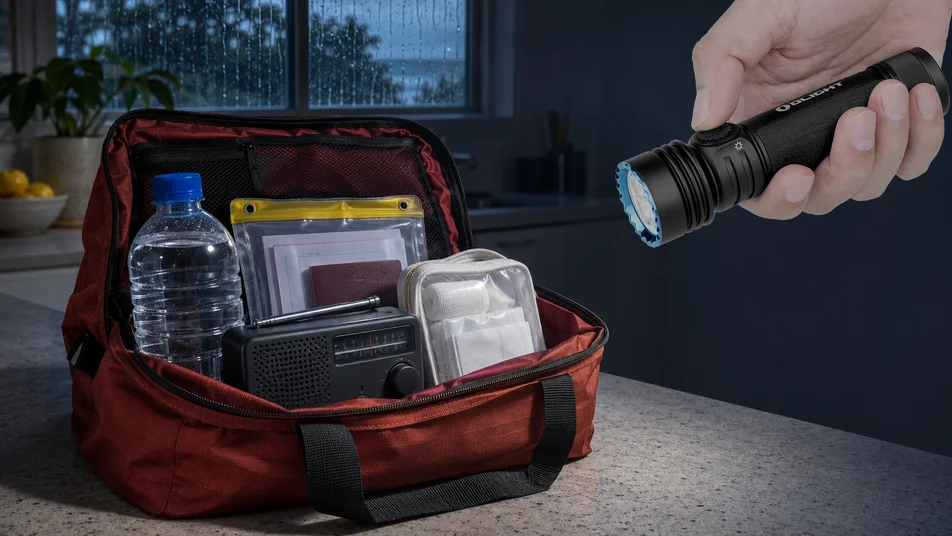
At home, use Moonlight when you want to find a lead beside the door without lighting up the room. Learn the selector before you leave. Check the battery indicator while there’s still daylight and clip the torch where you can reach it without rummaging. At home, use USB-C or the MCC magnetic lead. If you pack the latter for a trip, match its plug to the power bank you’re taking.
For most of a walk, the medium or low setting gives you a better buying comparison than Turbo. The ArkPro Ultra manual lists the full 1,700 lm for about three minutes before the flood drops to 520 lm under the stated conditions. Think of that extra light as a short check across a dark open area. If you spend most of the evening on lit footpaths, base your choice on how easily you can reach and change the lower settings.

Leave the green beam off around animals. Keep both UV and laser light away from eyes and out of children’s hands. ARPANSA warns against directing lasers at people, animals or vehicles. Check the device label and your state or territory rules before buying or carrying a laser-equipped version. Let the torch cool before stowing it after high-output use and keep the lens away from fabric and other flammable materials. (ARPANSA, Laser hazards and safety)
Which torch makes sense for your household?
Choose the ArkPro Ultra if you can name two jobs you’ll use it for every week, such as checking underneath the runner after a spill and seeing the footpath after dark. Its combination of white flood, spot and UV is the reason to move it between the kitchen and the jacket you take on walks.
The ArkPro is the alternative if you like that same spread of light but can do without the Ultra’s higher flood peak. Olight lists a 1,500 lm flood and 800 lm spot for the standard model. For routine indoor UV checks, buying the Ultra just for those extra 200 white-light lumens brings little benefit.

Its flood reaches 1,500 lm, according to Olight. It retains a focused white beam and 365 nm UV for a household that needs both.
View ArkProThe Arkfeld UV Sunburst has a simple white beam and a 365 nm UV source. Its smaller body and two-source selector make it a reference point for occasional checks if you already have a light for evening walks. Olight Australia lists this finish under discontinued products. If you already own it, give it a try on surfaces you want to check again.

Switch between 365 nm UV and white light that peaks at 1,000 lm according to Olight. The body is 15 mm thick.
View Arkfeld UV Sunburst| Model | White light maximum | UV | Body (L × W) | Best fit |
|---|---|---|---|---|
| ArkPro Ultra (select Ultra) | 1,700 lm flood and 800 lm spot | 365 nm | 124 × 27 mm | Regular clean-up checks plus evening walks |
| ArkPro | 1,500 lm flood and 800 lm spot | 365 nm | 124 × 27 mm | Same basic jobs with a lower flood peak |
| Arkfeld UV Sunburst | 1,000 lm, single white beam | 365 nm | 110 × 25 mm | Occasional UV checks with simpler controls |
Olight’s maximum output figures and body dimensions from the product and series manuals.
If you can already see recurring marks in daylight and your current torch works for the walk, keep what you have. If you want one light for both jobs, ArkPro Ultra and confirm ArkPro Ultra is the selected model. For help choosing a dedicated wavelength, read Olight’s guide to black light torches.
Common questions
Can a UV torch confirm a pet urine stain?
UV can highlight a patch for closer inspection. Cleaned fibres or other material can also glow, and some urine marks are hard to see under UV. Compare with the same surface nearby and check again in white light.
When is the ArkPro Ultra worth buying over ArkPro?
The Ultra makes most sense when you’ll use its higher flood peak as well as the spot and UV. If you want the same basic functions and mainly use low white output indoors, the 1,500 lm standard ArkPro is a reasonable alternative.
Which mode should I use for walking my dog?
Use a low or medium white flood aimed ahead of your feet on shared paths. Switch to the white spot for a distant turn or gate when the path is clear. Save the UV mode for surface checks indoors and leave the laser off around animals.