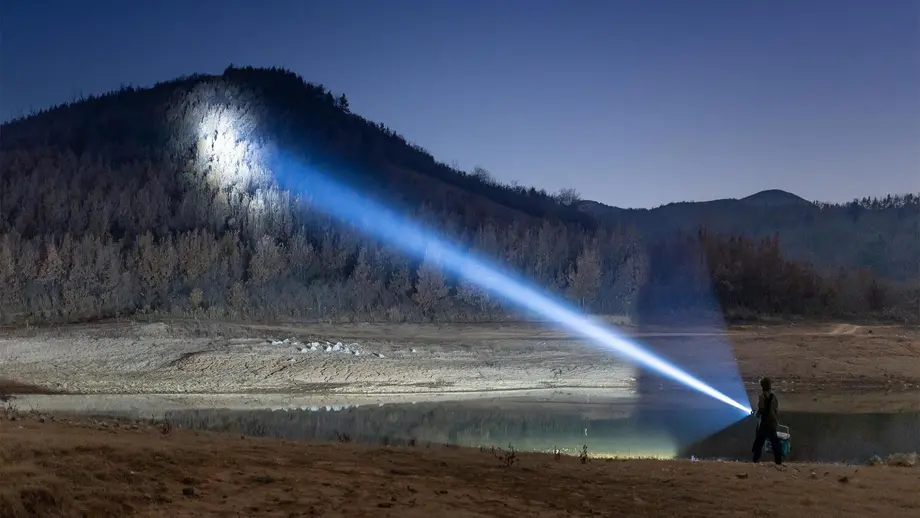
When purchasing a high-performance flashlight, users often focus exclusively on the lumen count. However, brightness alone does not determine how a light performs in the field. Understanding the relationship between Lumens vs Candela is essential for selecting a tool that matches specific environmental needs, whether you are navigating the Australian bush or performing a search and rescue operation.
This technical comparison breaks down the fundamental physics of light measurement and how these metrics influence real-world visibility and beam performance.
Table of Contents
Lumens vs Candela: What’s the Difference?
To understand Lumens vs Candela, one must distinguish between the quantity of light produced and the intensity of that light in a specific direction. These two metrics serve different purposes in lighting design and user application.
Total Light Output vs Beam Intensity
Lumens measure the total amount of visible light emitted by a source in all directions. If you think of a flashlight as a water hose, lumens represent the total volume of water flowing through the pipe. A higher lumen count means the LED is producing more light energy. This metric is critical for understanding the overall "power" of the flashlight.
Candela, on the other hand, measures luminous intensity. It describes how much light is concentrated into a single point or direction. Using the water hose analogy, candela represents the pressure of the water stream. If you restrict the nozzle, the volume (lumens) remains the same, but the pressure (candela) increases, allowing the stream to reach further.
Wide Beam vs Focused Beam
The interaction between these two measurements defines the beam profile:
- High Lumens + Low Candela: This combination produces a "flood" beam. The light is abundant but spreads out quickly, illuminating a wide area directly in front of the user. It is ideal for close-range tasks where peripheral vision is more important than distance.

- Moderate Lumens + High Candela: This creates a "throw" or "spotlight" beam. Even with fewer total lumens, a high candela rating ensures the light is tightly focused, allowing it to punch through the darkness and illuminate distant objects.

Real-World Comparison Example
Consider two different lighting scenarios:
1. The Flood Flashlight: An outdoor enthusiast uses a 2,000-lumen lantern with low candela to light up a campsite. The light fills the entire clearing, allowing everyone to see their immediate surroundings, but it cannot reveal a trail marker 200 meters away.

2. The Throw Flashlight: A hunter uses a 500-lumen dedicated spotlight with extremely high candela. While it does not light up the entire campsite, the concentrated beam can pinpoint an animal in the distance that the 2,000-lumen lantern would never reach.
How Lumens and Candela Work Together
While Lumens vs Candela are distinct measurements, they work in tandem to create the functional beam of a flashlight. The physical design of the flashlight determines how the lumens are converted into candela.
Beam Pattern and Optics
The primary factor influencing the balance between lumens and candela is the optical system, which consists of the reflector and the lens.
- Reflector Design: A deep, smooth reflector captures more light from the LED and focuses it into a tight beam, increasing candela. Conversely, a shallow or textured "orange peel" reflector scatters the light, increasing the flood effect and lowering candela.
- Lens Shape and Beam Focus: Total Internal Reflection (TIR) lenses are increasingly popular in modern flashlights. They allow for more precise control over the beam, often creating a clean hotspot for distance while maintaining enough "spill" for peripheral visibility.
Throw Distance and the ANSI FL1 Standard
Candela is the mathematical basis for determining the "beam distance" or "throw" of a flashlight. According to the ANSI/PLATO FL1 standard, beam distance is calculated by taking the square root of the candela rating, multiplying it by four, and expressing the result in meters.
The standard defines the end of the "useful" beam as the point where the light intensity drops to 0.25 lux. For context, 0.25 lux is roughly the amount of light provided by a full moon on a clear night. Therefore, a flashlight with a high candela rating will always have a longer rated throw distance, regardless of its total lumen output.
Choosing the Right Lumens and Candela for Your Needs
The "best" flashlight is not the one with the highest numbers, but the one with the right balance for your specific activity.
Everyday Carry (EDC) Flashlights
For EDC use, a balance of lumens and candela is preferred. You need enough lumens to see your path and enough candela to look across a dark parking lot. A versatile example is the Oclip Pro Compact Led Clip Light, which provides different modes to suit varying needs.

The Oclip Pro Compact Led Clip Light demonstrates the importance of choice; its floodlight mode provides broad coverage, while its spotlight mode utilizes 3,600 candela to reach 120 meters.
Camping and Outdoor Use
When hiking or setting up camp, high lumens are generally more beneficial. A broad beam allows you to see tripping hazards and provides a more natural viewing experience. For these tasks, look for lights with a wide beam angle and moderate candela.
Tactical and Search Applications
For search and rescue or tactical operations, high candela is non-negotiable. Professionals need to "out-throw" ambient light or smoke and identify targets at long distances. In these scenarios, a light with 50,000+ candela is often required, even if the lumen count is relatively modest.
Work Lights and Utility Lighting
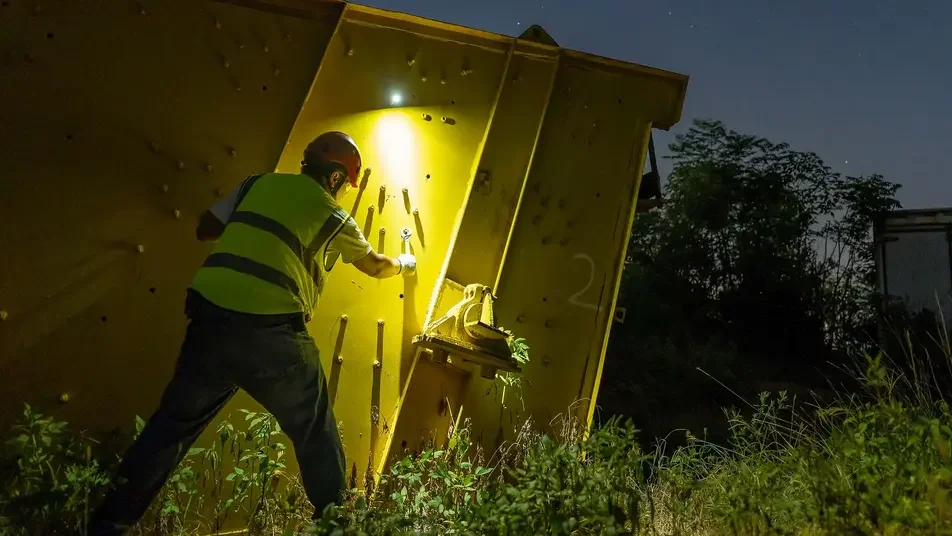
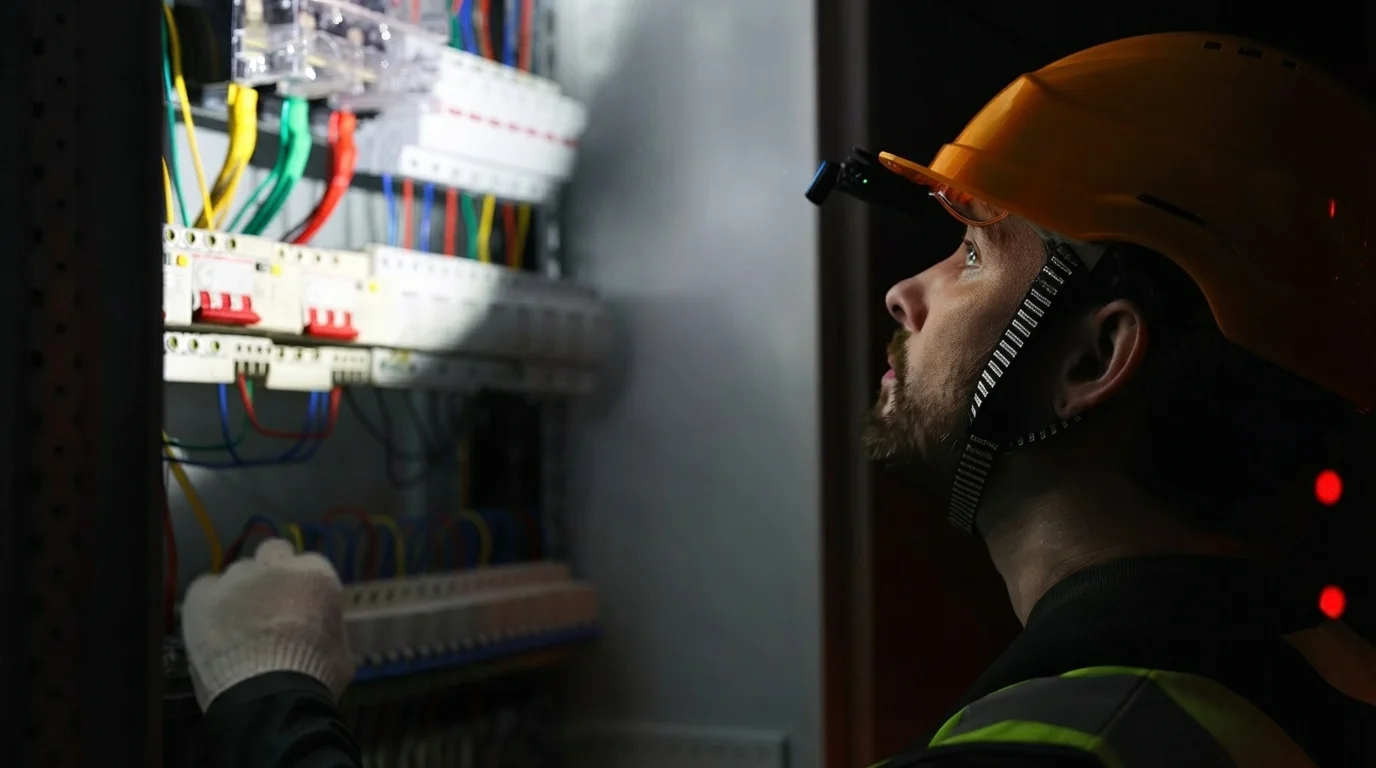
Mechanics and tradespeople require utility lighting. Here, high lumens combined with very low candela are optimal. The goal is to eliminate shadows and provide uniform light over a work surface without a blinding "hotspot" reflecting off tools or parts.

Common Misconceptions About Lumens and Candela
Understanding Lumens vs Candela helps debunk several common myths that lead to poor purchasing decisions.
Higher Lumens Doesn’t Always Mean Better
A 5,000-lumen flashlight might sound impressive, but if it has low candela, it will be useless for seeing across a field. Conversely, a 500-lumen light with high candela will easily illuminate a distant object. More lumens often mean more heat and shorter battery life, so "over-speccing" lumens can actually be a disadvantage.
Beam Distance Depends on Candela
Many manufacturers list beam distance on the packaging. This number is derived directly from candela. If you need to see 300 meters away, do not look at the lumens; look at the candela rating and the ANSI throw distance.
Why Both Metrics Matter When Choosing a Flashlight
Total light (lumens) and peak intensity (candela) define the "shape" of the light. A quality manufacturer provides both specifications so the user can visualize the beam. A high-lumen, high-candela light is a "powerhouse" but is usually large and heavy. A low-lumen, low-candela light is a "keychain" light. Finding your "sweet spot" in between is the key to a successful purchase.
Frequently Asked Questions (FAQ)
Is lumens or candela more important for a flashlight?
Neither is universally more important; it depends on the task. Lumens are better for close-up, wide-area tasks. Candela is better for long-distance, focused tasks.
How many lumens are enough for everyday use?
For most people, 300 to 1,000 lumens is more than enough for daily tasks like walking the dog or searching for items in a dark garage.
What candela level is good for long-distance lighting?
For lighting objects beyond 100 meters, look for a light with at least 10,000 to 20,000 candela. Serious search lights often exceed 100,000 candela.
Can a flashlight have high lumens but low throw distance?
Yes. This is a "mule" or a pure floodlight. It will be incredibly bright up close but the light will dissipate rapidly, failing to reach even modest distances.