Table of Contents
02 Why Smart Battery Chargers are Essential in 2026
03 Key Features of Modern Smart Chargers
04 The Top Pick: Ostation 2 Series 3-in-1 Smart Battery Hub
05 Technical Specifications of Ostation 2
06 Other Top Charger Categories for Outdoor Use
Introduction
A dead battery is more than just an inconvenience when you are deep in the Australian bush or camping under the stars in the Outback. It is a gear failure that can stall your entire adventure. In 2026, the technology behind the Smart Battery Charger has evolved significantly. We no longer rely on "dumb" chargers that cook batteries until they degrade; today’s intelligent systems manage voltage precision, monitor real-time temperatures, and provide secure, high-capacity storage.
Whether you are powering high-drain GPS units, LED headlamps, or emergency satellite radios, choosing the right charging hub is the difference between a reliable power supply and a bag of dead weight. This guide reviews the best options available this year, focusing on charging efficiency, safety protocols, and practical utility for outdoor enthusiasts.
Why Smart Battery Chargers are Essential in 2026
Traditional chargers deliver a constant current regardless of the battery’s health or current charge level, which often leads to overheating and chemical breakdown. A modern Smart Battery Charger utilizes advanced integrated circuitry to communicate with the battery, offering several critical advantages for longevity and performance:
- •Prevention of Overcharging: Smart chargers automatically terminate the current once peak voltage is reached to protect cell integrity.
- •Heat Management: Excessive heat is the primary killer of Ni-MH and Li-ion cells. Built-in sensors adjust charging speeds to maintain safe temperature thresholds.
- •Pulse Charging Technology: Many top-tier chargers use pulse technology to break down sulfation in older batteries, effectively "reviving" neglected cells.
- •Enhanced Safety Protocols: Built-in protections prevent short circuits, reverse polarity (incorrect battery insertion), and potential fire hazards.

Key Features of Modern Smart Chargers
When selecting a Smart Battery Charger in 2026, look for these specific attributes to ensure you are investing in a future-proof device that maximizes your battery life:
- Multi-Chemistry Support: The versatility to charge both Ni-MH (standard rechargeable) and Li-ion (high-performance) batteries within a single unit.
- USB-C PD Input: Power Delivery (PD) compatibility allows you to utilize your existing laptop or phone chargers, significantly reducing cable clutter.
- Independent Charging Channels: Each slot should be individually monitored, allowing you to charge a nearly full AAA cell alongside a completely drained AA battery safely.
- Integrated Storage & Protection: Premium chargers now double as rugged storage cases, keeping cells organized and protected from moisture or accidental shorting.
The Top Pick: Ostation 2 Series 3-in-1 Smart Battery Hub
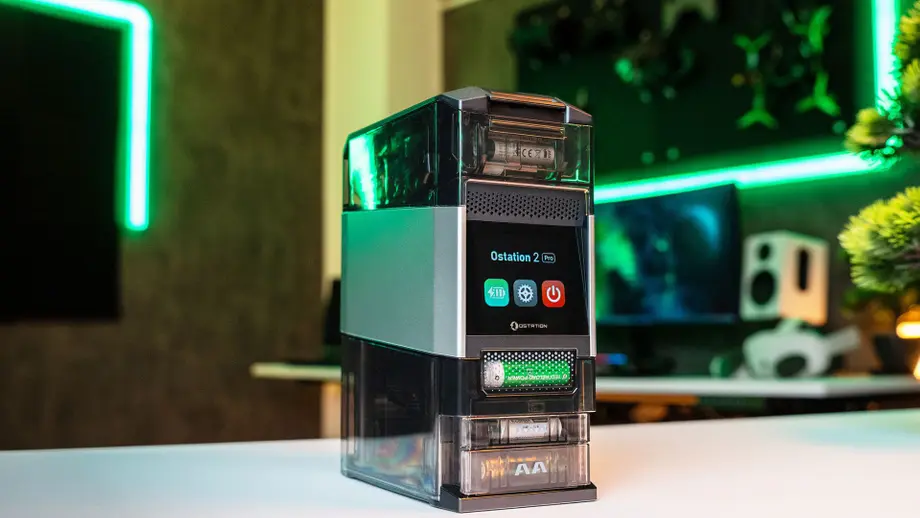
The standout performer for 2026 is the Ostation 2 Series. This device is more than just a charger; it is a comprehensive battery management system designed for power users. It effectively solves the two biggest headaches for outdoor enthusiasts: disorganized battery kits and sluggish charging speeds.
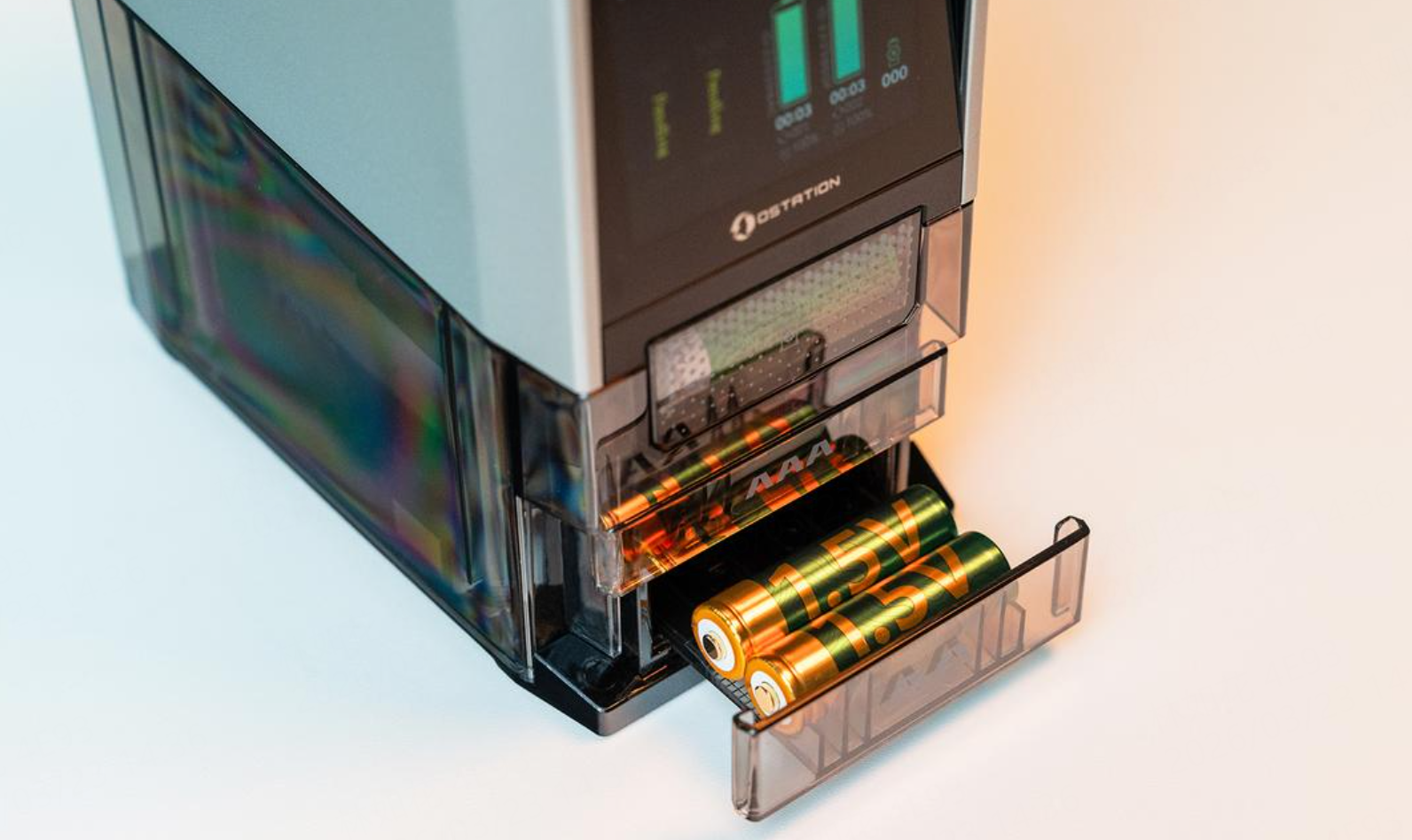
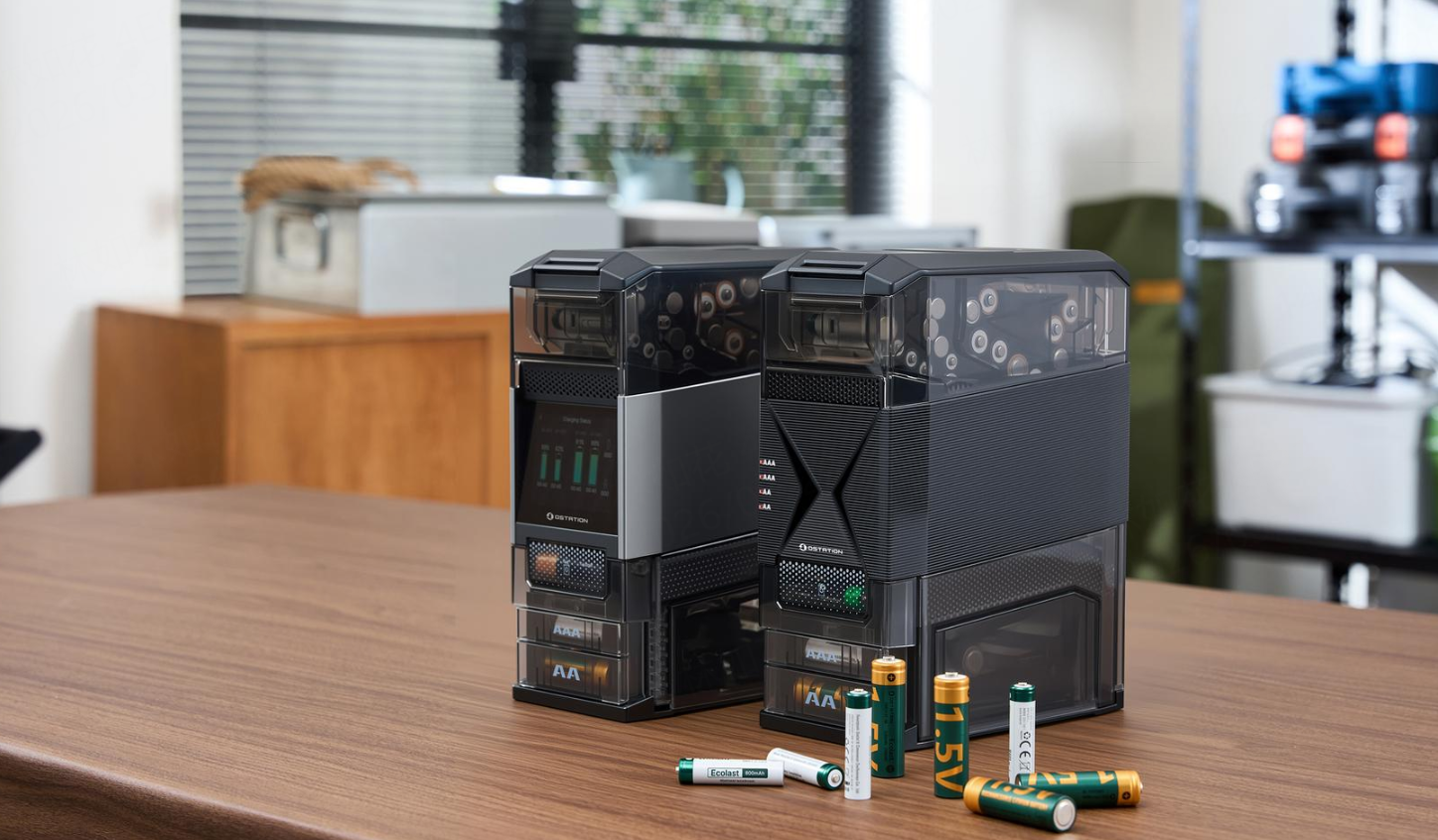
The Ostation 2 serves as a 3-in-1 hub that seamlessly handles charging, storage, and battery health testing. It features an impressive storage capacity, holding up to 12 AA and 12 AAA batteries simultaneously. Its vertical, compact design saves precious space in your gear bag while keeping batteries upright and ready for immediate deployment.
What sets this Smart Battery Charger apart is its full automation. It can charge two AA and two AAA batteries simultaneously using intelligent current distribution. For Ni-MH batteries, it optimizes the charge rate to prevent stress, while its compatibility with 1.5V Li-ion batteries (like the Ecolast series) ensures maximum versatility for modern high-tech gadgets.
Technical Specifications of Ostation 2
| Parameter | Specification |
|---|---|
| Max Charging Current (AAA NiMH) | 0.6A |
| Max Charging Current (AA Ni-MH) | 1.0A |
| Battery Size & Type | Ni-MH: AA & AAA; Li-ion: Ecolast 1.5V AA |
| Storage Capacity | 12 x AA + 12 x AAA |
| Simultaneous Charging | 2 x AA + 2 x AAA |
| Power Source | USB-C PD (PD 3.0 5.0V-2.0A) |
| Dimensions | 160 x 90 x 210 mm |
| Weight | 1.13 kg (2.49 lb) |
Other Top Charger Categories for Outdoor Use
While the Ostation 2 is the premier hub for organization and high-capacity management, different outdoor scenarios require specialized equipment. Here are the other smart charger categories dominating the market in 2026:
Ultra-Portable Travel Chargers
For minimalist backpackers where every gram counts, dual-slot USB chargers are the preferred choice. Look for models featuring magnetic plates or integrated silicone straps to keep batteries secure while charging inside a moving backpack.
High-Speed Field Chargers
Professional photographers and emergency response teams often require "Rapid" charging modes. These chargers push higher amperage (up to 3.0A) and must include robust active cooling systems to prevent thermal damage.
Solar-Optimized Chargers
Under the intense Australian sun, a Smart Battery Charger with a wide input voltage tolerance is essential. These units can handle the fluctuating power output of portable solar panels without resetting or damaging sensitive cells.

How to Extend Your Battery Life
Investing in a high-quality charger is only the first step. To maximize your rechargeable battery performance in harsh Australian climates, follow these expert tips:
- ✔Avoid Extreme Heat: Never leave chargers or batteries on a vehicle dashboard. Internal car temperatures can exceed 60°C, causing irreversible chemical damage.
- ✔Keep Pairs Matched: Use and charge the same pair of batteries together for their entire lifespan to ensure they discharge and recharge at a uniform rate.
- ✔Optimal Seasonal Storage: When storing gear, maintain batteries at a 50-70% charge level. Storing them completely flat can lead to "deep discharge" failure.
- ✔Maintain Clean Contacts: Periodically clean terminals with a microfiber cloth. Dust and oils increase electrical resistance, generating unnecessary heat.
Frequently Asked Questions
Can I charge AA and AAA batteries at the same time?
Yes, modern intelligent units like the Ostation 2 allow for simultaneous charging. Each slot is managed by an independent circuit, optimizing power delivery for each specific battery size and chemistry.
Is USB-C charging better than a standard wall plug?
USB-C PD is the modern gold standard. It offers superior versatility, allowing you to power your Smart Battery Charger from power banks, solar panels, or car adapters, while supporting sophisticated safety protocol communications.
Why do some batteries get hot while charging?
Mild warmth is normal during energy transfer. However, if a battery is too hot to touch, the charger has either failed to regulate the current or the battery cell is compromised. Smart chargers will automatically shut down if they detect unsafe temperatures.
Conclusion
Investing in a high-quality Smart Battery Charger is the most effective way to protect your expensive electronics. For Australian outdoor enthusiasts, the Ostation 2 Series offers an unmatched combination of organized storage and intelligent power management. It keeps your kit mission-ready and ensures that your power source is reliable when you need it most.
By choosing advanced, monitored charging systems, you extend gear lifespan, reduce environmental waste, and gain peace of mind. Whether you are preparing for a weekend bushwalk or a month-long expedition, make a smart charging hub the core of your essential electronic kit.