Quick Takeaway: Deploying two low-output, diffused fixtures clipped directly to corner trusses delivers superior coverage compared to swinging overhead lanterns. When selecting camping lights for gazebo setups, choosing magnetic mountings, warm amber spectrums below 3000K, and dedicated low-lumen perimeter peg illumination prevents storm damage, repels swarming insects, and eliminates severe nighttime tripping hazards across remote Australian campsites.
| Configuration Type | Wind Stability | Insect Impact | Primary Function |
|---|---|---|---|
| Dual Corner Magnetic Mount | Exceptional (zero pendulum swing) | Minimal when dimmed | Even dining and meal preparation illumination |
| Central Peak Suspension | Poor (violent oscillations in gusts) | High table-level drop rate | High-glare downward work light |
| Low-Level Perimeter Ground Peg Light | Maximum (flush with terrain) | Negligible (sub-lumen red output) | Guy rope safety marking and perimeter boundary |
| Perimeter Frame Strip System | Moderate (cable snag liability) | Moderate along truss channels | Broad decorative perimeter fill |
Setting up outdoor shelters across regional Australia involves navigating harsh environmental realities, including sudden afternoon squalls, dense airborne insect swarms, and treacherous guy wire tripping hazards. Installing dependable camping lights for gazebo structures requires moving away from fragile, high-glare central lamps toward robust, modular systems designed specifically for dynamic outdoor elements and wind-swept bush shelters.
Quick answer: two low, dimmable lanterns clipped to the frame beat one bright lamp swinging from the centre
Most campers instinctively hang a single high-output lantern directly from the apex of their canopy. While simple, suspended central fixtures create a severe pendulum effect during coastal breezes, casting harsh, sweeping shadows across plates, camping stoves, and camp tables. Suspending a single high-candela light source directly above communal seating also creates blinding glare that ruins peripheral night vision whenever campers look across the table.
The optimal tactical configuration utilizes two diffused, lower-lumen compact fixtures secured directly to opposing perimeter frame trusses. Splitting the luminous output provides cross-angled, shadow-free illumination that covers cooking surfaces evenly. Using adjustable camping lights for gazebo shelters allows campers to dim outputs during conversations, keeping illumination functional without washing out the night sky or attracting nocturnal wildlife into communal spaces.
Hanging options: clamps, magnets, hooks and the gazebo frame itself
Canopy frames sold across Australia typically utilize powder-coated steel or lightweight extruded aluminium. Understanding frame composition determines your mechanical attachment method. Standard open hooks or carabiners slide uncontrollably along diagonal struts when breezes lift the fabric roof, whereas specialized spring clamps and rubberized straps provide rigid, slip-resistant anchoring across varying tube profiles.
Direct magnetic attachment remains the cleanest and most versatile fastening method for modern best camping lights for gazebo configurations. Steel scissors trusses provide immediate contact points, while adhesive ferrous badges allow instant placement on aluminium uprights or ripstop canopy corners. Integrated rare-earth magnetic bases allow rapid light repositioning from upper horizontal rails to lower legs without detangling cumbersome suspension cords.

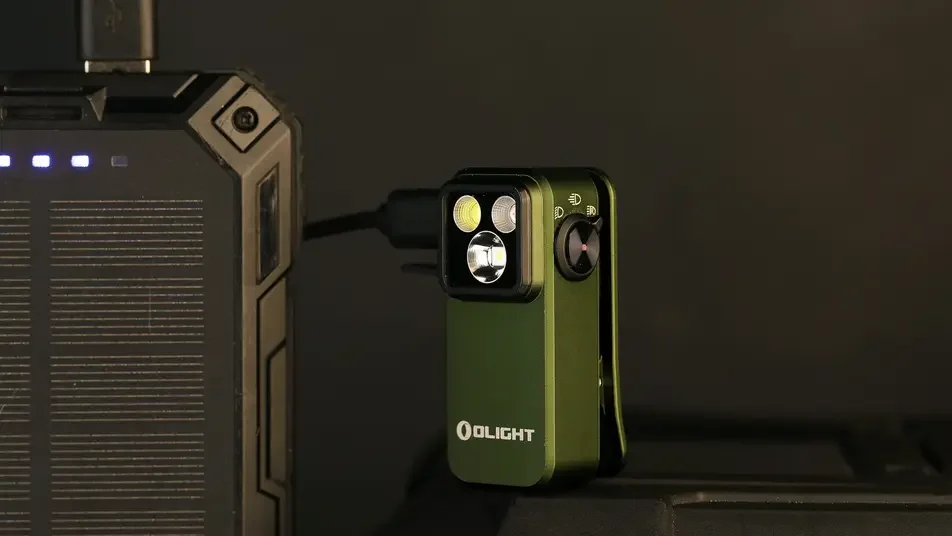
Olight Obulb Pro S
Equipped with a magnetic base and Bluetooth app control, this compact orb light delivers stepless dimming up to 240 lumens. Built with an IPX7 waterproof rating and 1.5-metre drop resistance, it serves as one of the most reliable Olight Obulb Pro S camping lights for gazebo deployments available for demanding Australian outdoor setups.
- Maximum output: 240 lumens with stepless brightness control
- Battery runtime: Up to 156 hours (0.8-lumen Low Mode)
- Durability rating: IPX7 waterproof and 1.5m impact resistance
- Mounting interface: Integrated base magnet with adhesive metal badge
When organizing functional workstations beneath a shelter, using modular camping lights for canopy corners prevents clutter. Combining low-profile magnetic spheres alongside structural framework members ensures that headroom remains completely clear, eliminating clumsy head collisions with hanging equipment when navigating around folding stretchers and camp furniture.

Olight Sphere Wireless Ambient Light
Featuring full spherical 360-degree illumination, intuitive group control, and protective red illumination modes, the Olight Sphere camping lights for gazebo system delivers 75 lumens of soft diffused light to eliminate glare beneath shade canopies.
- Maximum output: 75 lumens diffused spherical light
- Multicolour support: White light, night-vision red, and dynamic RGB
- Runtime performance: Up to 40 hours continuous use on Low
- Control method: Base switch and wireless smartphone app integration
What happens to hanging lights when a storm cell hits?
Severe afternoon squalls and sudden coastal "southerly busters" can generate violent gusts exceeding 60 km/h within minutes. When strong winds strike an open shelter, the canopy acts like an inverted parachute, creating violent updrafts and lateral shear forces. Suspended overhead lanterns transform instantly into heavy kinetic pendulums, battering against scissor trusses, cracking plastic housings, and puncturing thin polyurethane canopy roofs.
Emergency rescue agencies repeatedly emphasize that unsecured campsite items cause severe collateral damage and physical injuries during sudden storm emergencies. Heavy metal-cased lanterns swinging overhead present substantial impact risks to shelter occupants struggling to drop canopy legs or tension guy wires during high winds (Source: NSW State Emergency Service: Storm Safety Tips). Choosing low-profile, magnetically seated camping lights for gazebo hardware prevents heavy swinging impacts, keeping gear safely locked to structural steel tubing even during severe wind pressure spikes.
Furthermore, heavy water ingress during sudden downpours destroys standard budget flashlights. Selecting sealed, water-resistant camping lights for outside use rated to IPX7 standards guarantees continuous illumination when securing corner pegs in blinding rainstorms, preventing sudden campsite blackouts when clear visibility matters most.
Lighting guy ropes and pegs so nobody trips
Guy wires pegged into uneven terrain are responsible for a significant proportion of campsite injuries once dusk falls. Campers returning to their shelter after dark frequently catch boots on angled black polyester lines, leading to painful sprains, damaged canvas, or ripped eyelets that cause shelter collapses under nocturnal gusts.
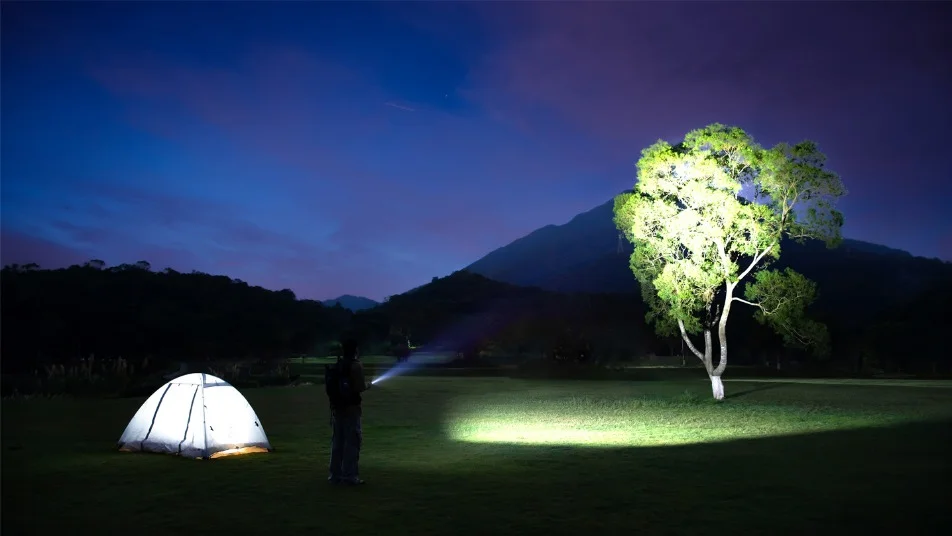
Parks authorities advocate clear hazard demarcation across multi-tent layouts to prevent personal injury and shelter structural failures (Source: Queensland Government Parks and Forests: Camping Safety Guidelines). Rather than running blinding floodlights that wash out the campsite, deploying compact ground markers with sub-lumen outputs or low-frequency red beacons marks anchor stakes visibly without creating light pollution. Placing dedicated camping lights for canopy corners directly over spring-loaded tensioners provides clear spatial awareness for family members and navigating visitors.
Utilizing durable miniature lanterns like the Obulb series affixed to peg heads establishes a clear pathway boundary. Because these compact lights feature long runtimes on moonlight modes, they mark hazardous guy lines continuously through the night while safeguarding natural night-adapted vision for anyone stepping outside the shelter.
How can you reduce moths landing in dinner?
Nothing disrupts an outdoor barbecue faster than clouds of midges, bogong moths, and beetles dive-bombing dinner plates. Nocturnal insects navigate primarily via transverse orientation relative to celestial light sources. High-temperature cool-white LEDs (5000K to 6500K) emit pronounced short-wavelength blue and ultraviolet spectrum energy, which strongly triggers positive insect phototaxis responses and draws swarms straight beneath your roof.
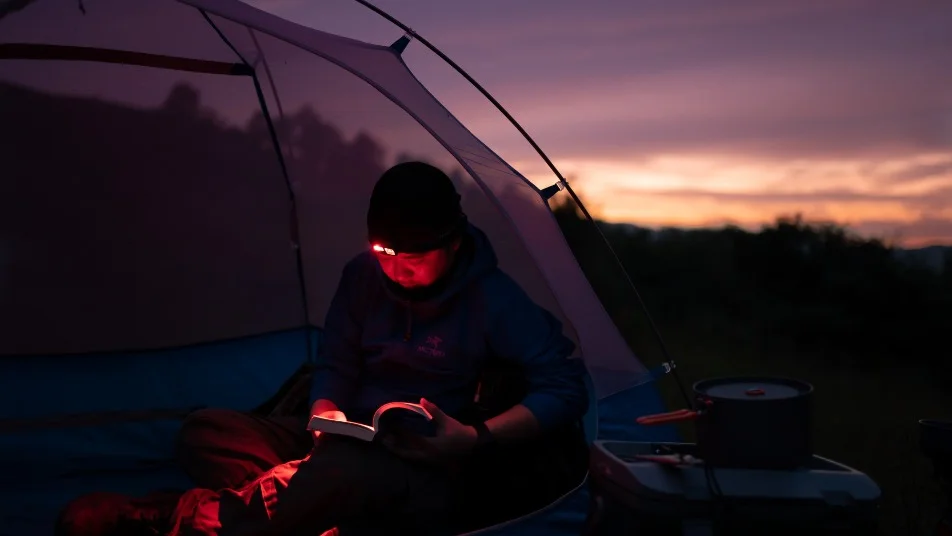
Entomological studies consistently reveal that nocturnal insects demonstrate peak visual sensitivity within UV and blue spectral bands, whereas longer wavelengths exhibit substantially lower attraction rates (Source: CSIRO: Why Insects Are Attracted to Lights). Switching camping lights for gazebo dining spaces to warm amber or dedicated red spectrum modes significantly minimizes swarm density around dining tables.
An effective campsite bug management tactic is the decoy light setup. Position a high-output, cool-white floodlight fifteen to twenty metres downwind from your shelter aimed at tree canopy foliage. Concurrently, maintain dim, warm-amber or red camping lights for gazebo communal tasks. Insects naturally track toward the high-energy decoy beam, leaving your dining space quiet and insect-free.
Runtime for long summer evenings under the gazebo
Australian summer evenings stretch late into the night, requiring continuous illumination from sunset until midnight across multi-day stays without 240V mains power. Running inefficient high-lumen floodlights drains portable 12V batteries rapidly, forcing campers to carry cumbersome dual-battery systems or noisy generators.
Efficient energy management relies on lumen discipline. Cooking requires around 50 to 100 lumens of diffused light, whereas casual dining and late-night conversation require only 5 to 15 lumens. Modern, dimmable camping lights for outside leisure deliver up to 156 hours of runtime on low settings from internal lithium-ion cells, enabling an entire week of evening illumination on a single pre-trip magnetic recharge.
Frequently asked questions
What is the best lighting for a gazebo?
The most effective setup uses two diffused, dimmable magnetic lanterns attached to opposing corner roof trusses rather than a single central light. Positioning warm or amber camping lights for gazebo corners produces even, glare-free cross illumination across tables while keeping light fixtures anchored firmly during sudden wind gusts.
How do I hang lights on my gazebo?
For steel-framed canopies, magnetic-base lights offer the most secure attachment without sliding during wind gusts. For aluminium structures, rubberized strap clamps, Velcro loops, or adhesive ferrous plates provide stable mounting points that eliminate fragile overhead string tangles and prevent fabric tears.
What is the best outdoor light for camping?
The best outdoor light combines an IPX7 waterproof rating, multiple colour temperature outputs including red or amber modes to deter insects, and an extended battery runtime. Versatile options like the Obulb Pro S offer hands-free magnetic mounting and stepless dimming for cooking, tent lighting, and perimeter marking.