Headline battery figures often mislead because manufacturers quote runtime on sub-lumen reserve modes while highlighting maximum output. To identify the best camping lantern australia reviews benchmark, evaluate endurance strictly between 100 and 200 usable lumens, check IP ingress ratings against tropical downpours, and ensure warm, glare-free optical diffusers preserve camp night vision.
| Model | Max Output | Usable Mid-Mode Runtime | Waterproof Rating | Weight | Primary Application |
|---|---|---|---|---|---|
| Olight Obulb Pro S | 240 lm | 2.5h (240 lm) / 156h (0.8 lm) | IPX7 | 105 g | Tent hanging & wet weather |
| Olight Sphere | 75 lm | 4.1h (High) / 40h (1 lm Low) | IP56 | 93 g | Table ambient & swag reading |
Finding reliable off-grid illumination across the Australian continent requires sorting through ambiguous specifications. When campers search for the best camping lantern australia reviews, they are frequently confronted with packaging claims advertising hundreds of hours of light. In reality, real-world utility depends on how equipment balances sustained lumen delivery, heat dissipation, weatherproofing, and campsite etiquette under rugged local conditions.
- Quick answer: compare runtime at a usable 100–200 lumens, not the headline number
- Runtime at which brightness? A table that makes lanterns comparable
- Why does a 1000-lumen lantern ruin a shared campsite?
- Diffuser quality and glare inside a tent
- Rain and storm season: reading IPX4 vs IPX7 on a lantern
- Hanging, standing and wind: stability checks for the review
- Frequently asked questions
Quick answer: compare runtime at a usable 100–200 lumens, not the headline number
A critical gap in everyday Olight Obulb Pro S best camping lantern australia reviews is the disconnect between advertised runtimes and actual work surfaces. A manufacturer may prominently advertise "100 hours of continuous runtime," but fine print reveals this test was conducted at 0.5 lumens. An ultra-low glow works for finding your swag zip at midnight, but it cannot illuminate a camp stove, prep food, or light up a camp table.
To establish valid camping lantern reviews australia metrics, readers must examine constant regulation curves within the 100 to 200 lumen bracket. This output range represents the practical sweet spot for group cooking and camp chores without blinding your companions. True testing reveals whether a compact battery pack maintains steady output via constant-current drivers or steps down drastically within fifteen minutes due to thermal throttling.
When reading an objective rechargeable camping lantern review, always assess battery watt-hours against discharge rates. A lantern utilizing an integrated lithium-ion cell must supply sufficient capacity to cover three to four hours of meal preparation on high settings, followed by several hours of low ambient reading light, before requiring a recharge via portable 12V or solar gear.
Runtime at which brightness? A table that makes lanterns comparable
Standardized ratings under ANSI/PLATO FL 1 dictate that total runtime is measured until output drops to a mere 10% of initial intensity. In the field, an LED that diminishes from 300 lumens down to 30 lumens over six hours has not provided six hours of functional cooking light. Rigorous field testing standardizes these output bands so buyers can compare models fairly.
| Output Bracket | Illumination Task | Obulb Pro S Performance | Sphere Performance |
|---|---|---|---|
| High Task (75–240 lm) | Vehicle repair, food prep | 240 lm / 2.5 hours | 75 lm / 250 mins combined |
| Ambient / Dining (10–15 lm) | Camp table dining, card games | 15 lm / 9 hours | Dynamic RGB / ~3 hours |
| Night Light (0.8–1 lm) | Tent orientation, midnight transit | 0.8 lm / 156 hours (6.5 days) | 1 lm / 40 hours |
By evaluating the realistic runtime table, anyone assessing the best camping lantern australia reviews can match their off-grid duration against battery capacities. The ANSI testing standard highlights why reading full discharge curves matters more than single numerical marketing claims. (Source: ANSI/PLATO FL 1-2019 Standard)

- Maximum output: 240 lumens with stepless smooth dimming
- Runtime: Up to 156 hours (6.5 days) on low setting (0.8 lm)
- Durability: Submersible IPX7 waterproof and 1.5m drop tested
- Charging: Fast 3-hour magnetic charging via MCC cable
Why does a 1000-lumen lantern ruin a shared campsite?
A trend among budget camp lanterns is the lumen arms race. Shoppers assume a 1000-lumen lantern must be superior to a 200-lumen alternative. However, deploying an unshaded 1000-lumen industrial flood inside a shared campground creates significant light pollution and causes instant dark-adaptation blindness for everyone in your vicinity.
When human eyes adapt to nocturnal conditions, rhodopsin accumulates in retinal rods, granting night vision. An intense, cool-white light source wipes out night adaptation instantly, taking up to thirty minutes to recover. Australia's state conservation bodies actively advise campers to keep lighting subdued to minimise ecological disruption and respect fellow bushwalkers. (Source: Parks Victoria Bush Camping Regulations)
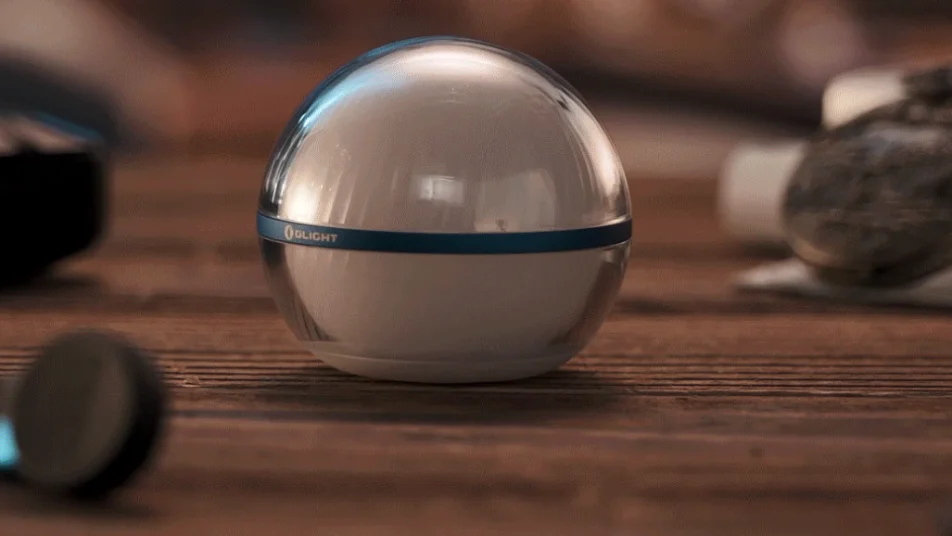
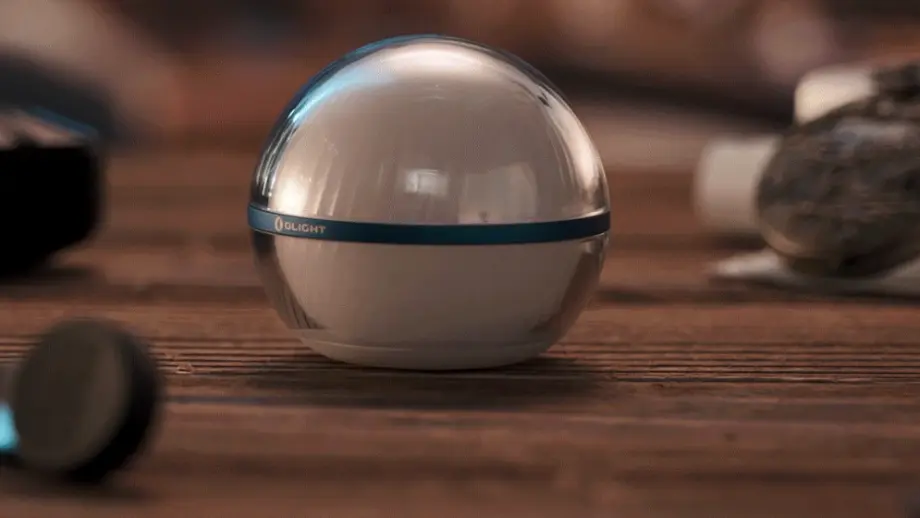
In practical Olight Sphere best camping lantern australia reviews, a 75-lumen frosted globe proves far more effective for camp dinner tables. Controlled, warm illumination limits insect swarms and allows campers to view the surrounding bush and night sky without casting harsh, blinding glare across adjacent pitches.
Diffuser quality and glare inside a tent
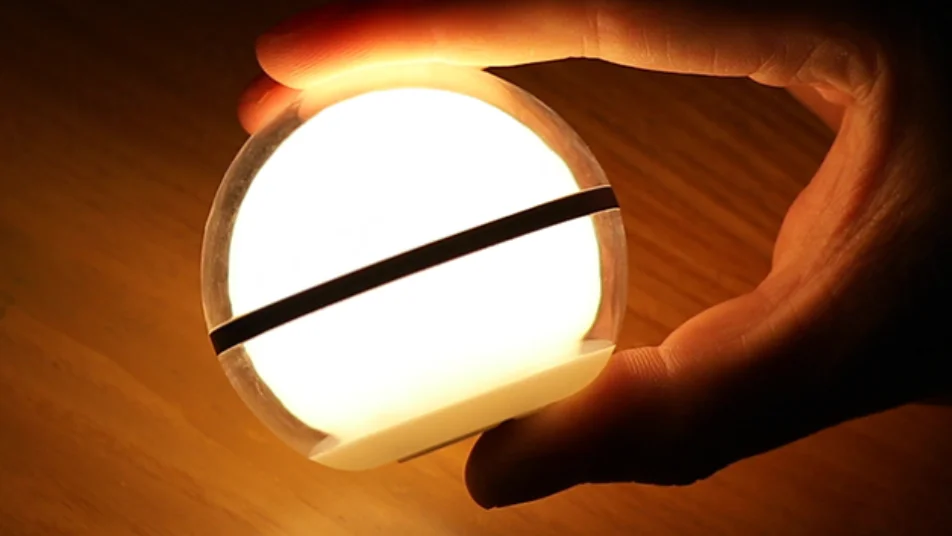
The interior volume of a two-person hiking tent or family dome tent concentrates light beams. Clear lenses with exposed LED emitters create point-source glare, which induces severe eye fatigue and heavy shadows. High-performing lanterns rely on milk-white, polycarbonate, or textured spherical diffusers that scatter rays across a continuous 360-degree plane.
Secondary considerations include colour temperature and auxiliary spectrums. Cool white diodes (above 6000K) feel sterile and attract flying insects during humid summer nights. In contrast, warm white emitters (3000K–4000K) create a restful atmosphere inside nylon canopies. Incorporating low-output red LED options further preserves night vision while reading trail maps or handling night gear checks.
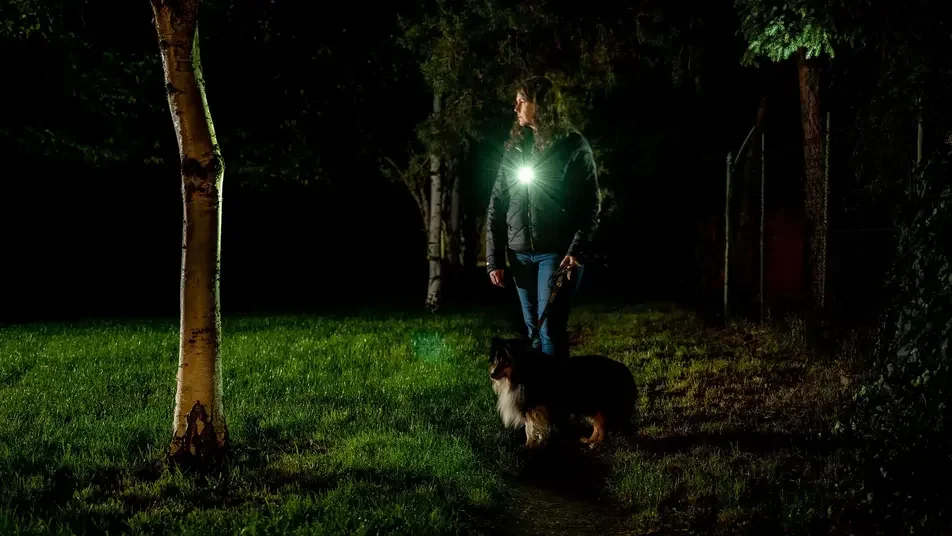
Comprehensive testing in our Olight Obulb Pro S best camping lantern australia reviews shows that stepless dimming combined with app-driven colour control solves this problem. Being able to fine-tune brightness from 240 lumens down to fractions of a lumen ensures campers avoid the high glare common to poorly diffused hardware.

- Max illumination: 75 lumens of soft 360-degree light
- Battery endurance: Up to 40 hours on white low mode (1 lm)
- Environmental seal: IP56 dust and high-pressure water spray resistance
- Smart features: Interactive app ecosystem, game modes, and group control
Rain and storm season: reading IPX4 vs IPX7 on a lantern
Australian weather demands serious ingress protection. An afternoon storm across Queensland or an unexpected alpine front in Tasmania can soak gear within minutes. Light equipment left on picnic tables or hung from awning stays must handle sustained moisture without short-circuiting its driver board.
Understanding ingress codes defined by international standards helps decode gear reliability:
• IPX4: Certified against light splashes from any angle. It withstands moderate drizzles, but driven rain or accidental drops into camp puddles can cause water ingress.
• IP56: Protected against harmful dust deposits and powerful water jets, offering strong defence against harsh coastal squalls.
• IPX7: Built to endure complete immersion in water up to 1 metre deep for 30 minutes, surviving river slips and flooded swags.
According to technical standards, laboratory water ingress testing is strictly defined under controlled conditions. (Source: IEC 60529 Ingress Protection Standards). If an evaluation claims top-tier weather resistance, our Olight Sphere best camping lantern australia reviews suggest looking for IPX7 or IP56 ratings so unexpected storms do not cut your lighting short.
Hanging, standing and wind: stability checks for the review
A common flaw discovered during long-term evaluations is top-heavy lantern housing. Tall, cylindrical lanterns tip over easily in strong gusts on uneven picnic tables. When knocked over onto gravel or hard dirt, cheap plastic covers frequently crack and fail.
Low-profile, spherical form factors solve this problem by lowering the center of gravity. Furthermore, integrated neodymium magnetic bases provide versatile mounting options across 4WD setups. Rather than balancing a lantern on a shifting surface, users can snap magnetic fixtures directly to vehicle roof racks, camper trailer doors, or steel awning poles.
In our dedicated Olight Obulb Pro S best camping lantern australia reviews, magnetic mounting coupled with adhesive metal badges proved exceptionally stable in coastal winds. Whether suspended upside down from a tent apex ring or stuck securely to a 4WD tailgate during evening dinner prep, positive mounting options ensure reliable hands-free operation.
Choosing the right system comes down to prioritizing real-world endurance over inflated lumen ratings. When checking a detailed Olight Sphere best camping lantern australia reviews breakdown, focus on build quality, broad diffusion, and stable mounting to keep your off-grid camps reliably illuminated.
Frequently asked questions
Which camping lantern is the best rated?
The best-rated models combine rugged waterproofing with gentle optical diffusion and stable runtimes. The Olight Obulb Pro S frequently scores top marks for its submersible IPX7 seal, drop resistance, compact footprint, and intuitive smartphone app control over brightness curves.
What is the best long-lasting camp lantern?
For long off-grid stays, pick a model with reliable low-lumen conservation modes. The Obulb Pro S runs up to 156 hours (6.5 days) on its 0.8-lumen night setting, while the Olight Sphere provides 40 hours on low, ensuring your camp stays lit throughout multi-day trips without needing constant recharges.
Which is the best camping lantern?
The ideal lantern depends on your camping style. For hiking, vehicle awnings, and bad weather, the waterproof Obulb Pro S stands out. For table ambiance, swag reading, and multi-light mood setups, the lightweight 360-degree Olight Sphere is the more versatile choice.