Configuring the best bike light for night trail riding requires pairing a 1,000–2,000 lumen floodlight on the handlebar with an agile 500–1,000 lumen helmet spotlight. This dual-source system fills cornering blind spots, models ground relief across Australian dirt, and preserves battery life during technical mountain bike ascents.
| Mount Location | Recommended Output | Beam Profile | Key Trail Role | Weight Target |
|---|---|---|---|---|
| Handlebar Primary | 1,000 – 2,000 lm | Wide flood (80°–100°) | Casts ground shadows; shows ruts | 150 g – 280 g |
| Helmet Secondary | 500 – 1,200 lm | Narrow spot with soft spill | Illuminates switchbacks & trail exits | < 160 g on lid |
| Emergency / Twilight Clip | 100 – 500 lm | Dual spot/flood + red beacon | Mechanical repairs, bail-out transit | 50 g – 80 g |
Venturing onto rugged trails after dusk demands a dedicated illumination strategy. This comprehensive guide examines how beam angles, thermal regulation, battery capacity, and clamping hardware interact on singletrack. Follow our breakdown below to assemble the best bike light for night trail riding setup tailored to technical native terrain.
- Quick answer: run 1000–2000 lumens on the bar with a wide beam plus a lighter helmet light, and plan for heat step-down on climbs
- What singletrack demands: depth, width and shadow detail
- Bar light beam patterns compared on rocks and roots
- Why do lights step down on slow climbs?
- Runtime planning for a 90-minute night loop
- Will your mount hold on rough descents?
- Frequently asked questions
Quick answer: run 1000–2000 lumens on the bar with a wide beam plus a lighter helmet light, and plan for heat step-down on climbs
Achieving the optimum field of vision on Australian mountain bike tracks cannot be done with a single beam. Experienced riders deploy a two-light system: an intense 1,000 to 2,000-lumen wide flood mounted squarely over the front tyre, combined with an agile 500 to 1,000-lumen light anchored to the helmet. Selecting the best bike light for night trail riding means balancing luminous power against head-weight fatigue and cockpit stability.
A handlebar-only lamp fails whenever you enter a tight 90-degree berm or hairpin corner. Because handlebars remain aligned with the front wheel, your illumination points tangent to the turn until the bike has already leant into the radius. Wearing the Perun 3 best bike light for night trail riding helmet solution directs a responsive beam precisely where your eyes look, revealing drops and sudden branches before the front wheel tracks across them.

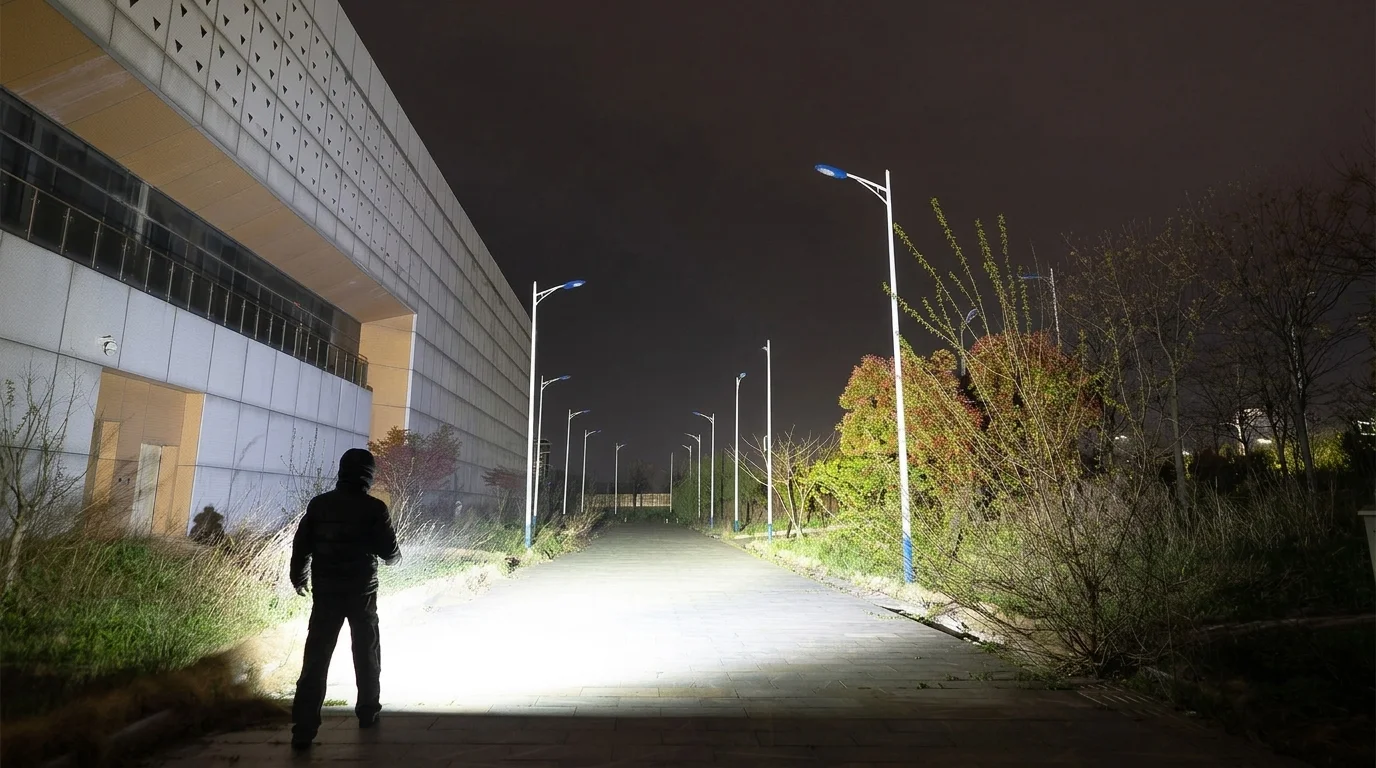
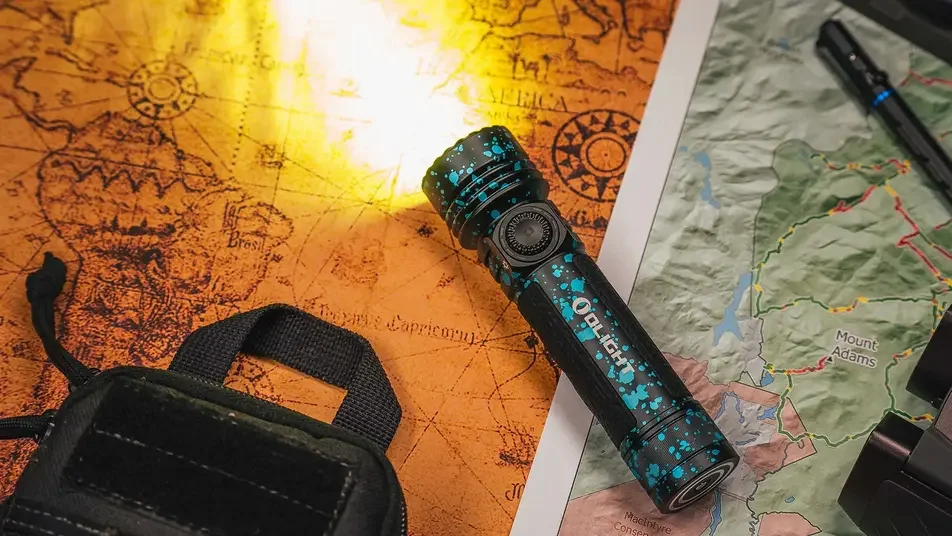
Delivering up to 3,000 lumens in Turbo with a dependable 600-lumen sustained High mode for 300 minutes, the Perun 3 serves as an ideal helmet lamp or camp lighting hub. Powered by a high-capacity 5,000 mAh 21700 cell with IP68 submersible protection.
- Max 3,000 lm output with 160-metre throw distance
- Customised 21700 5000 mAh lithium-ion battery
- Large glove-friendly top button and robust aluminium body
What singletrack demands: depth, width and shadow detail
Singletrack riding is visually unique compared to asphalt commuting. Sealed urban paths require a focused cutoff beam designed primarily to avoid dazzling oncoming traffic while meeting legal safety thresholds (Source: Transport for NSW Bicycle Safety Rules). By contrast, dense native bushland features unpainted surfaces, irregular sandstone, and overhanging gum tree branches that demand wide spatial awareness.
Without adequate peripheral illumination, a rider suffers tunnel vision. Peripheral light stimulates peripheral retina sensors, which detect rapid spatial displacement and balance changes. In addition, shadows provide depth cues. A handlebar unit positioned 850 mm to 1,000 mm above the ground casts long shadows behind roots and ledge drop-offs. If you ride exclusively with a high helmet light, that top-down perspective washes out micro-contours, turning dangerous 150 mm drops into flat grey smears on the trail.
Consequently, identifying the best bike light for night trail riding involves balancing low-angle shadow creation with responsive high-angle spotlight tracking. When your handlebar optic models the trail texture and your helmet tracks the path ahead, depth perception feels completely natural at speed.
Bar light beam patterns compared on rocks and roots
Optical engineering matters just as much as raw diode output. A light that claims 2,000 lumens focused into a narrow 12-degree pencil beam produces severe glare on dry eucalyptus bark and blinding white reflection on quartz or limestone gravel. Conversely, a pure floodlight lacking a central punch forces your eyes to strain when speeds exceed 25 km/h on technical descents.
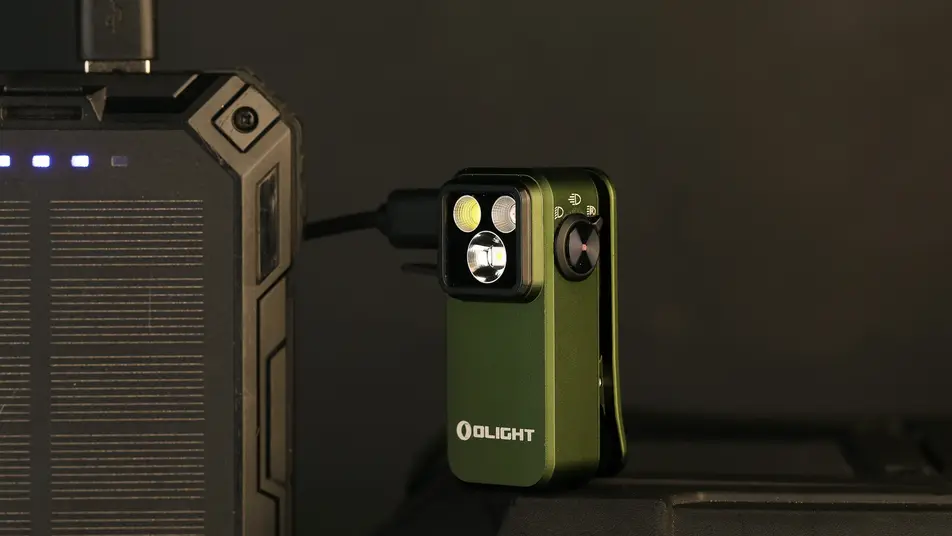
For emergency backup and pack storage, carrying an ultra-compact clip lamp ensures you are never stranded when primary systems need attention. Incorporating an auxiliary Oclip Pro best bike light for night trail riding backup delivers immediate dual-spectrum beam utility if you suffer a puncture or mechanical failure miles from the trailhead.

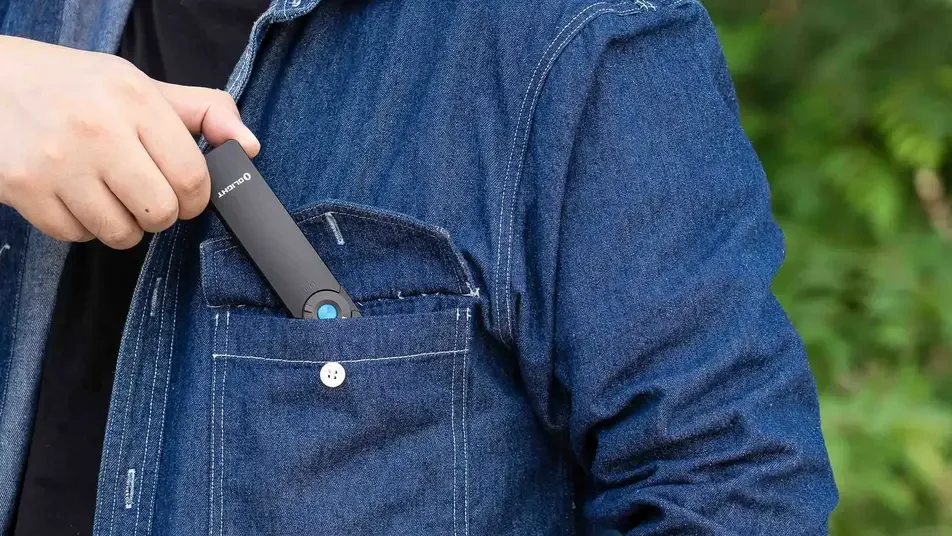
Weighing just 53 grams, the Oclip Pro integrates independent floodlight, spotlight, and red signal modes controlled via an intuitive rotary selector. Clips securely onto hydration straps, jerseys, or frame bags.
- Max 500 lm white light with 120-metre beam reach
- Integrated 580 mAh lithium-ion cell with USB-C port
- Durable spring clip rated for 10,000 cycles and surfaces up to 14 mm
The table below contrasts standard beam patterns used by mountain bikers navigating technical terrain:
| Beam Profile | Angle Spread | Visual Impact on Obstacles | Recommended Mounting |
|---|---|---|---|
| Spot (Collimated) | 8° – 15° | Intense throw; bleaches centre; dark borders | Helmet only |
| Wide Diffuse Flood | 70° – 100° | Even perimeter; reveals berm edges; short reach | Handlebar primary |
| Dual-Zone Hybrid | 20° hot spot + 85° spill | Balanced depth with trail shoulder visibility | Handlebar or Helmet |
Selecting optics with a progressive transition from hotspot to spill eliminates harsh visual boundaries. When searching for the best bike light for night trail riding, avoid hyper-concentrated beams that create stark contrasts, as your pupils constantly dilate and contract, accelerating eye fatigue.
Why do lights step down on slow climbs?
High-performance LED drivers produce substantial heat. Compact aluminium chassis dissipate thermal energy through convection and airflow. When descending at 30 km/h in ambient 18°C air, cooling efficiency remains optimal. However, when grinding up a steep 12% fireroad climb at 6 km/h, airflow plummets, causing internal temperatures to surge toward 60°C.
To prevent catastrophic emitter damage, modern LED circuitry features intelligent thermal step-down regulation. A torch advertising 3,000 lumens might dial down to 800 or 600 lumens within two to three minutes without forward velocity. Understanding this behaviour is vital when selecting the best bike light for night trail riding. Relying on maximum burst modes on climbs wastes battery without generating sustained light.
Trail advocacy groups and night riding guidelines emphasize preserving battery reserves by toggling to low or medium power on long ascents (Source: Bicycle Network Night Riding Guide). Drop your handlebar lamp to 300–400 lumens on uphill sections. This reduces heat, keeps thermal regulators idle, and stores maximum battery capacity for fast, technical downhill descents.
Runtime planning for a 90-minute night loop
A standard club night ride or midweek post-work loop typically lasts 75 to 90 minutes. However, a punctured tubeless tyre, cracked derailleur hanger, or loose chain link can easily push your trail time beyond two hours. Your equipment must include a runtime cushion to ensure you never walk out of the bush in pitch darkness.
To calculate real-world consumption, budget output across three distinct segments:
- Climb phase (40 minutes): Bar light on Medium (200–400 lm); helmet light on Low (100–150 lm). Power consumption remains negligible, keeping LED temperature low.
- Flow & descent phase (35 minutes): Bar light on High (1,000–1,500 lm); helmet light on High (500–800 lm). Cooling airflow supports full luminous stability.
- Transition & mechanical reserve (20+ minutes): Auxiliary wearable or clip light on task-level flood (50–100 lm) while preserving primary battery packs.
Riders who pack the Oclip 2 Ultra best bike light for night trail riding pack companion gain a dedicated 580-lumen torch with 360-degree rotation. It can clip onto a hydration vest or saddle rail, providing hands-free light for trailside repairs without draining your primary bar or helmet batteries.

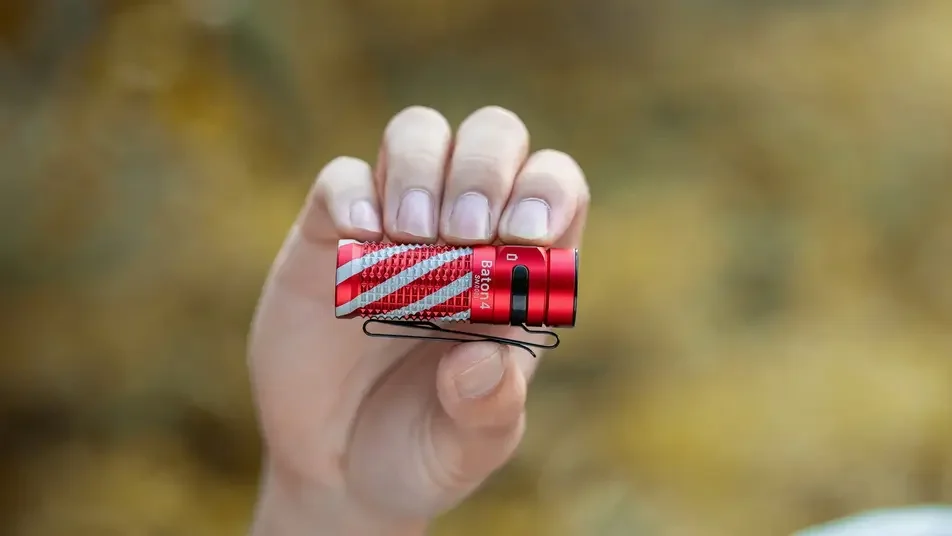
Engineered with 4-in-1 lighting including UV, spotlight, floodlight, and safety red mode. Features dual-axis articulation (115° tilt and 360° rotation) with dual USB-C and magnetic dock charging.
- Max 580 lm output with 130-metre throw rating
- Rugged aluminium housing with IP66 ingress protection and 2-metre drop resistance
- Compact 79.5 g weight with dual-axis aim flexibility
Always maintain at least 30% surplus capacity before starting. Running the best bike light for night trail riding setup means you never have to navigate technical rock gardens on battery conservation mode.
Will your mount hold on rough descents?
Repeated square-edge impacts over granite water-bars and braking bumps exert extreme shock loads on handlebar mounts. Elastic silicone straps, while convenient for commuter bikes on smooth bike paths, frequently slip downward when subjected to 160 mm fork compressions, sending your beam directly into your front mudguard.
To maintain optical alignment, competitive downhill and cross-country disciplines enforce strict technical safety standards regarding equipment retention and accessory mounting (Source: AusCycling Technical Regulations). Look for CNC-machined aluminium bar clamps or reinforced quarter-turn composite mounts that secure with Allen bolts to 31.8 mm or 35 mm handlebars.
For helmet mounting, use ventilated straps that loop through helmet shell vents, or stick-on curved adhesive mounts rated for off-road use. Keeping your helmet light under 160 grams ensures your helmet won't tilt forward over your brow during heavy braking. Solid mounting hardware guarantees that the best bike light for night trail riding stays locked onto your line through every rock garden.
Frequently asked questions
What bike light is best for night riding?
The best system for night riding pairs a 1,000 to 2,000-lumen wide floodlight on the handlebars with a 500 to 1,000-lumen spotlight on your helmet. The bar light casts shadows that reveal roots, rocks, and ruts, while the helmet light illuminates tight switchbacks and corners ahead of your front wheel.
What is the best bike light for trail riding?
The best trail light features a durable aluminium casing, IP67 or IP68 water resistance, and balanced beam optics with a smooth transition from hotspot to spill. The Olight Perun 3 head torch is an excellent multi-functional trail option, delivering up to 3,000 lumens on Turbo and a sustained 600-lumen High mode for 5 hours.
How many lumens for night trail riding?
For technical singletrack at moderate to fast speeds, plan for a combined 1,500 to 2,500 lumens across your handlebar and helmet units. Running 1,200 lumens on the handlebar combined with 600 to 800 lumens on the helmet gives ample depth perception and reaction time on rocky or wooded trails.