Table of Contents
- Introduction: The Evolution of Lighting in Modern Homes
- The Science of Color: How Mood Lights Affect Your Mind
- Room-by-Room Guide: Mastering the Art of Atmosphere
- Key Trends in Mood Lighting for 2026
- Technical Checklist: What to Look for Before Buying
- Sustainable Lighting: Energy Efficiency Meets Style
- Frequently Asked Questions (FAQ)
Introduction: The Evolution of Lighting in Modern Homes
The concept of home lighting has undergone a radical transformation. Gone are the days of a single, flickering fluorescent bulb in the center of the room. Today, lighting is an essential digital strategy for homeowners who want to optimize their environments for comfort and efficiency.
What is Mood Lighting? (Defining Ambiance vs. Utility)
Utility lighting is functional. It helps you perform tasks like chopping vegetables or reading without straining your eyes. Mood lighting, or ambient lighting, is emotional. It is the soft glow that makes a room feel cozy, the vibrant colors that energize a party, or the dim orange hues that signal to your brain that it is time to sleep.

The Psychological Connection: How Light Influences Your Emotions
Our bodies are hardwired to respond to light via our circadian rhythm. Exposure to the right kind of light at the right time can boost serotonin (the "feel-good" hormone) or trigger melatonin (the sleep hormone). By mastering your home's digital lighting strategy, you are essentially hacking your own biology to feel better every day.

The Science of Color: How Mood Lights Affect Your Mind
Color is more than just an aesthetic choice; it is a powerful psychological trigger. Understanding the science behind light temperatures and colors is the first step in creating a truly smart home.
Warm Tones for Relaxation and Melatonin Production
Warm light, ranging from 1,800K to 3,000K, mimics the soft glow of a sunset or a campfire. This temperature is ideal for evenings because it does not suppress melatonin production. Devices like the Olantern-Classic-2-Pro excel here, offering warm orange LEDs that create a relaxing "Sunset Sanctuary" anywhere, from your bedside table to your backyard deck.

Cool Blue Tones for Focus and Productivity
On the opposite end of the spectrum, cool white or blue-toned light (5,000K+) mimics daylight. This light suppresses melatonin and increases alertness. It is perfect for your home office or gym, helping you maintain a "Flow State" during intense work sessions.
Chromotherapy: The Healing Power of Vibrant RGB Colors
Modern digital lighting often includes RGB (Red, Green, Blue) capabilities. Different colors can evoke different psychological states:
- Green: Promotes a sense of calm and a connection to nature.
- Blue: Can lower heart rate and reduce situational anxiety.
- Red: Often used in the late evening to preserve night vision and prepare the body for deep rest.
Room-by-Room Guide: Mastering the Art of Atmosphere
Every room in your house serves a different purpose, requiring a unique lighting strategy for optimal functionality and comfort.
The Bedroom: Creating a Sunset Sanctuary for Better Sleep
Your bedroom should be a temple of rest. Avoid harsh overhead lights an hour before bed. Instead, use portable, dimmable lamps. The Sphere is a perfect choice here; as it is wireless and features both white and RGB light, you can set it to a low-lumen warm glow to ease your transition into sleep.

The Living Room: Layering Light for Socializing and Cinema Nights
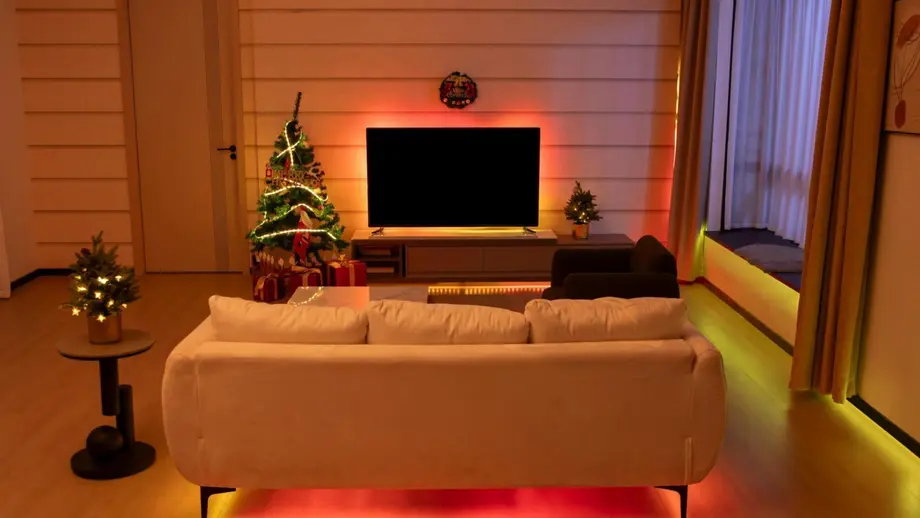
The living room is multi-functional. For movie nights, you want indirect light that doesn't reflect on the screen. The Ostrip is a game-changer for this space. By installing it behind your TV or under cabinets, you create a soft wash of light that adds depth without causing glare.

The Home Office: Boosting "Flow State" with Bio-Adaptive Lighting
In 2026, top-tier home offices use bio-adaptive lighting that changes temperature throughout the day—bright and cool in the morning, gradually shifting to warmer tones as the workday ends.
| Feature | Olantern Classic 2 Pro | Ostrip (5-Metre) | Sphere Wireless Bulb |
|---|---|---|---|
| Primary Use | Indoor/Outdoor/Retro | Indoor Ambient/Gaming | Portable/Ambient |
| Max Output | 300 Lumens | 5050 RGB LEDs | 75 Lumens |
| Control | Rotary Knob | APP Control | Bottom Switch/App |
| Power | Built-in 11200mAh | USB-A 5V/1A | Built-in 700mAh |
| Special Feature | Power Bank Function | 5-Metre Length | IP56 Waterproof |
Key Trends in Mood Lighting for 2026
As we move forward, three major trends are dominating the digital lighting landscape, combining technology with interior design.
Sculptural Minimalism: Lighting as Functional Art
Lighting fixtures are becoming art pieces. The Olantern Classic 2 Pro, with its vintage copper or forest green metal finish, serves as a beautiful centerpiece even when turned off. It blends retro aesthetics with modern digital power.
Portability & Freedom: The Rise of Rechargeable Cordless Lamps
The future is cordless. Moving your light from the dining table to the patio without worrying about outlets is a huge part of modern flexibility. The Sphere and Olantern series highlight this trend, offering long runtimes and convenient magnetic or USB-C charging.

Technical Checklist: What to Look for Before Buying
Don't buy just any LED. Keep these specifications in mind to ensure high-quality, health-conscious light.
Color Temperature (Kelvin) and Why It Matters
- 1,800K - 2,700K: Extra warm, candle-like ambiance.
- 3,000K - 4,000K: Neutral white, ideal for kitchens and bathrooms.
- 5,000K+: Cool daylight, best for high-focus tasks.
Color Rendering Index (CRI): Seeing Colors in Their True Form
CRI measures how accurately a light source reveals the true colors of objects. For living spaces, look for a CRI of 90 or higher. Low CRI light can make food look unappealing and skin tones look sickly.
Dimming Capabilities and "Flicker-Free" Technology
Ensure your smart lights have flicker-free technology. Even if invisible to the eye, flickering can cause eye strain and headaches. Smooth dimming, like the rotary knob on the Olantern Classic 2 Pro, allows for precise control over the atmosphere.
Sustainable Lighting: Energy Efficiency Meets Style
Sustainability is a core component of digital strategy and modern home ownership in 2026.
Why LED is the Gold Standard for Mood Lighting
LEDs use up to 90% less energy than traditional incandescent bulbs and last significantly longer. Products like the Ostrip utilize 5050 RGB LEDs, providing high-intensity color with minimal power draw.
Long-Term Cost Benefits of Smart LED Bulbs
While the initial investment might be higher, the combination of low energy consumption and extreme durability (often 25,000+ hours) means you save hundreds of dollars in energy bills and replacement costs over the product's life.

Frequently Asked Questions (FAQ)
Can mood lights improve sleep quality?
Yes. By using warm, amber-toned lights in the evening, you avoid blue light that suppresses melatonin. This helps your body naturally prepare for sleep, leading to faster onset and better rest quality.
What is the best color light for anxiety relief?
Soft blue and green lights are generally considered the best for relaxation. These colors are associated with nature and have a calming effect on the parasympathetic nervous system.
Are mood lights energy-efficient?
Absolutely. Most modern mood lighting uses LED technology. For example, the Sphere Wireless Light Bulb provides up to 40 hours of runtime on a single charge while drawing very little power, making it both eco-friendly and cost-effective.