Driving on remote Australian roads at night presents severe hazards, from sudden kangaroo crossings to unexpected breakdowns in zero-reception outback zones. According to insurance industry statistics, wildlife collisions spike dramatically between dusk and dawn, with kangaroos accounting for nearly 90% of animal strikes. Safe night travel requires heavy-duty long-range illumination, strict straight-line braking protocols, and a dependable emergency car kit featuring high-output torches like the Warrior 3S, Obulb Pro S, and Baton 4
Safe rural night driving requires a triple-layer setup: a 2,000+ lumen thrower torch to spot eye-shine on verges, a magnetic beacon for vehicle breakdowns, and a compact backup light. This strategy prevents high-speed swerving into trees and guarantees visibility when stranded without mobile signal. The Warrior 3S leads our picks for long-distance rural driving safety.
- 1. Quick Answer: The Four Rules of Night Rural Driving
- 2. Kangaroo Strike: Braking Versus Swerving
- 3. Peak Wildlife Hours and Where They Are Worst
- 4. Breakdown in a No-Signal Zone: The Kit and the Protocol
- 5. What do you do if a kangaroo runs out?
- 6. Is it safe to drive at night in the outback?
- 7. What should you carry in a rural car kit?
- 8. Frequently Asked Questions (FAQ)
1. Quick Answer: The Four Rules of Night Rural Driving
Navigating regional highways and unsealed outback tracks after dark presents vast distances between towns and unpredictable wildlife hazards. To minimize accident risks across regional Australia, drivers should follow four golden rules: reduce cruising speed by 10 to 15 km/h below the limit, brake firmly in a straight line rather than swerving when animals appear, regularly scan road verges with high-throw spotlight beams during rest stops, and maintain an independent emergency vehicle kit. Carrying high-performance handheld torches guarantees essential illumination if you need to change a tire or inspect engine components on dark roadsides. For comprehensive touring advice, explore our 4WD and off-road lighting guide or check our Australian emergency checklist guide.

Olight Warrior 3S
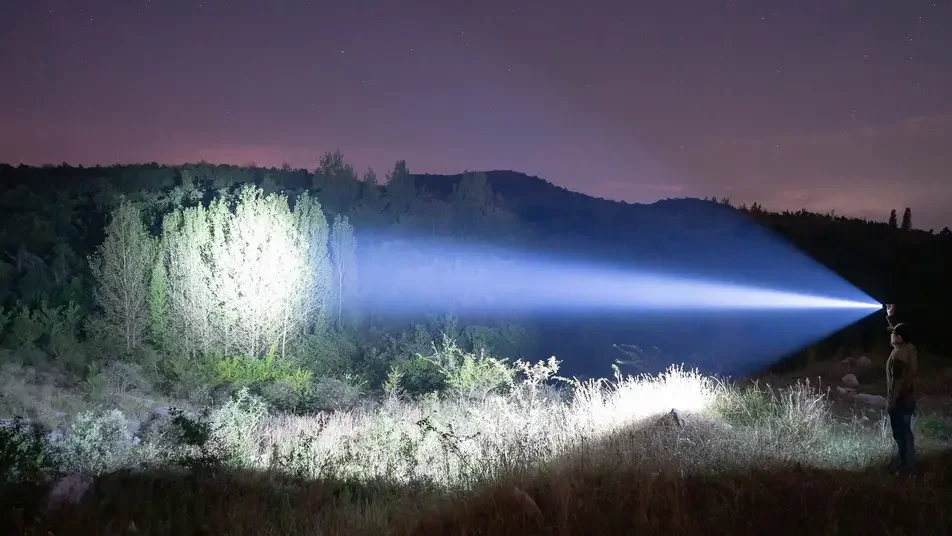
Pushes up to 2,300 lumens with a focused 300-metre beam throw. Built with a strike bezel, dual tail switches, and proximity sensors—making it the ultimate long-range safety tool for rural vehicle kits.
Buy Now2. Kangaroo Strike: Braking Versus Swerving
Insurance claim data across Australia reveals over 20,000 animal collisions annually, with marsupials representing almost 90% of all reported incidents. When a kangaroo leaps into headlights unexpectedly, driver instinct often prompts sudden swerving. However, emergency driving research strongly advises against swerving at speeds above 80 km/h on regional roads. Swerving abruptly on unsealed shoulders frequently causes vehicles to lose traction, roll over, or collide with heavy roadside trees—outcomes vastly more dangerous than a direct collision. The proven survival technique is to hold the steering wheel firmly in a straight line and apply hard, continuous braking.
3. Peak Wildlife Hours and Where They Are Worst
Kangaroo activity peaks during crepuscular hours—specifically 30 minutes before sunset through to full darkness, and again during predawn hours. During hot Australian summers, animals congregate along road shoulders to feed on green grass watered by road runoff. High-risk areas include unfenced pastoral highways in Western Australia, regional Victorian forest corridors, and inland New South Wales routes. Drivers planning long journeys across these regions should schedule travel during midday hours whenever possible.

Olight Obulb Pro S
Outputs up to 240 lumens with RGB color cycling and red emergency flashing modes. Features an upgraded magnetic base and seamless app controls, attaching instantly to car roofs for 1 km+ roadside alert visibility.
Buy Now4. Breakdown in a No-Signal Zone: The Kit and the Protocol
Suffering a mechanical breakdown or punctured tire in remote areas without mobile reception requires immediate safety protocols. First, pull the vehicle completely off the bitumen onto a level shoulder, turn on hazard lights, and attach a magnetic flashing red beacon light like the Obulb Pro S to your roof. Second, never leave your vehicle to walk for help in the dark; a stationary vehicle provides shelter and is vastly easier for emergency searchers or passing road trains to locate. Having a self-powered light like the Baton 4 with its charging case ensures continuous power for multiple nights.

Olight Baton 4 Premium
Delivers up to 1,300 lumens from a micro body. Comes stored inside a custom wireless power case capable of recharging the torch up to 5 times, ensuring uninterrupted reserve power in outback zones.
Buy NowWhat do you do if a kangaroo runs out?
If a kangaroo suddenly leaps onto the road, grip the steering wheel firmly and brake hard in a straight line without swerving. Swerving at high speeds on regional roads often causes vehicles to roll into ditches or crash into roadside trees. Reduce speed as much as possible before impact, and sound your horn to encourage the animal to jump clear.
Is it safe to drive at night in the outback?
Driving at night in the outback carries elevated risks due to extreme wildlife activity, vast distances between service stations, and total lack of mobile phone coverage. It is generally advised to avoid driving between dusk and dawn. If nighttime travel is unavoidable, lower your speed, ensure your bull bar and high-beam lights are functional, and pack an emergency kit with reserve water and high-output illumination.
What should you carry in a rural car kit?
A comprehensive rural car kit should include a high-throw primary torch, a magnetic red flashing beacon light for roadside breakdowns, a first-aid kit, at least 10 litres of drinking water, a tire pressure gauge and repair kit, jumper cables, and a satellite communicator or PLB (Personal Locator Beacon) for zero-reception outback areas.
8. Frequently Asked Questions (FAQ)
Last Updated: September 2026. Published with Australian wildlife strike collision metrics, straight-line braking safety evaluations, and outback no-signal emergency breakdown protocols.
What essential emergency lights do you carry in your rural vehicle kit for long Outback trips?