Quick answer
A $10–$20 UV torch can show a strong glow on a known sample. For Australian banknote checks, choose a torch centred around 365 nm. Around $60 buys a rechargeable clip light such as the Oclip Pro S. Spend closer to $150 if you’ll also use it as your main handheld white torch.
| Price tier and type (AUD incl. GST) | Best fit | What to look for | Example |
|---|---|---|---|
| About $10–$20: basic UV-only torch | An occasional check on something you already know fluoresces | A stated wavelength around 395 nm and a clear battery specification | Basic AAA-powered 395 nm mini torch |
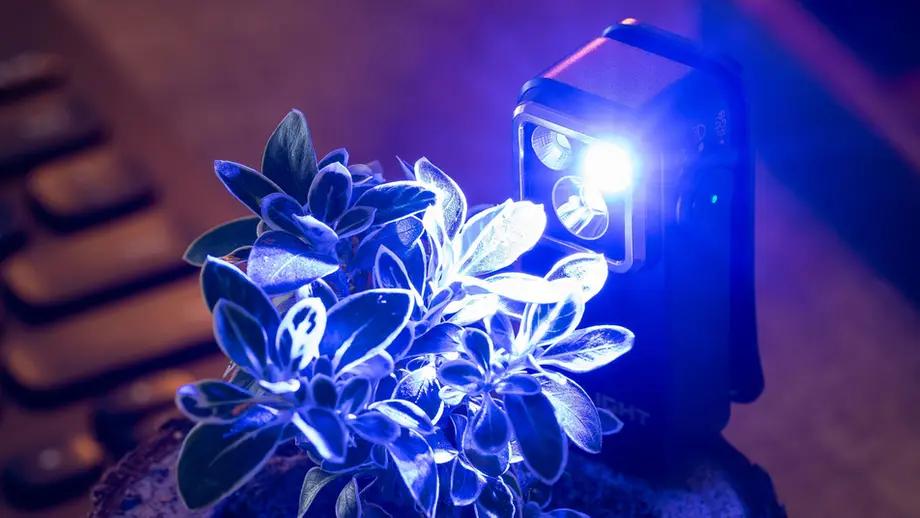
| About $60: rechargeable clip light | Close tasks at a workbench or around the house, with quick UV checks | UV around 365 nm, a stable mount and a separate white mode | Oclip Pro S, black |
| About $120–$150: handheld white and UV | Repeated inspections and enough white light for general torch duty | UV around 365 nm, a grip you can aim comfortably and a documented UV runtime | Arkfeld UV, Arkfeld UV Sunburst or Seeker 4 Mini, depending on the grip and charging setup |
What the extra money buys
A UV torch earns its price by making the feature you care about easier to pick out. The wavelength affects how the material responds. Visible light from the torch affects how easily you can see that response. The grip, clip and controls then determine how easily you can hold the beam where it needs to go.
The tiers show what different designs cost in Australian listings. One AAA-powered 395 nm mini torch was listed at about $11, and Olight Australia listed the black Oclip Pro S at $59.95. The handheld tier spans standard and limited-finish examples. Compare the full price of the exact version you want, especially when a listing mixes finishes or includes accessories.
A basic 395 nm torch is worth considering if you’re showing fluorescent beads or checking a material that gives a strong response under that wavelength. Some entry-level models run on AAA cells sold separately. Add those and delivery before comparing with a rechargeable clip light. If you can borrow a torch for one quick check, try it on a known sample first.
For a faint mark, reflected violet light can make the object and its surroundings look brighter even when the mark itself remains hard to see. A UV-pass filter reduces visible light leaving the torch while passing a band of UV. Look for a manufacturer that specifies the filter or its transmission, especially if mineral contrast is the main reason you’re buying. A dark-looking lens or a claim about UV purity gives you less information than a stated filter.
If you’re deciding between wavelengths first, see the 365 nm and 395 nm black light guide before comparing price or output.
Compare UV and white-light figures separately. Lumens describe visible light. Manufacturers may give UV optical output in milliwatts, which is the power emitted by the source. A higher UV figure can be useful, but the illuminated area also depends on the optics and working distance. A broad patch is handy for sweeping carpet. A tighter patch is easier to keep on a single stone or banknote feature.
About $60 for the Oclip Pro S
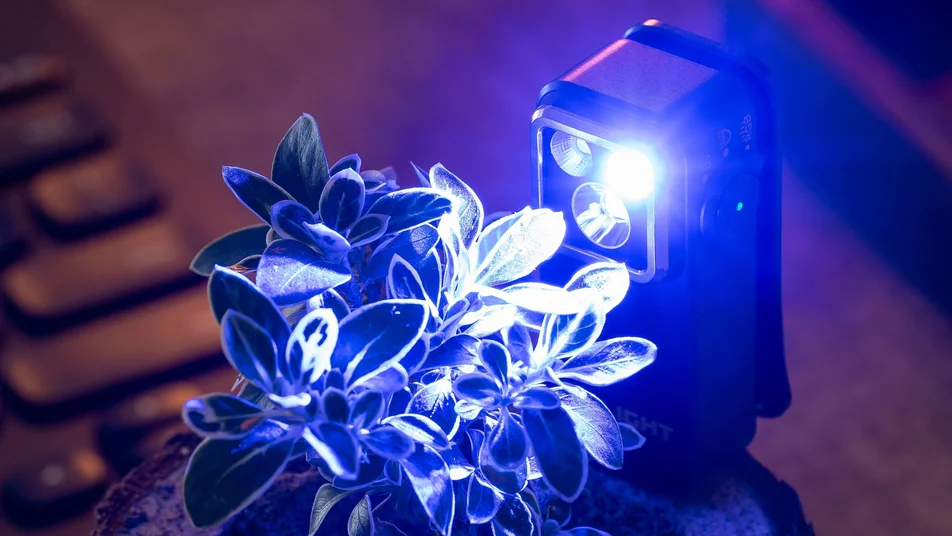
The Oclip Pro S fits jobs where you put the torch down repeatedly to free both hands. Clip it to the edge of a bag or fix the magnet to stable steel near a work surface. Check where the beam falls before starting. For a small UV target that sits outside the fixed beam, reposition the clip or bring the torch into your hand.
The Oclip Pro S manual lists 600 lm for the initial white Turbo stage, which steps down after about a minute under Olight’s test conditions. It also lists up to 144 hours at 1 lm in white Moonlight. For a longer job, plan around the setting you will actually use and check UV runtime separately. If you’re reading a label or working inside a bag, start on a low white setting and adjust from there.
About $120–$150 for a dual-light torch
Arkfeld UV and Arkfeld UV Sunburst for a flat pocket carry
Pick the Arkfeld UV if the torch will live in a pocket and you often switch between a quick UV check and white light. The flat body gives you a consistent grip when aiming at a tabletop. Its selector switches between two sources. Olight’s Arkfeld UV manual lists typical 365 nm UV output at 580 mW, up to four hours in UV mode, white Turbo up to 1,000 lm, and an included USB magnetic charging lead.
Arkfeld UV Sunburst is a limited-finish version of the same white-and-UV layout. Its published specifications likewise list 365 nm and 580 mW. An Australian listing showed Sunburst at about $139. Compare like-for-like white-light tints if you are weighing up the finish. Keep the magnetic lead where you normally recharge so it is available when you need it.
Seeker 4 Mini for a round grip and two lights
The Seeker 4 Mini suits someone who wants a short, round torch for regular white-light jobs and occasional UV. The Seeker 4 Mini manual lists typical 365 nm UV, 1,700 mW optical power and up to 95 minutes in UV mode. The white beam reaches an initial 1,200 lm on Turbo. It uses a side switch and charges through its supplied USB magnetic lead.
The higher rated UV output and the shorter rated UV runtime answer different questions. For repeated scans, consider whether you want a brief pass with a stronger source or longer published UV runtime per charge. Those figures describe the torches under their respective manufacturer test conditions. Compare the actual beam coverage and visibility on the surface you’ll inspect before treating either number as a deciding factor.
Choose by what you want to see
| Task | Useful UV setup | What to do on the spot |
|---|---|---|
| Australian banknotes | Around 365 nm in low ambient light | Check the feature for the specific note and series, then check other security features in white light. |
| Fluorescent minerals | Use the wavelength your specimen is known to respond to. Filtered 365 nm is a starting point for long-wave specimens. | Compare one known sample at a fixed distance before buying a brighter torch. |
| Possible pet stains | A UV beam that gives readable contrast on the same type and colour of fabric | Scan dry material in a dim room. Mark spots to inspect in white light and compare with an unaffected patch. |
| Scorpions in the garden | A UV beam you can keep on the ground, plus white light for footing | Observe from a safe position and leave animals and shelter undisturbed. |
| Fluorescent markers or craft materials | A 395 nm beam can be enough when your material is known to respond | Check a sample up close and look for a glow that stands out from reflected violet light. |
Banknotes and minerals
The Reserve Bank of Australia recommends a black light centred around 365 nm with the room lighting low. The bank says common 395–400 nm LEDs are unsuitable for viewing the UV features. Use the reference for your note’s denomination and series, then examine other security features such as the clear window. Wear can weaken the fluorescent patch, so one faint feature calls for further checks. (Source: RBA banknote security features)
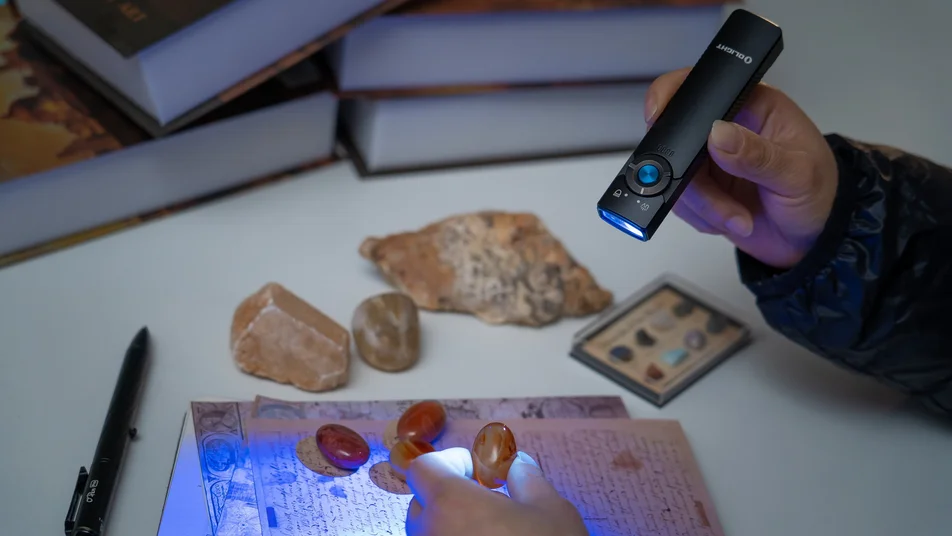
For rocks, start with one specimen whose response you recognise. The Fluorescent Mineral Society describes examples in which the same mineral responds differently to 365 nm and 395 nm, and notes that visible spill and working distance change what you see. If you collect long-wave specimens, a documented filter can be a more useful purchase than a larger white Turbo number. Check any specialist wavelength requirements before you choose a general-purpose UVA torch. (Source: Fluorescent Mineral Society comparison of 365 nm and 395 nm)
Carpet and outdoor checks
At home, darken the room and sweep dry carpet slowly. Keep the angle and distance similar across the patch you suspect and an unaffected area. Cleaning residue, fibres and other materials can also fluoresce. Treat each bright mark as a place to inspect, then switch to white light to see the actual surface before cleaning.

Outdoors, the Australian Museum notes that scorpions fluoresce under ultraviolet light. A white beam helps you see where you are stepping, then a short UV check can help you spot a specimen against the ground. Observe from a safe place and leave the animal where it is. Choose a torch whose controls let you return quickly to white light if you need to move. (Source: Australian Museum guide to scorpions)
What to check before you buy
If you can compare two torches in person, use the same dry sample, room lighting, angle and working distance for both. For minerals, place a known fluorescent sample next to one that shows little response. For carpet, a spare piece of the same material gives you a useful baseline. Look at the difference between the target and its surroundings, then check whether the tool stays practical when you change grip or need a free hand.
- Check that the wavelength suits the job. If the seller only says “UV”, look up the exact model’s manual.
- Ask what kind of UV-pass filter is fitted if reflected violet light would make the target harder to see.
- Check charging and battery costs. Include new cells or a spare magnetic lead if you need either.
- Work out where the light will sit or where your hand will be. A secure mount gives you a repeatable view of a bench. A comfortable grip makes it easier to follow a seam, edge or small mark.
UV torch safety
Aim UV at the work surface for short checks. Keep the beam away from eyes, skin, other people and pets, and avoid reflective metal and mirrors in the beam. ARPANSA identifies black lights as typically emitting UVA, with potential risks to eyes and skin from exposure to artificial UV sources. Use UV-blocking safety eyewear appropriate for the wavelength if the work brings you close to the beam or calls for repeated checks. Follow the torch manual and use white light for walking and setting up the work. (Source: ARPANSA guidance on exposure to artificial ultraviolet radiation)
For rechargeable lithium-ion models, use the supplied or manufacturer-recommended charging equipment. Charge on a non-flammable surface and disconnect once charged. Stop using a torch or battery that is damaged, swollen or overheating. (Source: ACCC Product Safety guide to lithium-ion batteries)
Frequently asked questions
How much does a UV torch cost in Australia?
Basic 395 nm torches can cost around $10–$20, before batteries or delivery. The black Oclip Pro S is an example near $60. Flat or round rechargeable white-and-UV torches can sit around $120–$150, depending on the model, finish and seller.
What is a UV torch used for?
It makes certain materials fluoresce. Common uses include finding a patch to inspect on carpet, viewing fluorescent minerals, spotting scorpions at night and checking specific banknote features. Use white light or another suitable check to interpret what you see.
Which UV torch is best for a first purchase?
Start with the task you do most often. A low-cost 395 nm torch can show a strong glow on a known sample. Choose a torch centred around 365 nm if Australian banknote features matter. For daily carry, decide whether a hands-free clip or a handheld grip suits the way you work.