TL;DR: Overlanding across remote Australian terrains (such as the Simpson Desert or Victorian High Country) requires separating hardwired 12V vehicle illumination from portable rechargeable Olight torches. This strategy prevents auxiliary dual-battery drainage in 40°C summer heat, protects critical 12V fridge power under Australian Consumer Law (ACL) operational standards, and delivers mobile, high-lumen reliability for track scouting and campsite setups.
Heading into remote outback tracks across Australia demands a calculated power and gear strategy where portable illumination and 12V electrical systems operate in complete synergy. Overlanders frequently make the critical mistake of hardwiring every light source to their vehicle's dual-battery auxiliary bank, only to face premature low-voltage cut-offs on their upright compressor fridges or flat starter cells in remote bush camps. Grounded in Australian Design Rule (ADR) compliance and real-world outback testing, this guide outlines the physical boundaries between vehicle-mounted systems and portable Olight solutions to keep your remote site fully illuminated without risking your vehicle's energy reserves.
Olight Australian Touring Illumination Matrix
| Scenario | Model | Peak Throw / Candela / Lumens | Weight (Incl. Battery) | Charging Format | Key Trade-off |
|---|---|---|---|---|---|
| Outback Track Scouting & Roving | Olight Seeker 4 Pro | 260m throw / 19,800 cd / 4,600 lm | 200g | MCC3 Magnetic / Holster USB-C | High peak turbo output drains high-capacity 21700 cell faster |
| Camp Kitchen & Mechanical Repairs | Olight Perun 3 | 160m throw / 6,400 cd / 3,000 lm | 128g | MCC Magnetic / Right-angle dock | Dual white and red modes require manual tactical switching |
| Tent & Swag Ambient Lighting | Olight Sphere C | 360° Omnidirectional / 75 lm max | 93g | Wireless Dock / USB-C | Engineered for diffuse ambiance rather than long-range spotlighting |
| Quick Trail Inspection & Pack Clips | Olight Oclip 2 Pro | 125m throw / 3,900 cd / 530 lm | 75.5g | USB-C / MCC Dual Port | Compact physical footprint limits ultra-extended runtime on max flood |
Quick answer: fitted lights handle the vehicle perimeter, portable rechargeable lights handle camp; keep them on separate power budgets
The foundation of off-grid safety across Australian touring routes lies in keeping your lighting hardware bound to distinct energy banks. High-output bullbar driving lights, ditch lights, and roof rack floods serve a clear operational objective: illuminating dynamic hazards during driving transit and casting broad work beams when initially parking or conducting recovery. However, relying on fixed vehicle lights to cook dinner, pitch canvas swags, or inspect equipment hundreds of metres from the rig introduces massive compromises.
Separating your system means your auxiliary dual-battery capacity remains reserved for continuous loads like travel refrigerators, 12V water pumps, and satellite communications. Dedicated rechargeable torches and lanterns carry their own high-density lithium-ion power cells, eliminating parasitic vehicle drains and allowing individual campers to direct beams exactly where required without blinding fellow travellers across the fire pit.
What fitted lights do well, and where they fall short at camp
Vehicle-mounted light bars and driving spotlights excel at projecting raw lumens over exceptional distances. When tackling unsealed corrugations or tight scrub tracks after sunset, high-powered forward beams illuminate drop-offs, washouts, and track markers well beyond standard factory halogen or LED headlamps. Vehicle-mounted auxiliary work lamps attached to roof platforms also simplify nighttime tarp deployment directly around the rig's perimeter.
Where fitted lights fall short is versatility and spatial adaptation. A fixed flood mounted to a roof platform casts harsh shadows if a tent or open awning panel sits in its path. Furthermore, fixed lights run at excessive color temperatures (often above 6000K), which severely damages human scotopic night vision and draws thousands of insects directly to your rig. Australian road and vehicle safety standards restrict auxiliary lamp usage on public roads to avoid glare hazards for approaching motorists, emphasizing that extreme forward-facing auxiliary lighting must remain isolated to specific driving contexts in accordance with Federal Register of Legislation: Vehicle Standard (Australian Design Rule 13/00 - Installation of Lighting and Light Signalling Devices).
 High-powered portable handheld illumination bridges the gap between fixed vehicle beams and mobile trail exploration.
Portable lights that follow you away from the vehicle (Featuring Seeker 4 Pro & Perun 3)
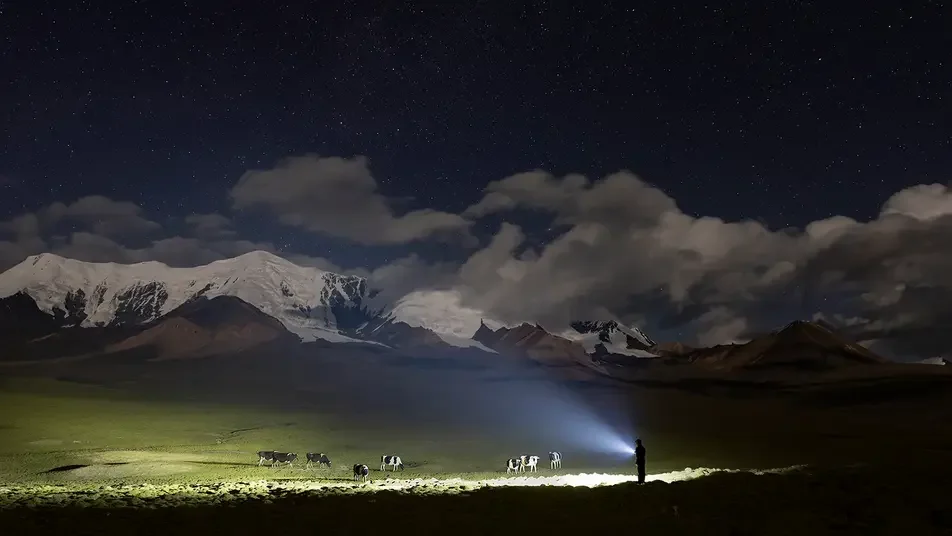
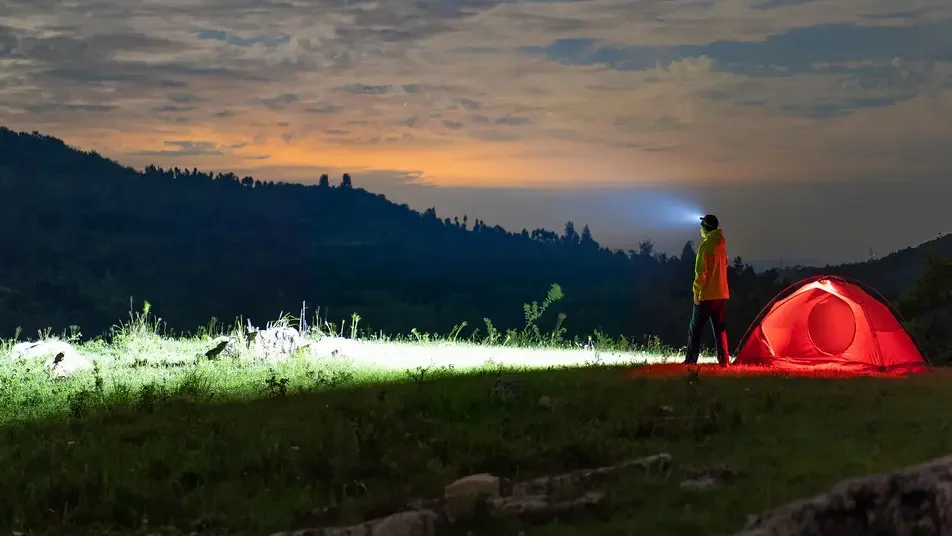
Stepping away from the vehicle requires intense, mobile light that does not demand an electrical umbilical cord. A handheld torch with extreme output and optical throw allows 4WD tourers to scout ahead on unknown tracks, examine river crossings on foot, or illuminate canopy perimeters. Featuring up to 4,600 lumens and a 260-metre beam throw, the Olight Seeker 4 Pro Powerful Rechargeable Led Torch functions as an unconstrained searchlight packed into an aluminum housing, giving remote adventurers immediate long-range visibility off the tracks.

High-Power Handheld Trail Search
Output: 4,600 max lumens | Throw: 260m | Battery: 5000mAh 21700 | Rating: IPX8
Engineered with a stepless rotary dimming switch and a multi-functional charging holster, the Seeker 4 Pro provides massive flood-to-throw punch when scouting hazards away from your 4WD bullbar.
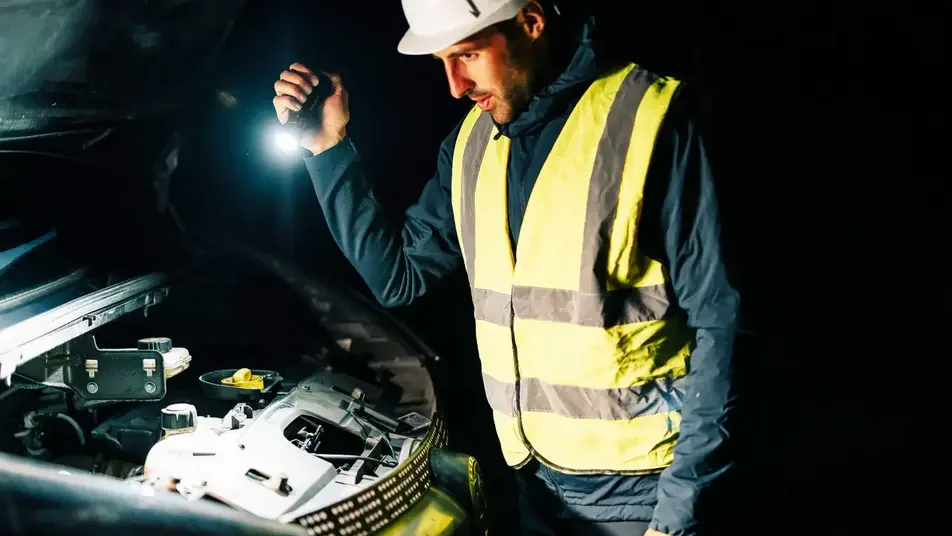
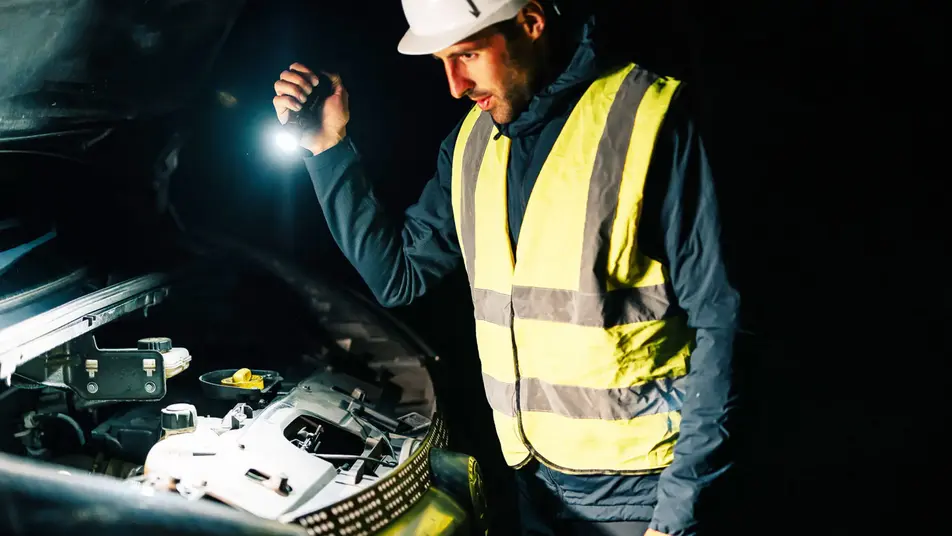
View Seeker 4 Pro on Olight AU StoreConversely, campsite tasks require hands-free utility. Mechanical maintenance beneath an unlit chassis or preparing dinner on a tailgate drop-down table requires localized task lighting. The Olight Perun 3 Versatile Led Rechargeable Head Torch from Head to Hand transitions seamlessly from a headband-mounted work light to a magnetic right-angle flashlight, delivering up to 3,000 lumens alongside dedicated red light modes that protect dark-adapted vision while reading maps or checking winching gear.

Hands-Free Mechanical & Camp Tasks
Output: 3,000 max lumens | Beam: 160m | Modes: White & Red Light | Rating: IP68
Delivers up to 20 days of runtime on Moonlight mode, integrated red safety signaling, a magnetic base for chassis attachment, and a comfortable headband bracket for recovery situations.
View Perun 3 on Olight AU StoreHow much do awning strips draw from a dual battery overnight?
A common oversight in overlanding power management across Australian cattle stations and coastal campsites is underestimating continuous static loads. A standard 1.2-metre dual-color (white/amber) LED awning strip draws approximately 1.0 to 1.5 Amps per hour on maximum brightness at 12 Volts. Over a standard 6-hour evening sitting around camp, that light strip consumes 6 to 9 Amp-hours (Ah) of battery capacity.
In a standard AGM battery configuration, discharging beyond 50% capacity accelerates chemical degradation and causes irreversible cell plate sulfation. In extreme 40°C Australian summer heat, battery chemical activity increases, compounding stress on auxiliary power banks. This fundamental electrochemical dynamic restricts an everyday 100Ah lead-acid battery to roughly 50Ah of usable capacity before rapid degradation occurs, as detailed in research by Battery University (BU-808b: What Causes Car Batteries to Fail?). When you factor in an upright 12V fridge consuming 25 to 40 Ah overnight depending on ambient Outback temperatures, adding unmonitored hardwired awning strips can easily drive the auxiliary circuit below its low-voltage cut-off threshold, jeopardizing perishable food and consumer guarantees protected under Australian Consumer Law (ACL).
Charging portable lights from the 12V system while driving
The most sustainable power routine replenishes portable gear while your vehicle's engine is running. When the alternator generates surplus output via a DC-DC charger, cabin USB ports and 12V accessory sockets provide stable recharge cycles without drawing on deep-cycle storage reserves.
By using modular magnetic docks (such as Olight's MCC magnetic charging cables) hardwired into cabin consoles, your high-drain 21700 lithium-ion torches remain fully charged and accessible in the driver door pocket. Modern lithium chemistries allow rapid top-offs over short 1 to 2 hour driving stretches between remote tracks, ensuring personal lights provide maximum lumen output the moment you park at dusk.
Should you leave vehicle lights on to keep wildlife away?
Leaving stationary vehicle floodlights switched on throughout the night does not deter Australian wildlife, and in fact, produces the opposite consequence. Broad-spectrum white light alters nocturnal insect dynamics, causing immense swarms of moths, midges, and mosquitoes to congregate around the light source, which consequently attracts predatory geckos, cane toads, and spiders directly into living areas.
Scientific assessments on environmental illumination published by the Australian Department of Climate Change, Energy, the Environment and Water (DCCEEW): National Light Pollution Guidelines for Wildlife demonstrate that artificial light at night disrupts wildlife movement patterns and causes phototaxis in non-target insects, while warm amber and narrow-spectrum light sources reduce ecological disruption and insect congregation. For ambient camp settings, diffused low-output lanterns or red-light spectrum modes maintain safety and campsite comfort without disrupting local nocturnal habitats across Parks Victoria or NSW National Parks estates.
A packing list: vehicle-mounted vs camp box (Featuring Sphere C & Oclip 2 Pro)
Organizing your lighting kit into dedicated equipment zones prevents frantic searching when arriving late at camp or responding to gear issues on dark corrugated tracks.
For tent interiors, swags, and cooking preparation surfaces, compact omnidirectional illumination works best. The Olight Sphere/Sphere C Wireless Light Bulb Ambient Light features a smooth 360-degree diffuse output, magnetic mounting, and app-based dimming control down to 1 lumen, producing pleasant camp illumination for up to 40 hours without causing battery drain on your rig.

Omnidirectional Camp & Canopy Atmosphere
Output: 75 max lumens | Runtime: Up to 40h | Protection: IP56 | Weight: 93g
Equipped with magnetic attachment, app control, and red light modes, the Sphere C delivers comfortable 360-degree light without the excessive glare or heavy amp draw of hardwired strips.
View Sphere C on Olight AU StoreFor quick clip-on access during spot checks or night fuel transfers, the Oclip 2 Pro EDC Clip Torch fastens directly to pack webbing, cap brims, or awning poles. Delivering 530 lumens, a 115-degree tilting head, and magnetic attachment, it serves as the ultimate portable companion inside your camp recovery box.

Precision Hands-Free Utility
Output: 530 max lumens | Throw: 125m spotlight | Weight: 75.5g | Rating: IP66
Offers a 115° tilt head, heavy-duty 14mm spring clip, magnetic base, dual USB-C/MCC recharging, and integrated red illumination for campsite chores.
View Oclip 2 Pro on Olight AU StoreFrequently asked questions
Does a red light spook feral pigs or cattle on remote Australian stations?
No, utilizing dedicated red light modes (such as those on the Perun 3 or Sphere C) does not typically spook livestock or feral animals in open paddocks compared to harsh white LED beams. Because many quadrupeds have limited sensitivity in the long-wavelength red spectrum (above 620nm), red light preserves both human dark adaptation and allows discreet nighttime observation without disturbing station cattle or wildlife.
How long does the Seeker 4 Pro run on low mode during an outback bush camp?
When operated on its lowest moonlight setting (5 lumens), the Olight Seeker 4 Pro delivers an exceptional runtime of up to 15 days on a single charge of its internal 5000mAh 21700 lithium-ion battery. For moderate general camp tasks around 300 lumens, users can expect approximately 10 to 12 hours of continuous, stable output.
What lights belong in a 4WD touring emergency kit for Australian conditions?
An emergency kit requires at least one dedicated hands-free headlamp with red light modes (such as the Perun 3) to allow mechanical repairs in rough weather, a high-lumen handheld searchlight (such as the Seeker 4 Pro) for track inspection, and high-visibility flashing safety beacons or clip lights (such as the Oclip 2 Pro) to mark vehicle corners during trackside breakdowns.
How do you make a bogged vehicle visible at night on remote outback tracks?
To prevent approaching trail vehicles from colliding with a bogged 4WD on dark tracks, activate vehicle hazard signals if auxiliary battery levels permit. If the electrical system is disabled, mount secondary battery-powered red flashing clip lights or high-visibility reflective markers along the chassis corners and place warning markers 50 metres up and down the track.