Table of Contents
The Confusion Between Lumens and Candela
Lumens Explained: Total Light Output
Candela Explained: Beam Intensity
Lumens vs Candela in Real-World Use
Which Metric Matters for Your Use Case?
How to Calculate Approximate Throw Distance
Conclusion: Don't Judge a Flashlight by Lumens Alone
Frequently Asked Questions (FAQ)
The Confusion Between Lumens and Candela
When browsing for LED torches Australia review sites or shopping for your next gear, you often encounter two primary numbers: Lumens and Candela. Many buyers mistakenly believe that higher lumens automatically mean a "better" or "longer-reaching" light. This misunderstanding leads to purchasing a torch that might be incredibly bright but fails to reach the distance required for specific outdoor tasks.
In the debate of lumens vs candela AU, it is essential to realize that these two metrics describe completely different properties of light. While lumens measure the total volume of light, candela measures the concentration of that light in a specific direction. Understanding this distinction is the key to choosing between a flood vs throw flashlight.
Lumens Explained: Total Light Output
Lumens (lm) represent the total amount of visible light emitted by a source in all directions. Imagine a light bulb hanging in the center of a room; the total brightness it adds to the space is its lumen count. In the context of flashlights, lumens indicate the "raw power" of the LED chip.
What Lumens Tell You (and What They Don't)
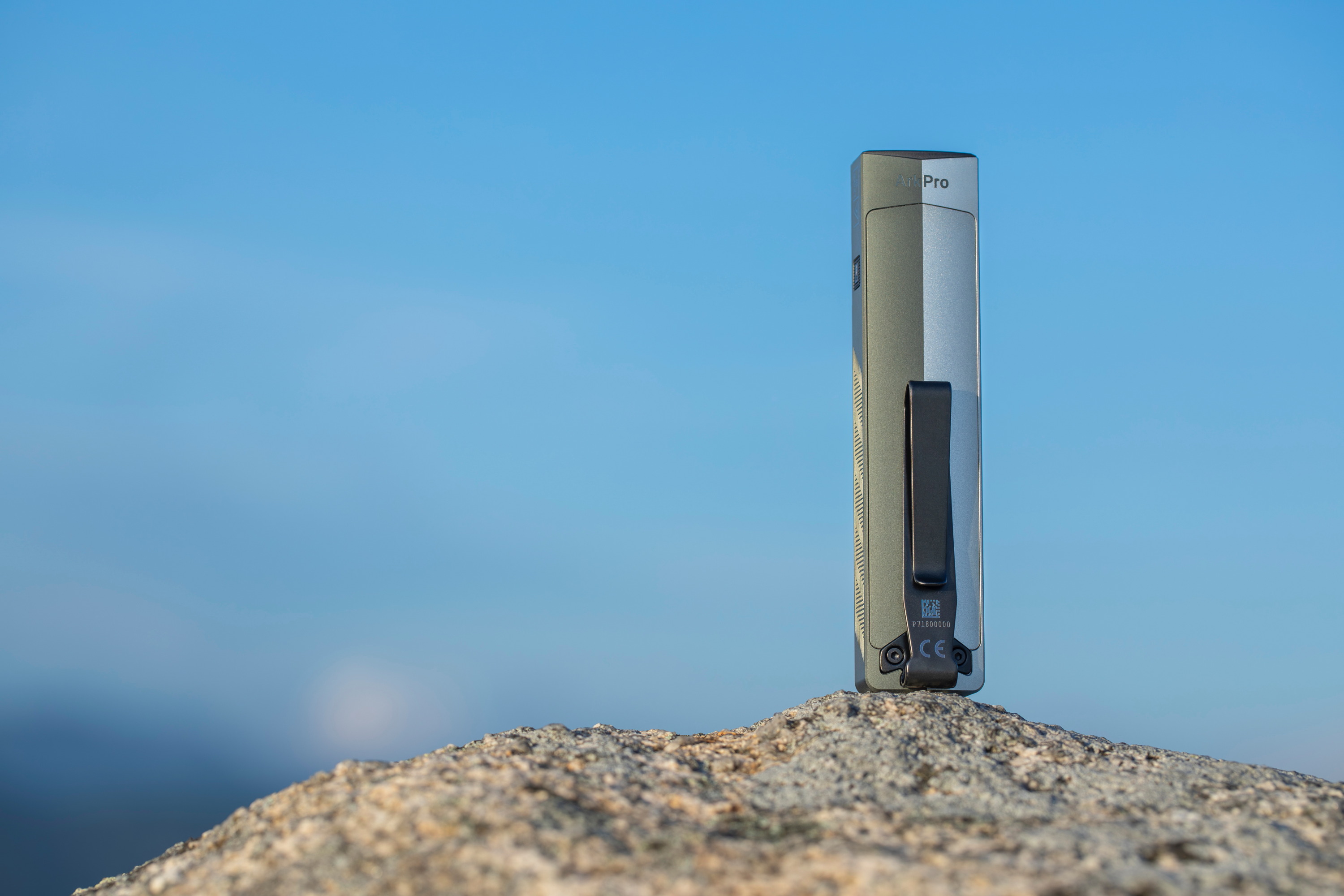
Lumens tell you how much energy is being converted into light. A high-lumen torch, like the ArkPro Series which offers up to 1,500 lumens, ensures that a vast amount of light is available to illuminate your surroundings.
However, lumens do not tell you where that light goes. You can have a 2,000-lumen light that only reaches 50 meters because the light is spread extremely wide (flood), or a 500-lumen light that reaches 300 meters because the light is tightly focused (throw). Lumens are about quantity, not direction.
Olight Arkfeld Pro Flat EDC Flashlight
Experience the ultimate versatility with up to 1,500 lumens of broad floodlight, combined with high-intensity laser and UV modes in an ultra-slim, easy-to-carry flat design.
Shop Arkfeld ProCandela Explained: Beam Intensity
Candela (cd) measures luminous intensity. It describes how much light is packed into a single, focused beam. If lumens are like the total amount of water in a bucket, candela is like the pressure of a water jet coming out of a nozzle. High candela is the defining characteristic of a long range thrower flashlight.
What Candela Tells You About Throw Distance
Candela is the metric that determines how far a beam will travel before it becomes ineffective. The higher the candela, the more "punch" the beam has to cut through darkness, fog, or rain. For instance, the ArkPro Series features a max light intensity of 10,640 candela, allowing its spotlight mode to reach a distance of 205 meters. This intensity ensures that the light remains concentrated enough to see distant objects clearly.
Lumens vs Candela in Real-World Use
Understanding is higher lumens or candela better depends entirely on the environment. Flashlights generally fall into three categories based on how they balance these two metrics.
Flood Light: High Lumens, Lower Candela
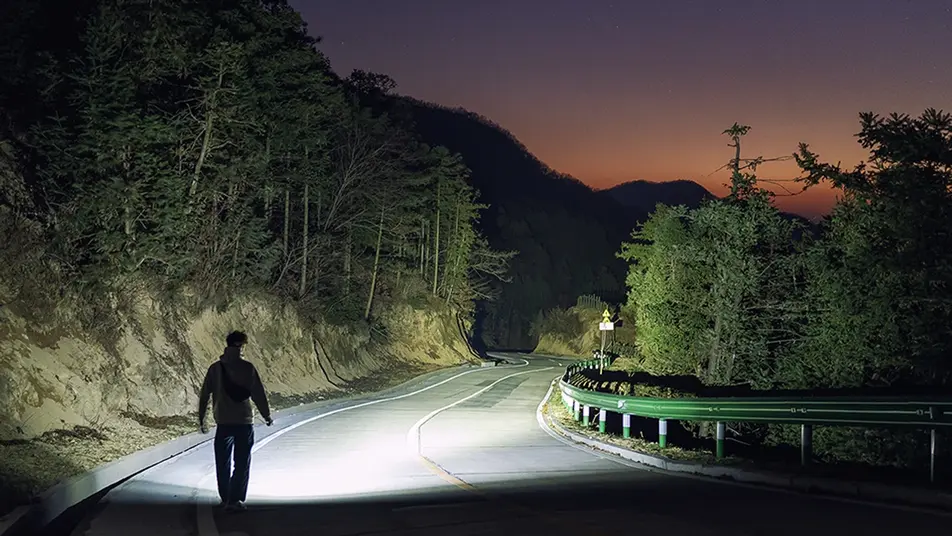
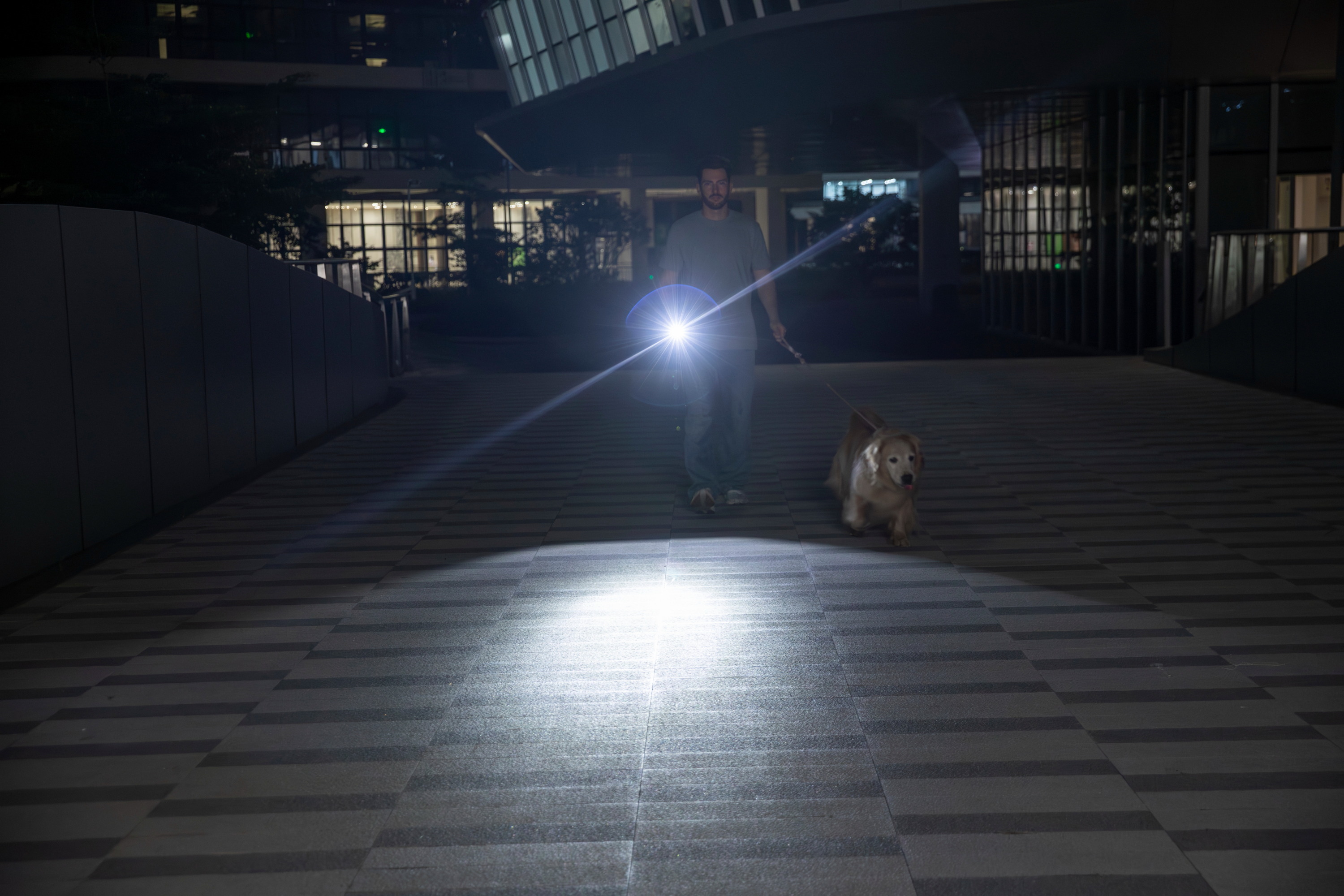
Flood lights are designed to light up a wide area close to the user. They typically have high lumen counts but lower candela. These are perfect for walking the dog or working in a garage where you need to see everything in your immediate periphery.
Throw Light: Moderate Lumens, High Candela
A "thrower" uses specialized reflectors or lenses to focus light into a tight beam. Even with moderate lumens, a high-candela rating allows these torches to spot markers or animals at great distances. This is the classic long range thrower flashlight profile.
Balanced Light: Both Moderate
Many modern EDC (Everyday Carry) lights aim for a balance. The ArkPro Series is a prime example, providing a 1,500-lumen "Pure Flood" mode for broad area lighting and a dedicated 800-lumen "Spotlight" mode for distance. This dual-source approach eliminates the need to choose between flood and throw.
Which Metric Matters for Your Use Case?
To find the best flood vs throw long range LED torches, you must match the specs to your activity.
Camping and Area Lighting: Focus on Lumens
When setting up a tent or cooking at a campsite, you need a broad wash of light. High lumens allow you to see the entire site without having to point the torch precisely. Candela is less important here, as you rarely need to see 100 meters away while flipping a burger.
Hiking and Trail Navigation: Balance Both
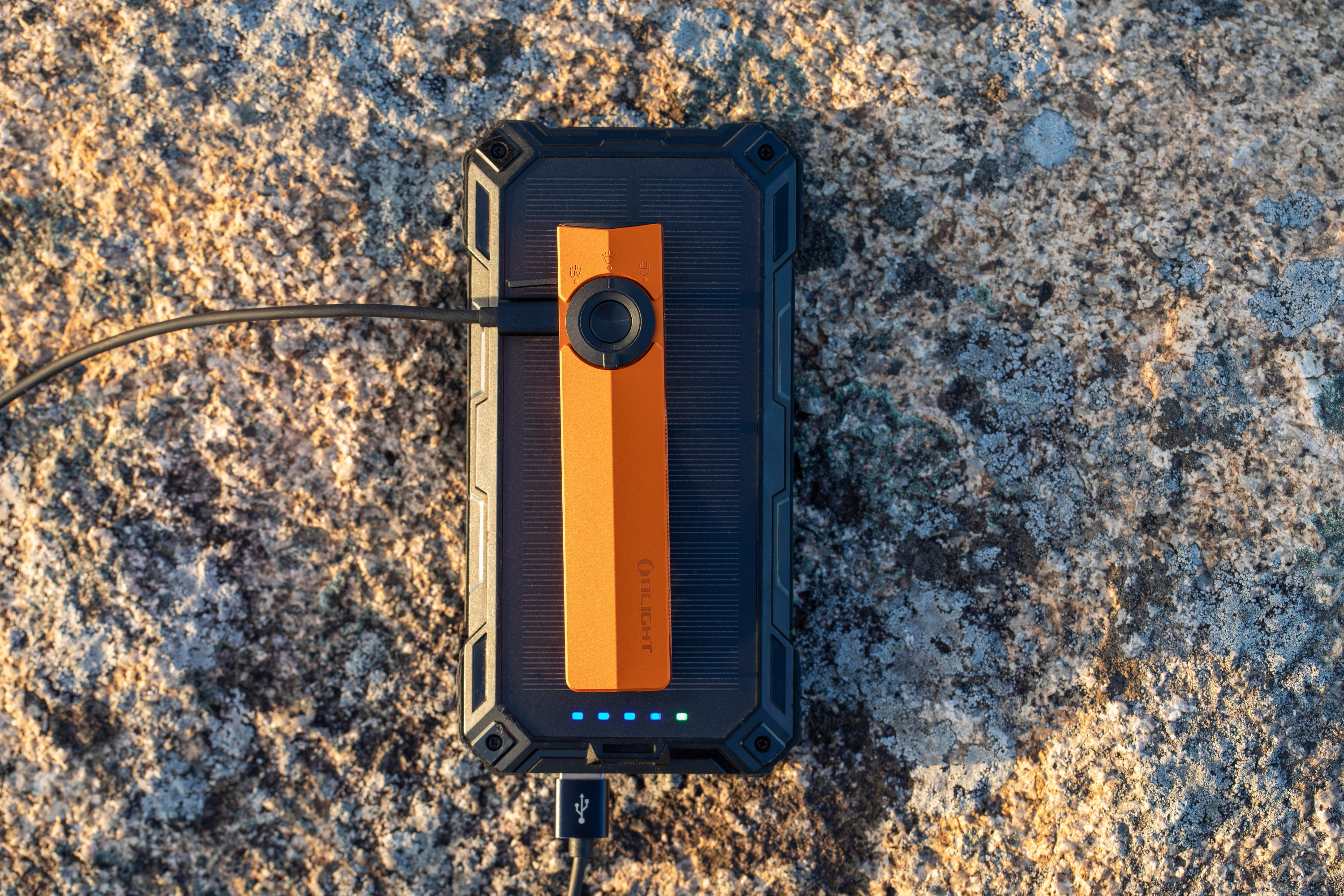
Hikers need to see the path directly in front of their feet (lumens) but also need to spot trail markers or potential hazards further ahead (candela). A balanced light like the ArkPro Series is ideal because its flat design makes it easy to carry, while its multi-light sources provide the versatility required for changing terrain.
Hunting and Searching: Focus on Candela
For search and rescue or hunting in the Australian bush, candela is king. You need to identify targets at long distances. A beam with low candela will simply wash out and fail to reach the target, regardless of how many thousands of lumens it claims.
Work and Inspection: Focus on Lumens + CRI
For tradespeople, high lumens and color rendering (CRI) are more important than throw. You need to see wires, leaks, or cracks in detail at arm's length. The UV light feature found in the ArkPro Lite or ArkPro Ultra is also a professional-grade addition for detecting leaks or verifying documents.
How to Calculate Approximate Throw Distance
If a manufacturer only provides candela, you can actually calculate the theoretical throw distance (in meters) using the Inverse Square Law. The standard industry formula for "effective throw" (to 0.25 lux, roughly the light of a full moon) is:
Distance = Square Root of (Candela * 4)
For the ArkPro, with 10,640 candela:
1. 10,640 * 4 = 42,560
2. Square root of 42,560 ≈ 206 meters.
This matches the 205m beam distance listed in the technical specifications, proving how candela directly dictates reach.
Conclusion: Don't Judge a Flashlight by Lumens Alone
When choosing LED torches Australia review enthusiasts often get caught up in the "lumen wars," but savvy buyers look at the candela too. If you need to see a wide area close up, prioritize lumens. If you need to see far into the distance, prioritize candela.
For the ultimate versatility, consider a multi-source light like the ArkPro Series. By offering dedicated flood and spotlight modes, plus professional tools like UV and green lasers, it solves the Lumens vs Candela flashlight dilemma by providing the right light for every situation. Whether you are navigating a trail or inspecting a job site, having both high-lumen flood and high-candela throw in one pocket-sized device is the most efficient way to stay prepared.
Frequently Asked Questions (FAQ)
What is the main difference between lumens and candela?
Lumens measure the total amount of light emitted by a flashlight in all directions (overall brightness), whereas candela measures the intensity of the light in a specific direction (beam focus and throw distance).
Can a flashlight have high lumens but low candela?
Yes. Flashlights with high lumens and low candela are known as floodlights. They produce a massive wall of light that illuminates a wide area nearby but cannot project very far into the distance.
How do I choose between a flood light and a throw light?
Choose a flood light (high lumens) for close-up tasks like camping, indoor inspections, and general hiking. Choose a throw light (high candela) for search and rescue, hunting, or long-range navigation where spotting objects at a distance is critical.