TL;DR:
Selecting an under bonnet work light in Australia requires matching attachment mechanisms with modern vehicle metallurgy and harsh 40°C field environments. While full-length underhood bars suit garage servicing, combining a compact magnetic clip light (like the Oclip 2 Pro) with a hands-free headlamp delivers portable, dual-axis illumination across both steel and non-magnetic aluminium engine lids during remote 4WD touring or roadside breakdowns under Australian Consumer Law (ACL) quality guarantees.
Choosing an effective work light under bonnet depends on panel metallurgy, engine clearance, and job scope. While broad underhood bars provide continuous workshop floodlight across the entire bay, combining a magnetic work light under hood with a hands-free headlamp delivers superior precision, compact roadside storage, and dependable anchoring on modern aluminium, composite, or strut-assisted engine hoods.
Whether servicing an off-road 4WD on a dark trail or checking coolant levels beside a busy Australian highway in 40°C summer heat, engine bay lighting requires dependable positioning. Restricted spaces, engine grime, high operating heat, and non-magnetic modern metals make hand-held flashlights cumbersome. This technical explainer examines mounting mechanisms, vehicle metallurgy, engine bay thermal boundaries, and optimal setup configurations for mechanical tasks and emergency stops.
Under Bonnet Work Light Scenario & Hardware Matrix
| Scenario | Model | Peak Throw / Candela / Lumens | Weight (with Battery) | Charging Format | Key Trade-off |
|---|---|---|---|---|---|
| Multi-Angle Engine Bay Inspection | Olight Oclip 2 Pro | 530 lm Flood / 125m Throw | Approx. 45g | USB-C Direct Input | Dual-axis swivel and magnetic clamp; compact battery footprint requires topping up during multi-hour overhauls. |
| Fluid Leak & UV Diagnostic Inspection | Olight Oclip 2 Ultra | 580 lm Flood / 450 lm Spot + UV | Approx. 45g | USB-C Direct Input | Integrated UV leak detection array; focused beam spread compared to full-size rigid garage bars. |
| Roadside Emergency Rear Warning Marker | Olight SEEMEE 30 C | 800m Visibility / 30 Lumens Red COB | 24g | USB-C Direct Input | High-visibility 230° safety warning signal; specialized rear hazard marker rather than a primary white engine bay flood. |
Quick answer: combine a hook or magnet light with a head torch for most roadside jobs
Automotive engine compartments feature deep visual shadows cast by intake plenums, brake master cylinders, and structural firewalls. Relying solely on an overhead hood lamp creates high-contrast silhouettes directly beneath nested engine components. The most practical lighting setup couples a stationary floodlight anchored under the lid with an adjustable head torch that projects direct illumination wherever your eyes focus.
A stationary magnetic or clamp fixture establishes wide environmental visibility, enabling mechanics to locate sockets, dipsticks, and fluid reservoirs across the engine perimeter. Meanwhile, a headlamp penetrates deep recesses around alternator brackets and transmission bellhousings. This dual-source approach avoids the fatigue of holding a penlight in your teeth while unfastening rusted jubilee clips.
Underhood bars vs compact magnetic lights
Traditional underhood light bars consist of a telescoping aluminium tube spanning 1.2 to 1.8 metres, fitted with spring-loaded hooks that grip each bonnet flange. They provide broad overhead light with minimal glare across the entire engine bay, making them a preferred staple in professional dealership workshops and tyre centres.
However, underhood bars introduce severe practical compromises outside controlled workshop bays. Their substantial length prevents convenient storage in door cards or compact vehicle gloveboxes. Furthermore, curved bonnet contours, aftermarket bonnet protectors, and tight engine bays in modern compact crossovers frequently obstruct spring clamp grips, causing instability.
In contrast, a magnetic work light under hood solution offers high portability, directional articulation, and instant repositioning. Modern compact task lights integrate dual-axis swivels that let users redirect wide flood beams onto drive belts or switch to narrow pencil beams when inspecting leaking steering racks.

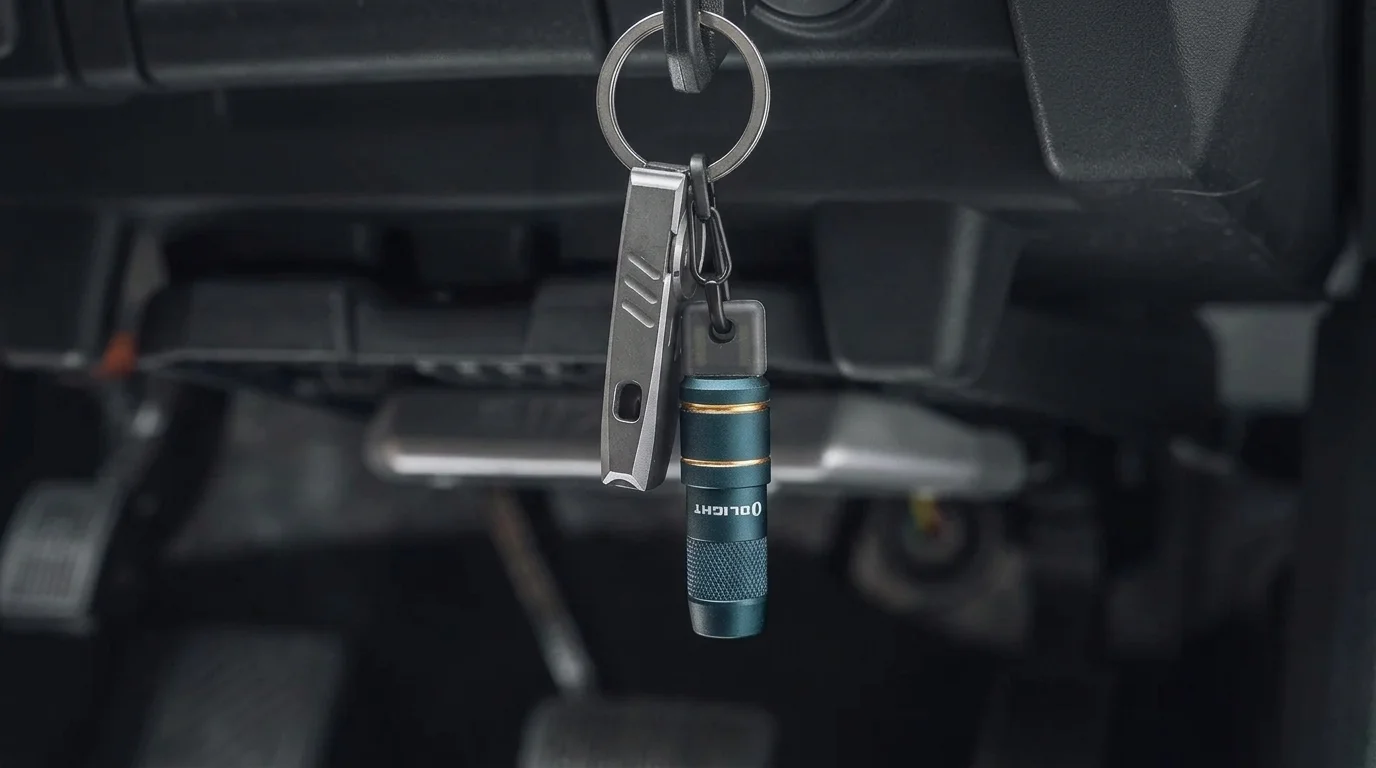
Engineered with a powerful magnetic base, 14 mm heavy-duty clamp, and 115° head tilt, the Oclip 2 Pro attaches effortlessly to bonnet latches, body struts, or ferrous brackets. Tested to ANSI/NEMA FL1 standards and delivering up to 530 lumens across flood and spotlight arrays, it illuminates broad engine bays without bulky framework ($69.95 AUD incl. GST).
- Max 530 lumens with 125 m spotlight throw
- 360° rotating clip and 115° head tilt adjustment
- IP66 water resistance with 2 m impact rating
- Dual charging via USB-C or magnetic dock
Why won't a magnet stick to some bonnets?
Vehicle manufacturers increasingly replace pressed mild steel bonnets with stamped aluminium alloy sheets to reduce front-axle weight, lower the vehicle centre of gravity, and improve pedestrian impact safety metrics. Many popular utes, off-road wagons, and electric vehicles across Australia feature aluminium bonnet panels.
Because aluminium lacks ferromagnetic crystalline structures, permanent neodymium magnets cannot establish magnetic flux coupling. When placing a work light under hood surfaces made from non-ferrous metals, the device slides down instantly. Additionally, composite bonnets (such as carbon-fibre reinforced polymers or sheet moulding compounds) and thick acoustic insulation pads also block magnetic grip.
According to technical material reviews by automotive bodies, aluminium body closures require non-magnetic attachment methods during workshop handling and servicing. (Source: RACQ: Vehicle Body Maintenance and Materials)
Hook and clip mounting on latches and struts
When working with aluminium bonnets, mechanics turn to secondary structural anchors. The front bonnet catch loop—typically made of hardened forged steel—provides an ideal central attachment point. Securing a hook or clip directly to this striker loop angles downward floodlight across the radiator support and engine front.
Hydraulic gas strut cylinders and bonnet prop rod pivots offer sturdy secondary clamping platforms. A mechanical clamp with rubber-coated jaws protects strut shafts from scoring while holding the fixture firmly in place. Furthermore, specialized task lights with integrated UV emitters assist in tracing neon dyes inside air conditioning condensers and cooling systems.

Equipped with a 580-lumen floodlight, long-throw spotlight, red safety mode, and dedicated ultraviolet beam, the Oclip 2 Ultra clips securely to latches, strut mounts, and pockets for hands-free troubleshooting and fluid leak identification ($79.95 AUD incl. GST).
- 4-in-1 light source: Flood, Spot, Red, and UV
- Strong magnetic base and durable 14 mm spring clamp
- Dual-axis 115° tilt head and 360° rotating mount
- Rugged aluminium housing with IP66 weatherproofing
Is it safe to place a light near a hot engine and battery?
Positioning portable lights inside vehicle engine bays introduces thermal and electrical considerations. Turbochargers, cast-iron exhaust manifolds, and catalytic downpipes frequently exceed 450°C during normal operation. Placing a torch housing directly against these surfaces can melt polymer casings and degrade internal lithium-ion cells.
Lead-acid automotive batteries generate additional safety risks. During high-current charging cycles or rapid discharge, lead-acid cells release hydrogen gas. Workplace safety regulations emphasize avoiding open sparks, hot tool drops, and uninsulated contact bridging across exposed battery terminals. (Source: SafeWork NSW: Battery Charging and Electrical Safety)
To prevent short circuits, never rest uninsulated metallic work lights across exposed battery posts. Anchor magnetic fixtures to upper firewall ribs, inner wing reinforcement rails, or latch brackets at least 30 centimetres away from exhaust heat shields and battery vent ports.
Roadside breakdown at night: a minimal kit
A roadside breakdown on a regional road presents serious safety risks from passing traffic. An emergency lighting kit should occupy minimal boot space while addressing two distinct requirements: illuminating your engine workspace and providing high-visibility rear warning to oncoming drivers.
A streamlined kit should contain:
- One magnetic articulating clip light for the underhood latch or strut.
- One lightweight personal headlamp for directional eye-level focus.
- One red flashing beacon attached to the rear boot lip or tailgate.
Compact safety lights originally designed for cycling make excellent rear hazard markers. Their wide optical dispersal provides long-range visibility to alert oncoming vehicles while you carry out underbonnet repairs.

Weighing just 24 g, the SEEMEE 30 C provides up to 800 metres of visibility with 230-degree optical coverage. Featuring silicone strap mounting and USB recharging, it fastens quickly to roof racks, spare wheels, or tailgates during roadside emergencies ($39.95 AUD incl. GST).
- COB LEDs delivering up to 30 lumens output
- Wide 230° side visibility visible from 800 metres
- IPX6 waterproof rating for stormy weather durability
- Flexible silicone mounting strap for quick attachment
Frequently Asked Questions
How do I attach a magnetic work light if my bonnet is aluminium?
If your bonnet panel is non-magnetic aluminium, use a multi-functional task light equipped with a heavy-duty mechanical clamp (like the Oclip 2 Pro) to attach directly to the forged steel bonnet catch loop, gas strut shaft, or radiator support frame.
How long does the Olight Oclip 2 Pro run on flood mode for underhood repairs?
The Olight Oclip 2 Pro delivers up to 530 lumens on High floodlight mode, providing clear engine bay illumination for multi-hour mechanical servicing before requiring a fast USB-C recharge.
Is it illegal to have underglow or unshielded auxiliary lights on cars in Australia?
Yes, operating decorative underglow or unshielded auxiliary lights on public roads is illegal under Australian Design Rules and state regulations (such as QLD TMR and Transport for NSW), as auxiliary lighting must not produce glare or project prohibited colors forward or backward. Work lights must remain isolated while driving on public roads (Source: Queensland Government: Vehicle Lighting Modifications).
What is the best under bonnet work light for 4WD touring in Australia?
The best under bonnet light for 4WD touring combines strong magnetic bases with heavy-duty mechanical spring clamps and dual-axis tilting. Compact models like the Oclip 2 Pro or Oclip 2 Ultra store easily in gloveboxes and clamp securely to latches, struts, or bullbars across outback tracks.