TL;DR:
Night bicycle commuting across Australian urban shared paths and arterial roads requires balancing visibility with path etiquette. Complying with Australian Road Rule 259 means deploying a 400–800 lumen downward-angled front light alongside a 200-metre visible rear light like the SEEMEE 30 C, ensuring legal compliance, preventing pedestrian glare, and maintaining reliable battery runtimes through chilly winter mornings under Australian Consumer Law (ACL) guarantees.
Commuting by bicycle after sunset in Australia frequently involves traversing mixed-use trails, riverside boardwalks, and suburban shared paths before merging into busy road traffic. Navigating these transitions safely demands more than just buying the brightest lamp available. Choosing the correct bike light for night riding involves understanding local road transport regulations under Transport for NSW and state transport authorities, selecting an appropriate optical profile, mastering angle alignment to prevent dangerous glare, and managing battery runtimes over chilly winter commutes.
Designed to withstand unpredictable weather and rigorous daily urban use, reliable commuter lighting systems protect riders from unseen road hazards while ensuring absolute compliance with national safety standards backed by ACCC consumer protections.
Australian Commuter Scenario & Lighting Matrix
| Scenario | Model | Peak Throw / Candela / Lumens | Weight (with Battery) | Charging Format | Key Trade-off |
|---|---|---|---|---|---|
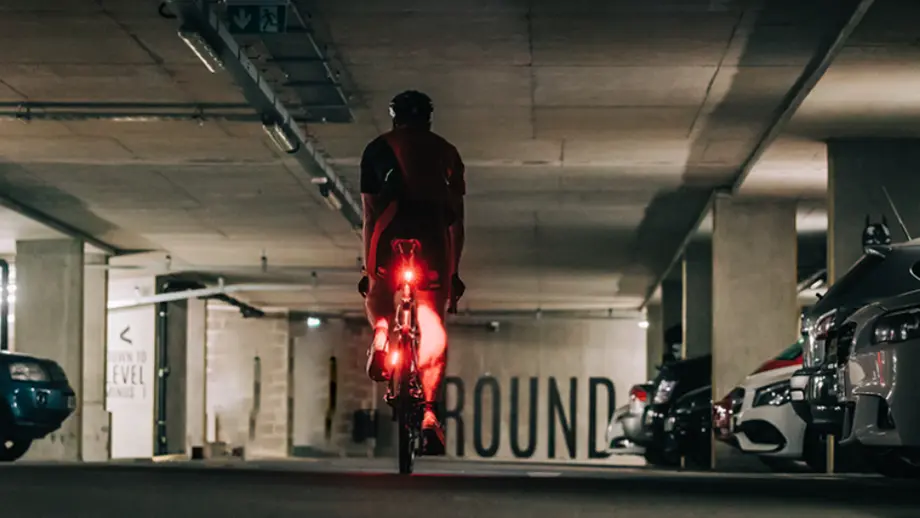
| Urban Rear Visibility & Road Compliance | Olight SEEMEE 30 C | 800m Visibility / 30 Lumens | 24g | USB-C Direct Input | Exceptional 230-degree wide arc visibility; dedicated tail light requiring a separate front handlebar lamp. |
| Versatile Commuter & Pack Backup | Olight Oclip 2 Pro | 530 Lumens Flood / 40-Lumen Red Mode | Approx. 45g | USB-C Fast Charging | Multi-source clip utility and red warning signal; smaller battery capacity than dedicated high-output bars. |
| Pannier, Clothing & Roadside Repair Backup | Olight Oclip 2 Ultra | 580 Lumens Flood / 450 Lumens Spot | Approx. 45g | USB-C Direct Input | Four lighting modes including UV and red beacon; optimized as a secondary backup or wearable marker. |
Quick answer: a 400–800 lumen front light aimed slightly down, with a steady mode on shared paths and a rear light on, suits most commutes
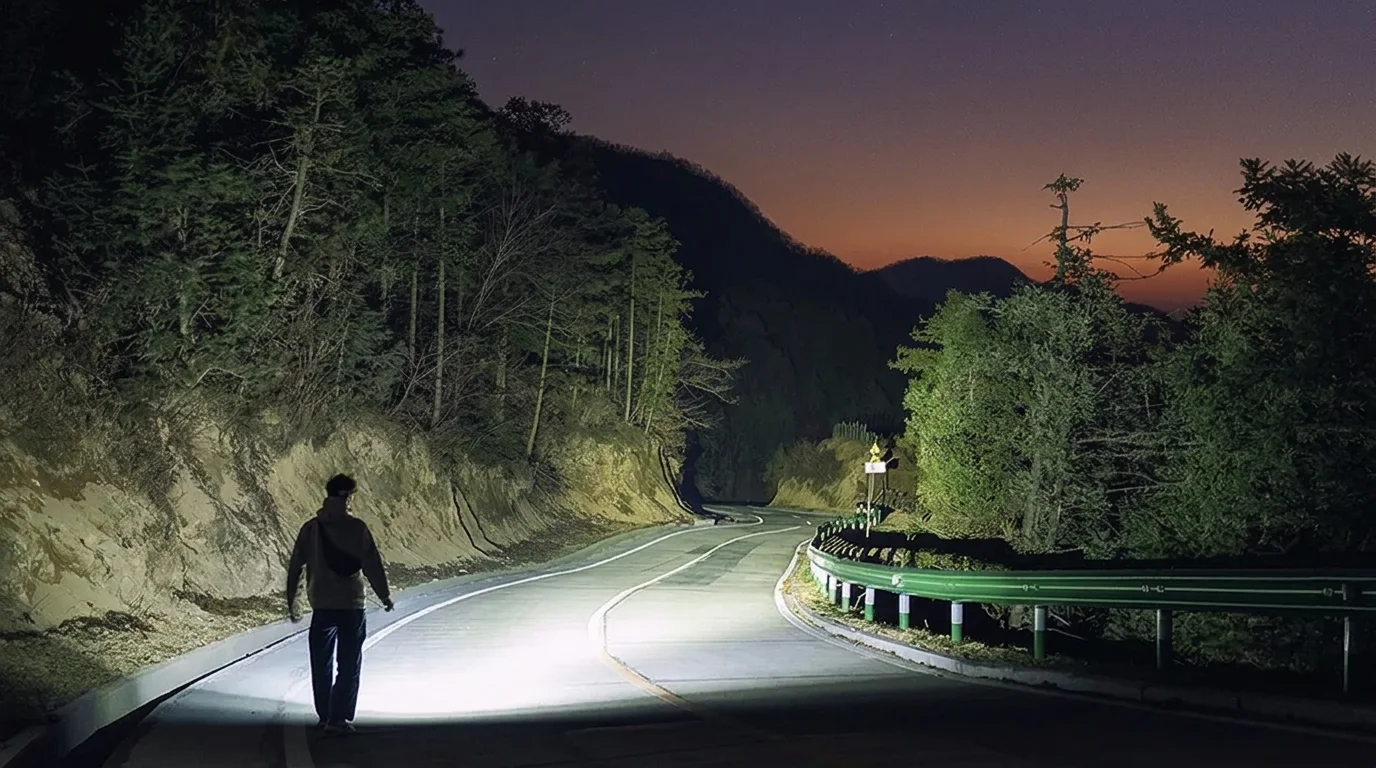
Finding the best bike lights for commuting comes down to practical beam management rather than sheer power. An output between 400 and 800 lumens is the sweet spot for mixed commuting. When cruising along an unlit asphalt park connector, 400 lumens lets you clearly spot sticks, wet leaves, glass, or stray wildlife without turning your beam into an offensive spotlight.
Excessive output—such as unshielded 1,500+ lumen trail lights pointed horizontally—degrades the night vision of oncoming pedestrians and fellow riders. A downward-angled beam with moderate output keeps the immediate 10 to 15 metres of tarmac bright while ensuring you remain a courteous, predictable path user.
What do Australian road rules require for night riding?
Across all Australian states and territories, bicycle lighting rules derive from Rule 259 of the Australian Road Rules. Cyclists travelling at night or in hazardous weather conditions with reduced visibility must display a white light visible from at least 200 metres to the front, and a red light visible from at least 200 metres to the rear. The regulations allow these lights to show either a continuous steady beam or a flashing beam (Source: Queensland Legislation: Transport Operations (Road Use Management—Road Rules) Regulation 2009, Rule 259).
In addition to active lighting, regulations nationally require a red reflector fitted to the rear of the bicycle, visible for at least 50 metres when illuminated by a vehicle's headlights on low beam. State authorities, such as Transport for NSW, enforce strict penalties for riders without compliant lights after dark, emphasising that these devices are statutory safety requirements rather than optional gear (Source: Transport for NSW: Bicycle rider safety and equipment guidelines).

A compact 24-gram tail light engineered for Australian road compliance under strict ANSI/NEMA FL1 testing standards, featuring a transparent optical casing that delivers 230-degree wide visibility. Equipped with automatic low-power flash mode when battery hits 5%, backed by local Australian Consumer Law (ACL) warranty coverage.
- Max Output: 30 lumens (up to 800 m visibility)
- Runtimes: 2 h (High 30 lm), 4 h (Mid 14 lm), 9.5 h (Low 7 lm)
- Waterproof Rating: IPX6 weather resistance
- Mounting & Price: Flexible silicone O-ring fitting round or aero seatposts ($39.95 AUD incl. GST)
How do you aim a front light so it lights the path, not faces?
Cyclists riding on shared pathways share narrow corridors with dog walkers, runners, and opposing riders. The standard rotational symmetric optics found on many cycling torches throw light equally in all directions, creating intense horizontal glare if mounted level with the horizon.
To adjust your light correctly:
- Park your bike on a flat surface facing a vertical wall approximately 5 metres away.
- Turn on your regular cruising output mode.
- Tilt the light downward until the brightest centre of the beam (the hot spot) strikes the wall at or below your handlebar height—ideally around knee-to-hip level.
- Step 10 paces ahead, crouch down to the eye level of an oncoming pedestrian, and look back toward your handlebar. If the beam stings your eyes, angle it further down.
Aiming the central focal point 5 to 10 metres ahead on the path illuminates hazards well within stopping distance while directing the cut-off spill below the eye line of oncoming trail users.

Steady vs flashing on paths, roads and in traffic
While Australian legislation permits both flashing and steady lights, choosing between them depends entirely on your immediate riding environment. On dark, narrow shared pathways, flashing front lights are widely discouraged. A strobe creates a disorienting flicker effect that impairs depth perception, makes judging closing speeds difficult, and can trigger sensory distress in pedestrians and riders.
Scientific road safety research indicates that human observers require consistent visual cues to accurately estimate a cyclist's approach trajectory and vehicle speed. Flashing patterns cause spatial jumps, making it harder for other path users to track motion accurately (Source: PubMed Central: Bicycle Conspicuity and Road Safety Research Review).
On the roadway alongside motor vehicles, a daylight flash mode helps you stand out against streetlights and cluttered urban backgrounds. However, as soon as you turn onto a multi-use off-road path, etiquette dictates switching the headlight immediately to a continuous steady output.

A versatile secondary light offering floodlight, spotlight, and red illumination modes. With a 115° tilt head and 360° rotating clip, it mounts quickly to backpack straps, bike bags, or jackets to serve as a wearable safety marker for night commuters navigating Melbourne or Sydney cycleways.
- Max Performance: 530 lumens floodlight / 400 lumens spotlight
- Secondary Signal: 40-lumen red light mode (4 hours high runtime)
- Mounting & Durability: 14 mm heavy-duty clip, magnetic base, IP66 water resistance ($69.95 AUD incl. GST)
Mount positions: handlebar, under computer or helmet
Mounting location determines light stability, beam trajectory, and convenience when adjusting modes while pedalling.
Handlebar Mounts
Mounting directly atop the handlebar keeps the light within easy thumb reach. You can adjust modes quickly as you move from dark paths to lit streets. The drawback is cockpit clutter alongside bells, phone mounts, and GPS computers.
Under-Computer Out-Front Mounts
Under-computer mounts position the lamp underneath an out-front computer bracket using a standard interface. This frees handlebar space, centres the light on the front wheel, and keeps the beam positioned lower to enhance road shadow contrast.
Helmet Mounts
Helmet mounts track your line of sight, which works well for unlit mountain bike trails. On urban shared paths, however, a helmet light inevitably shines directly into the eyes of pedestrians whenever you turn your head to check traffic. Helmet lights should be reserved for remote singletrack, or supplemented by a wide, low-intensity clip-on light attached to your pack.
Runtime for a winter commute there and back
During Australian winter months, a standard commuter often rides both legs of the journey in low light. A daily 45-minute one-way trip means your system needs at least 90 minutes of dependable output per day, plus an adequate safety margin for stops and detours.
Cold temperatures lower the electrochemical efficiency of lithium-ion cells, reducing accessible capacity by 15% to 25% on chilly mornings. For reliable round-trip operation, choose a light whose mid-level runtime is at least double your total daily riding time.
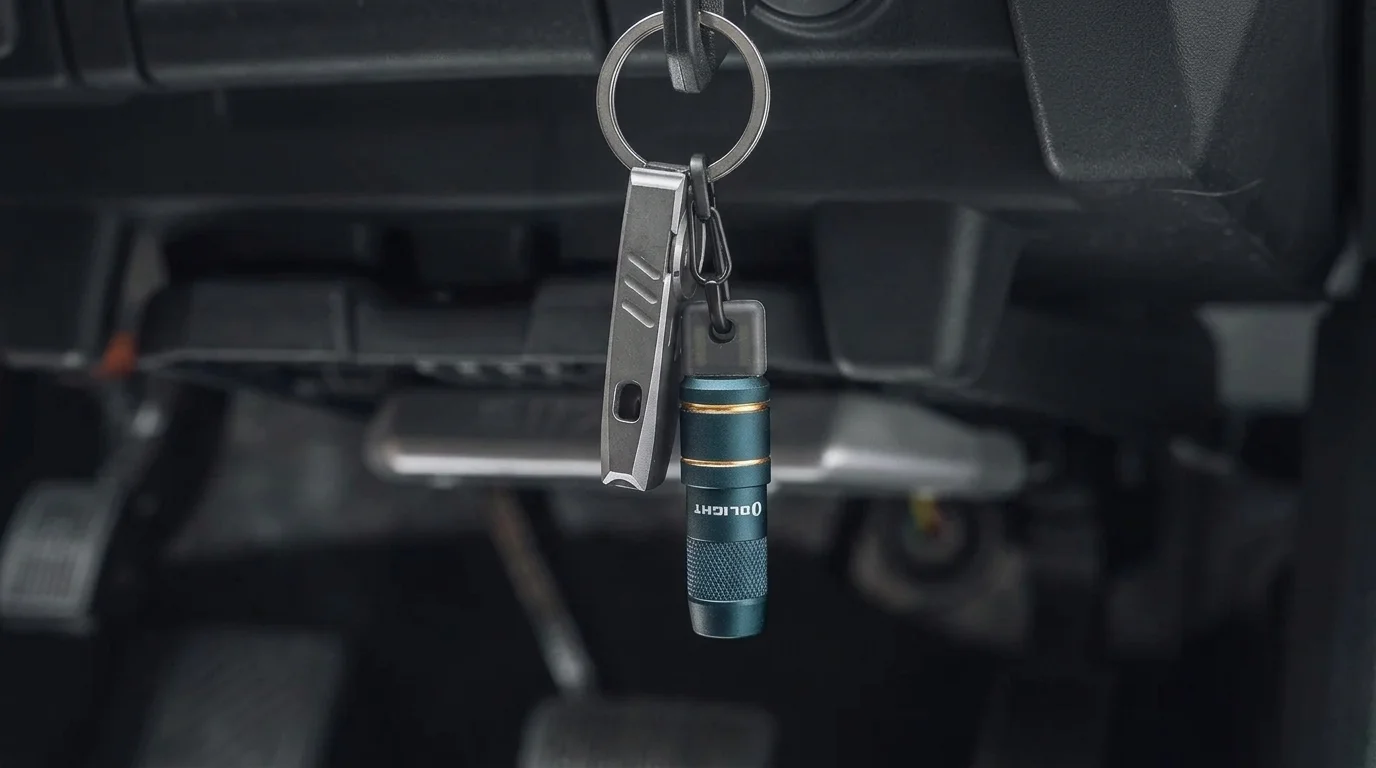
Carrying a secondary light source helps prevent unexpected battery dropouts. A clip-on torch with integrated red signalling and standard USB-C charging can back up your main handlebar lamp or provide utility lighting during roadside tube repairs.

Featuring four lighting modes—floodlight, spotlight, red beacon, and UV light—housed in a durable aluminium casing. An ideal emergency backup for commuter panniers, clothing, or roadside repairs during late-evening winter rides across Australia.
- Max Performance: 580 lumens floodlight / 450 lumens spotlight
- Dedicated Red Mode: 40 lumens on high (3 hours runtime) for visual warning
- Run-down Security & Price: Up to 25 hours on low flood mode ($79.95 AUD incl. GST)
Frequently Asked Questions
Is a flashing front bike light legal on shared paths in Australia?
While Australian Road Rule 259 permits flashing lights nationally, flashing front lights are strongly discouraged on narrow, unlit shared pathways. Strobe effects impair pedestrian depth perception and closing speed calculations; switch to a continuous steady beam when riding off-road or on multi-use paths.
How long does the Olight SEEMEE 30 C run on high mode?
The Olight SEEMEE 30 C rear bike light delivers up to 2 hours of continuous high output at 30 lumens, and up to 9.5 hours on low mode (7 lumens), ensuring dependable visibility across multiple evening commutes.
What do Australian road rules require for bicycle lights at night?
Under Australian Road Rule 259, riding at night or in low-visibility weather requires a white front light visible from at least 200 metres, a red rear light visible from at least 200 metres, and a rear red reflector visible from 50 metres when illuminated by vehicle low beams.
How do I aim my bike headlight to avoid blinding pedestrians?
Park your bike 5 metres from a wall and tilt your front light downward until the brightest hot spot strikes at or below handlebar height (knee-to-hip level), ensuring the central beam illuminates the path 5 to 10 metres ahead without shining into oncoming eyes.