| If you regularly need… | Start with | Check before spending more |
|---|---|---|
| Light across a bench or inside a boot | ArkTac | Try broad white light at a comfortable level before paying for a fifth source. |
| A point on a fixed, matte part or a visible source preview | ArkTac Ultra | Confirm your site allows lasers and check the exact local version. |
| The Ultra and an organised carry and storage setup | ArkTac Ultra Premium | Compare the kit with the Ultra and only the accessories you would buy separately. |
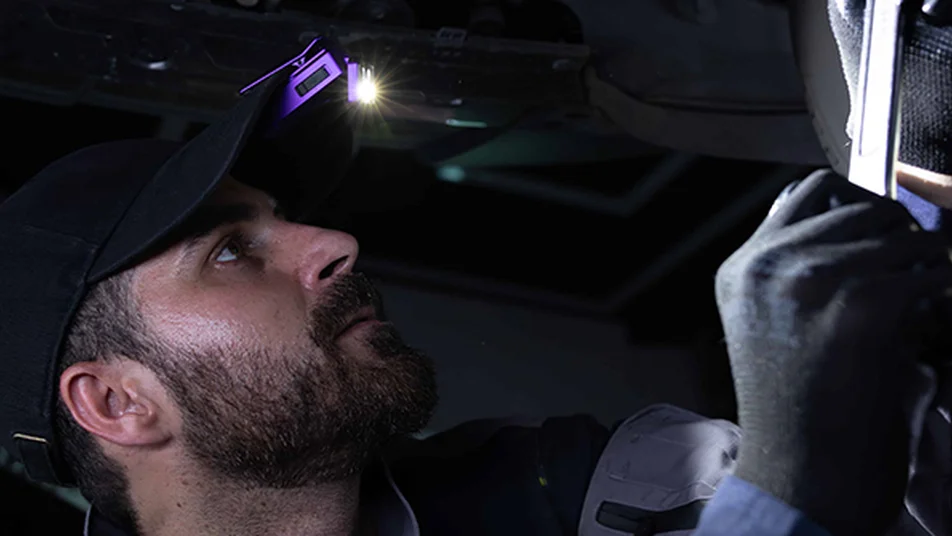
| Both hands free for repairs | Head torch or workshop lamp | Pick a light that stays aimed while you work. |
Start with the job you do most often
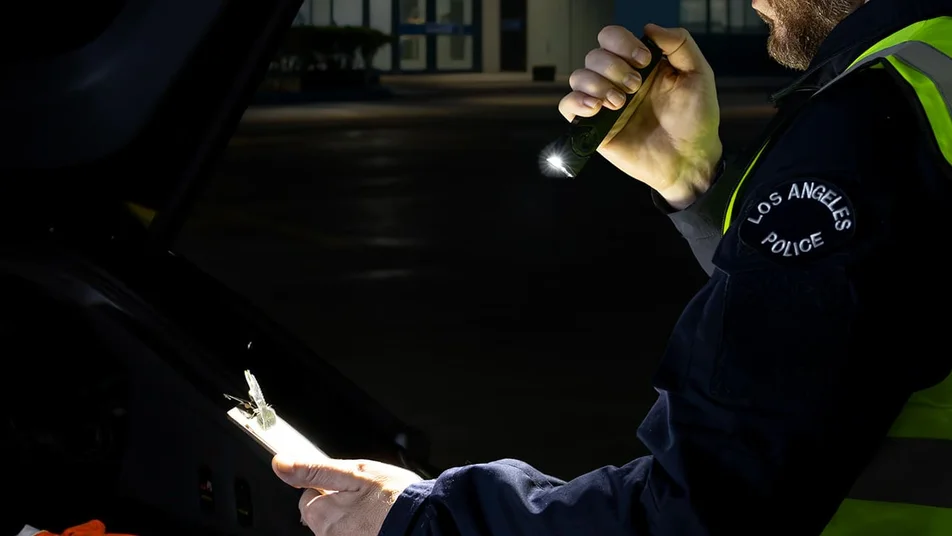
Picture the first ten seconds of a familiar job. You reach into a car boot after dark and need to see the buckle, the bag beside it and the edge of the boot. Start with broad white light. A narrow spot is more useful for reading a label at the back of a high shelf. If you still need a free hand to lift the bag or hold the ladder, change the type of light you carry.
The standard ArkTac brings those two white beams, red and UV into one flat torch. It makes sense for errands and short checks where you can hold the light yourself. If a job normally takes both hands, make a head torch your main light and keep a handheld light as a backup.

Choose this for broad and focused white light, two additional sources and a flat 6061 aluminium body.
View ArkTacFour or five sources and where each earns its place
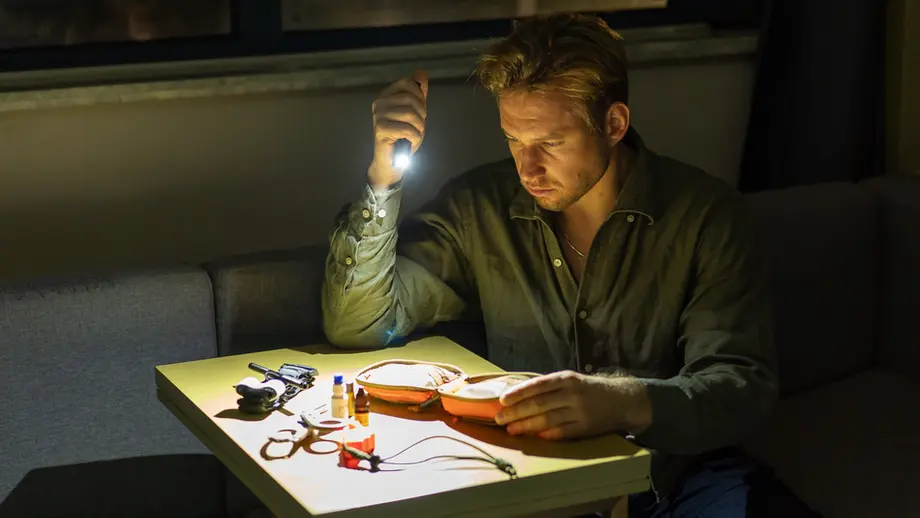
Use flood for a work area, spot for a specific object farther away and low red when you only need to find a zip or a switch nearby. Use white again to match wire colours or read coloured markings. UV can reveal a fluorescent mark you already expect to see. A glow alone cannot tell you what a substance is, establish that a surface is clean or show that it has been disinfected.
ArkTac Ultra and the torch in Ultra Premium add green laser. Olight’s manual describes it as a separate source that can also pair with any one of the other four. It is useful for pointing out a fixed detail on a matte object to a colleague. Leave it off around eyes, animals, traffic, aircraft and reflective surfaces, and follow site rules. Keep both UV and laser away from eyes and out of children’s reach. (Source: ARPANSA, laser hazards and safety)

The OAL 2 body, textured grip and light-source preview suit frequent changes between tasks. Check the local laser specification on the product page.
View ArkTac UltraWhat changes with 6061 and OAL 2
The ArkTac uses 6061 aluminium. Both Ultra packages use OAL 2. In Olight’s material comparison, OAL 2 has about 1.86 times the hardness of 6061. The company’s other figures compare OAL 2 with the first OAL alloy: about 9.6% more tensile strength and 11.5% more yield strength. The reference material matters when you read those numbers.
Hardness measures resistance to local indentation. Tensile strength describes how much stress a material withstands in a pull test, and yield strength marks the onset of permanent deformation. To think about a dropped torch, look at the rating for the assembled light and consider the surface and angle of impact. Olight quotes the same 1.5 m drop rating for ArkTac and Ultra. If yours mostly rides in a pocket by itself, the beam and controls are usually the more useful upgrades to compare.
Check the selected source before you turn it on
The pinhole display tells you the battery level and selected brightness. The two Ultra packages add an illuminated preview of the selected source. That is useful if you switch between white, red and UV and then pick up the torch again in a dark shed. Practise checking the selector with the gloves you actually wear. The textured surfaces on both sides of the Ultra give your fingers a more defined grip.
ArkBeat cycles through eight colours with accumulated use. Read remaining charge on the battery display. For a quick garage check the extra preview can be more useful than the coloured usage indicator, especially if several people share the torch.

Compare the three versions on the same terms
Start with the beam you will use most. Both bodies have the same rated 1,300 lm initial white flood. The difference between their spot peaks matters less for near work than the shape of the beam and the level you can comfortably use. Premium pairs the Ultra torch with a kit, so the two Ultra columns share the same beam and control specifications.
| Decision factor | ArkTac | ArkTac Ultra | ArkTac Ultra Premium |
|---|---|---|---|
| Light sources | White flood, white spot, red, UV | Same four plus green laser | Same five as Ultra |
| Peak white flood | 1,300 lm | 1,300 lm | 1,300 lm |
| Peak white spot | 1,700 lm, rated 205 m | 1,800 lm, rated 215 m | 1,800 lm, rated 215 m |
| Body material | 6061 aluminium | OAL 2 aluminium | OAL 2 aluminium |
| Control feedback | Brightness and battery display | Same display plus source preview, ArkBeat and two textured sides | Same controls and indicators as Ultra |
| What the package changes | Torch and magnetic charging cable | Ultra torch and magnetic charging cable | Ultra torch, carry and storage accessories |
In the ArkTac series manual, Olight separates the initial white-light peaks from the subsequent output stages and lists the core contents of each pack.
The Premium package is easiest to justify if you will carry the light in its holder, use the bracket and pack the set away between jobs. The series manual lists the ArkSnap holder, a mounting bracket, a case, a magnetic charging cable and a commemorative coin with the Ultra torch. Confirm the box contents for your local listing before comparing prices.

The case, holder and mounting bracket bring the same Ultra torch together with its carry and storage hardware. Check the kit’s listing for availability and included items.
View ArkTac Ultra PremiumA summer camp setup after dark
Set a broad, low white beam across the camp table while you unload the car. Move closer to a shiny latch and angle the light across it to cut glare. For a marker at the far end of an established path, a brief look with the spot beam can orient you. Switch back to broad light to see the ground in front of you. Inside a tent, use a low level for searching a pocket and white when the colour of the item matters.
At home, try the same near-and-far routine on the garage shelf. Place a separate light so it covers the bench before you start a job that needs both hands. If you carry the handheld as a backup, store it where you can find it when the main light fails.

What the figures tell you before a longer job
Peak output and the duration at that output are separate checks. Olight lists the Ultra spot at 1,800 lm for the first three minutes, followed by lower stages in its published profile. Battery state, heat and use affect what you see. For a long outage or a weekend away, plan around a lower setting that gives you enough light and make room for a charged spare. Keep the torch out of a hot parked car, away from fabric when lit and dry at the charging port.
Add up the setup you will actually carry
Compare the delivered total in AUD, including GST, for the standard Ultra and only the accessories you would otherwise pay for. A holder and a bracket count when you have a place to use them. A case counts if you transport and store the whole setup. Give decorative extras zero value in your calculation if they would stay in the box.

Before ordering, check the selected variant, its included cable and what you already own. Test how the torch fits your pocket or bag before adding a holder. Reserve part of the budget for an independent backup if the job would be awkward to stop halfway through.
Make the choice in three checks
Choose ArkTac when the four sources cover your routine and the pocket clip or a pouch you already own is enough. Choose ArkTac Ultra if the extra source, preview or grip solves a problem you encounter regularly. Choose Ultra Premium when the equipped Ultra setup costs less in the kit, or when the case and included hardware solve a real storage and carry problem. Keep your current torch if it already gives you the beam, runtime and hands-free setup your work needs.
Frequently asked questions
Which features matter most for daily carry?
Compare the flood beam you use on close jobs, the brightness and battery display, and how the torch fits in the pocket you actually use. Try the selector with your work gloves if you wear them.
When is ArkTac a better buy than Ultra or Premium?
ArkTac makes sense when white flood, spot, red and UV already cover your jobs. If you also need the mode preview or a green point on a fixed object, compare Ultra. Only count Premium accessories you would use.
Can ArkTac replace a head torch or a workshop light?
A handheld ArkTac works well for quick checks. For extended work with both hands, use a head torch or a stationary light as your main source. Keep a charged second light available when losing illumination would interrupt the job.