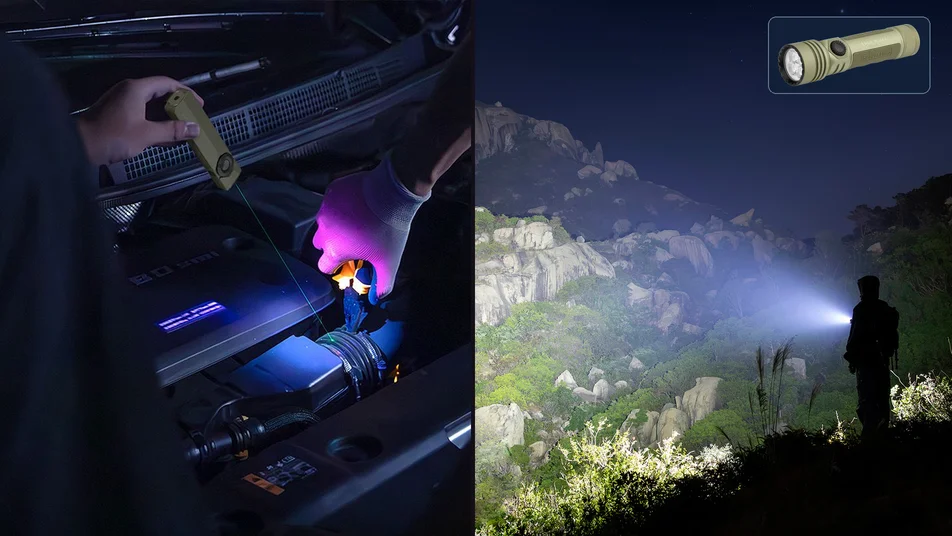
Choose ArkPro Ultra if your torch lives in a pocket and moves between close repairs, quick spot checks and occasional UV inspection. Choose Seeker Ultra if you regularly need to light a larger area after dark and can carry a 220 g torch. Compare beam shape, usable runtime and the controls you reach for most.
| What matters | ArkPro Ultra | Seeker Ultra |
|---|---|---|
| Carry size and weight | 124 × 27 × 16 mm, 120 g | 138 × 35 mm (length × diameter), 220 g including battery |
| White-light Turbo | Pure Flood 1,700 lm for 3 min, then 520 lm for 140 min. Separate Spot peaks at 800 lm with a rated 205 m reach. | 4,800 lm for 2.5 min, then two lower-output stages. Rated peak reach 265 m. |
| White-light Medium | Pure Flood 100 lm for 13 h. Spot 100 lm for 10 h. | 300 lm for 12 h 30 min. |
| Light sources | White flood, white spot, 365 nm UV and a Class 1 green laser | Four white LEDs behind a single TIR optic |
| Controls | Source selector, centre button and dedicated laser button | Rotary side switch for stepless brightness adjustment |
| Charging and storage | 2,000 mAh built-in battery, USB-C or magnetic charging, pocket clip | 5,800 mAh 21700 battery, USB-C or optional magnetic charging, included holster |
Olight’s ArkPro Series manual and Seeker Ultra manual give the mode and runtime figures. The beam distances are maximum manufacturer ratings. Runtime at the initial Turbo level is shown separately from the lower-output stages.
What Matters in a High-Lumen EDC Torch?
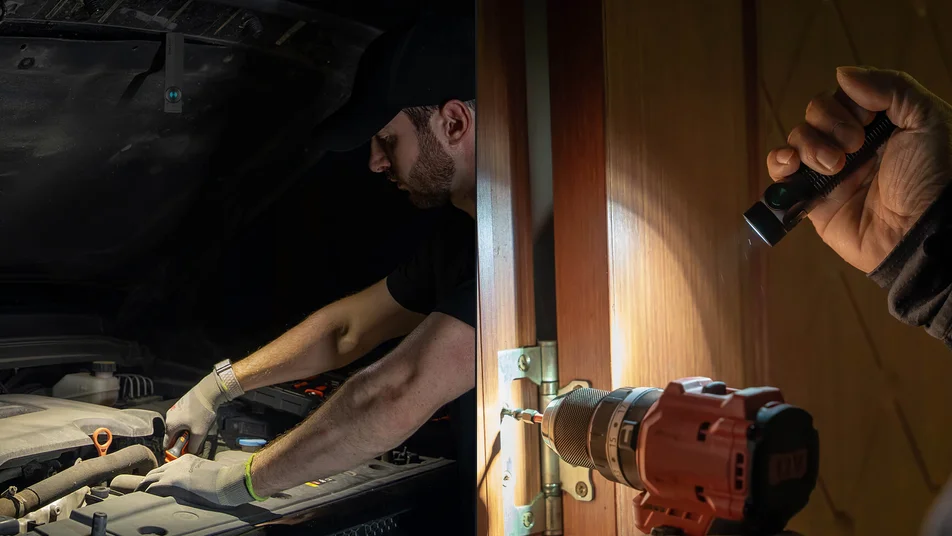
Start with where the torch will live. For a walk from the station car park, a loose latch at home or a dropped screw beside the workbench, a flat EDC torch you keep on you is easier to reach than one you carry only on planned jobs. Then consider the size of the subject. A strap buckle needs even light around arm’s length. A dark driveway calls for enough light across its width to see the ground and both edges from one position.
Name an actual job for each extra mode before you buy. A separate white spot earns its place when you can aim through a gap to read a label. UV is useful when the object has a fluorescent feature you know to look for. If your usual task is scanning a whole shed or camp perimeter, a larger white-light torch and a setting you can sustain are more relevant than the number of light sources.
ArkPro Ultra’s EIP 1 LED and Separate Spotlight
Use Pure Flood when you need to see a group of parts together, such as a connector, its retaining tab and the cable leading into it. Olight’s EIP 1 LED supplies that beam and is rated at up to 1,700 lm in Turbo. At a workbench, start lower and hold the torch at an angle so the light grazes the surface. A small change in position can make a fastener easier to see by moving a reflection out of your line of sight.
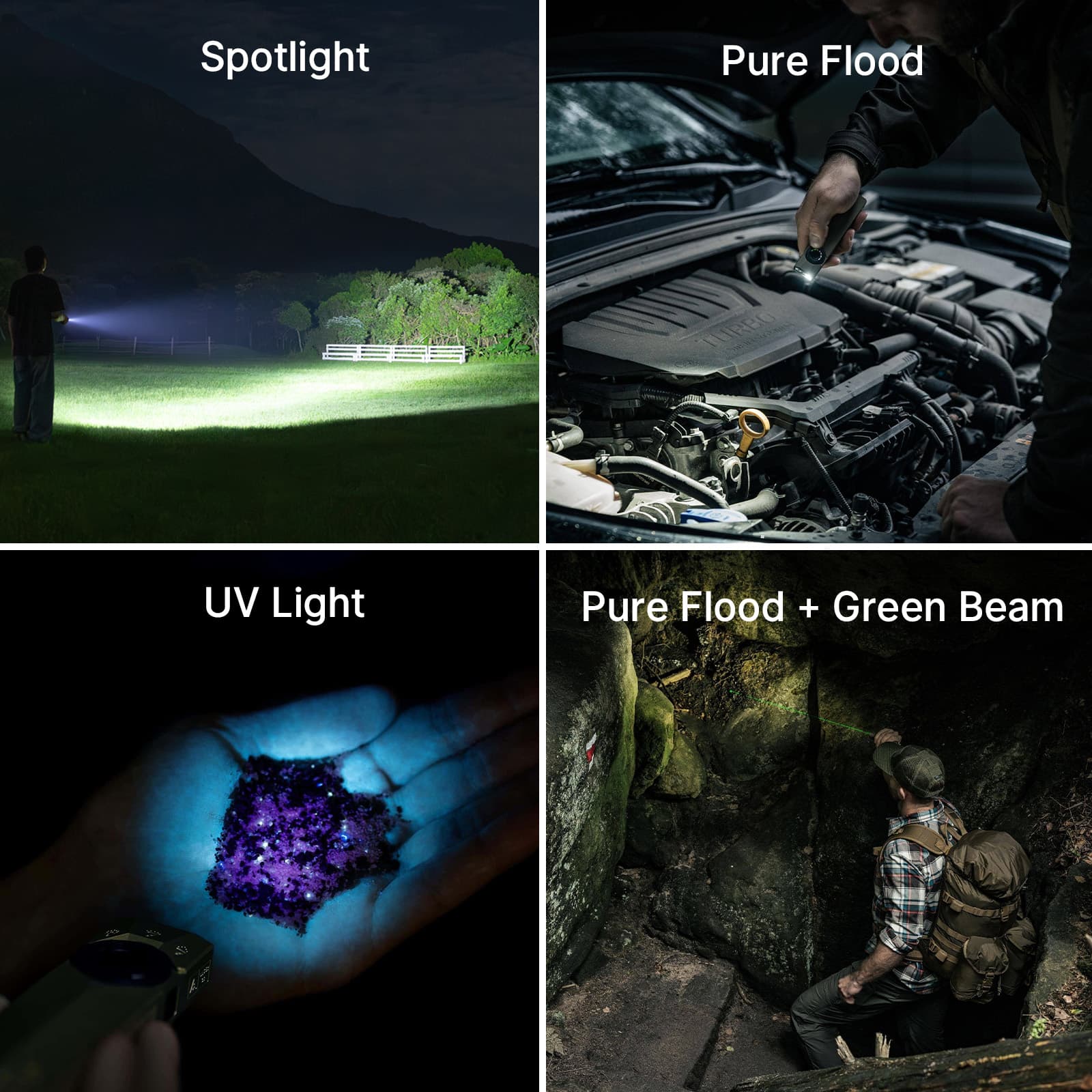
The EIP 1 flood and separate spot share a 16 mm-thick OAL alloy body with a two-way clip and magnetic base. On the Australian series page, select ArkPro Ultra before choosing the colour.
View ArkPro UltraTurn to Spot when the object is farther away or you need to aim through an opening. Its narrower beam can put more light on a sign or recessed label from the same position. Olight rates the spotlight at up to 800 lm and 205 m. That distance describes the beam rating. Whether you can read a marking depends on its size, contrast and the conditions around you.
When the Four Light Sources Earn Their Place
For everyday carry, the selector gives you flood for a work surface, spot for a specific target and 365 nm UV for deliberate fluorescence checks. The separate button operates the Class 1 green laser. Olight counts seven configurations because the laser can run alone or with each of the three selectable sources. The laser serves as a pointer. Keep the white beam on when the job also calls for seeing the area around the point.
Use UV only when you know what signal to look for, such as a fluorescent reference mark. Material fluorescence alone cannot establish identity or prove disinfection. Keep both UV and laser away from eyes, and keep the laser away from people, animals and vehicles. See ARPANSA’s laser-safety guidance for safe handling.
When Seeker Ultra Makes More Sense for Area Lighting
Pick Seeker Ultra for regular checks of a bigger outdoor area. Four white LEDs and a TIR optic produce one general-purpose beam. Aim at the ground beyond the foreground and turn the side dial up until you can see the edges of the area you are checking. A broad beam that reveals surrounding objects is useful when walking a campsite boundary or checking a yard after dark.
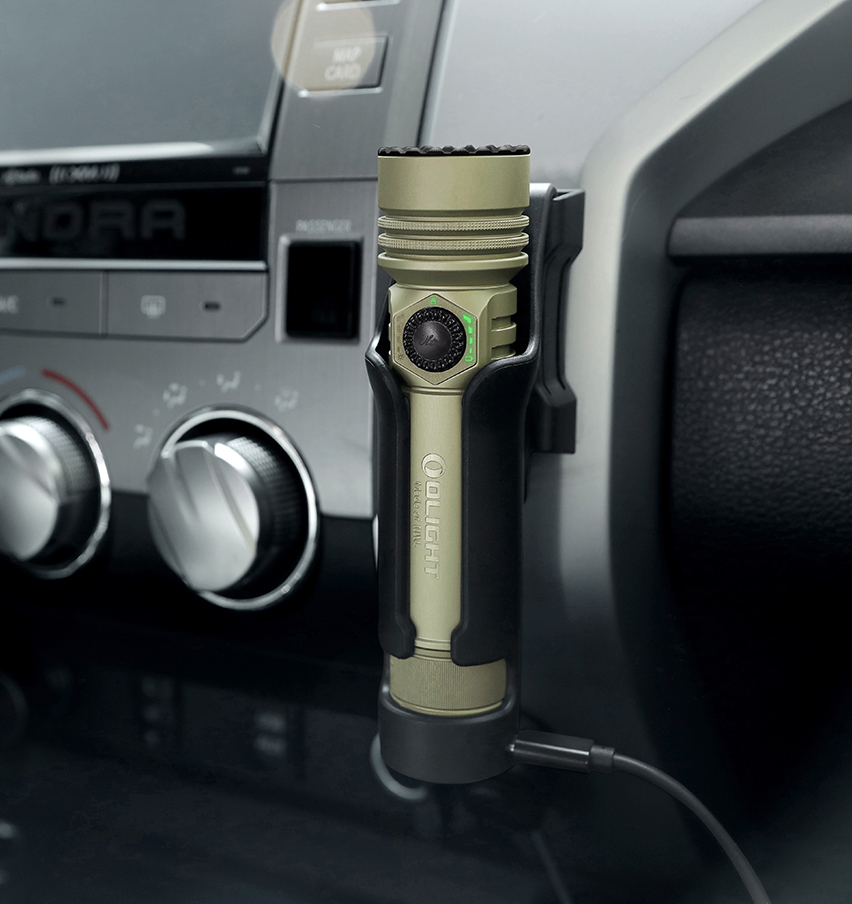
Olight rates peak output at 4,800 lm and nominal beam distance at 265 m. The torch weighs 220 g including its battery. The supplied holster holds it between area checks and can serve as a charging dock.
View Seeker UltraThe rotary controls serve different purposes. The ArkPro Ultra’s selector changes the light source, with brightness handled by the centre button. The Seeker Ultra’s dial adjusts brightness along the same white beam. If you routinely change what the light does, the ArkPro Ultra gives you direct access to distinct beams. If you spend an evening varying how brightly the same area is lit, the Seeker’s dial addresses that job.
Australian Summer Camps, Garages and Evening Commutes
Picture arriving at a campground near dusk. Clip the ArkPro Ultra to a pocket before opening the boot. At the tent, use low flood to pick out the peg and its guyline together. If you need to check the edge of a large campsite, bring Seeker Ultra out of the gear bag and raise the white beam only until the ground and obstacles ahead are visible. For a shared camp table, a lantern keeps the light in place while people move around it.
| Task | Useful capability | Practical alternative |
|---|---|---|
| Find a dropped part in a garage | ArkPro Ultra flood lights the part and its surroundings. The magnet can hold the light on suitable steel. | Use a head torch when the mount cannot hold firmly or you need both hands to move. |
| Check a large campsite after dark | Seeker Ultra provides broad white light and lets you adjust it as the area opens out. | Set up a lantern when the group needs steady, shared lighting around one spot. |
| Walk from the station car park | The flat ArkPro Ultra stays accessible at a pocket edge. Start with low white light aimed at the ground. | Keep your current pocket torch if it already shows kerbs and steps clearly. |
| Read a recessed label | ArkPro Ultra’s separate spot directs white light through an opening. | Use a slim inspection light if the housing still blocks the beam. |
What Peak Lumens and Beam Distance Can Tell You
Use the Turbo figures to plan a brief look across a dark area. The ArkPro Ultra manual lists 1,700 lm in flood for about three minutes before a 520 lm stage. The Seeker Ultra manual lists 4,800 lm for about two and a half minutes, followed by lower-output stages. These are Olight’s published conditions. The days-long Moonlight figures apply at 1 lm on ArkPro Ultra and 5 lm on Seeker Ultra.
For a longer job, compare how much of the area stays visible on the setting you would actually use. Medium on ArkPro Ultra is 100 lm for either white beam, with a different rated runtime for each. Medium on Seeker Ultra is 300 lm. The labels identify settings within the respective torches. On a hot evening, leave room for conditions to affect usable output and have a second light ready if finishing the job depends on continuous illumination.
Charging, Carry and a Backup That Fits Your Task
For a day bag, check that the USB-C cable you already carry reaches the ArkPro Ultra’s port with the torch set down securely. At home you can also use a compatible magnetic charger. The Seeker Ultra manual includes a USB-C cable and vertical holster in the box list and identifies its magnetic charging cable as optional. If you store it in a holster, allow for the full setup when estimating space in your kit.
For summer car camping, bring the torch out of a parked vehicle when the cabin is heating up and follow the manual’s temperature limits. Let the torch cool before charging and check that the socket is clean and dry. Keep a charged head torch handy for tent setup or work that takes both hands. Which backup you pack should follow the work you still need to finish if your main torch runs flat.
Check the Fit, the Beam and the Controls
Try the carry position you actually use. The Seeker Ultra is 100 g heavier than the ArkPro Ultra before adding its holster. That difference is easy to accept on a belt for a planned campsite check. In a front pocket alongside keys, the flatter ArkPro Ultra can be easier to keep at hand. Practise the lockout with the torch in your intended pocket or holster and check that you can find the controls by feel.
To compare at home, choose one fixed position and leave the ambient lighting the same. Look for the lowest setting that keeps the whole area you need visible, then check whether a small marking is legible. Keep this check separate from colour selection. Amber Orange is a finish on the existing ArkPro Ultra. Match the shop’s model selection and local laser label to the specification before buying.
Which Torch Should You Buy or Keep?
Choose ArkPro Ultra for daily pocket carry, close jobs and the occasional task that genuinely needs a separate spot or UV. Choose Seeker Ultra for regular work across a larger outdoor area when you can carry the larger body. Keep your current torch if it already fits where you carry it and lights the areas you use at a comfortable setting. Add a head torch or a lantern if the recurring problem is where to put the light.
Frequently Asked Questions
Which high-lumen torch features matter for daily carry and small jobs?
Look for a low white-light setting that is comfortable at arm’s length, a beam that covers the work surface and a clip or body that suits your pocket. A separate spot is useful if you regularly aim through gaps or check farther details.
When is ArkPro Ultra a better choice than Seeker Ultra?
Choose ArkPro Ultra when you expect to carry the torch most days and regularly switch between near flood and a focused spot, or use UV for a known inspection task. Choose Seeker Ultra when illuminating a larger area is a frequent job and you have room for the larger body.
What are the limits of ArkPro Ultra for area lighting?
Its 1,700-lumen flood setting is a short burst, and the separate 205 m rating applies to the spotlight. For a broad area that must stay lit, use Seeker Ultra at a suitable output or a stationary light if the illumination needs to stay in one place.