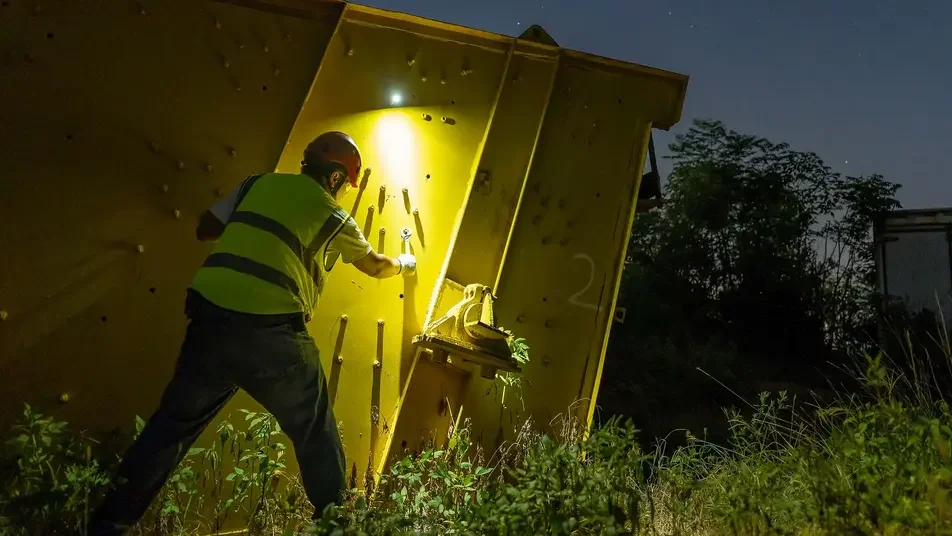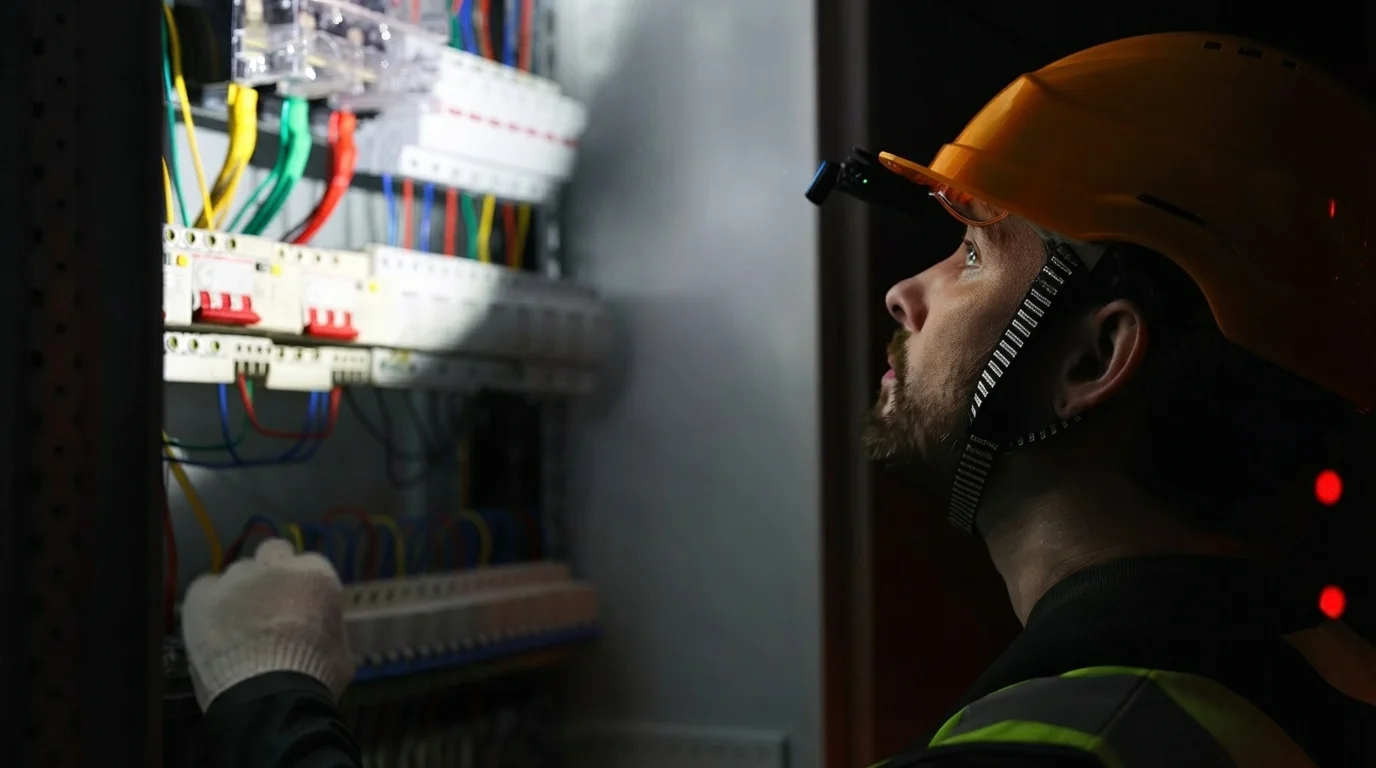
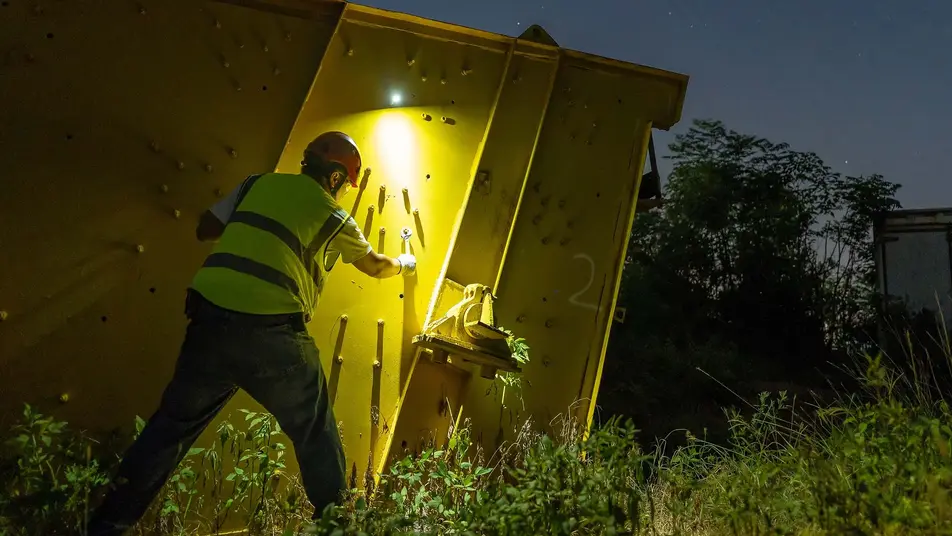
Planning a night hike in the Australian bush? This comprehensive, in-depth guide outlines the essential three-tier illumination strategy—featuring a reliable head torch, a high-output handheld backup, and a micro emergency light. Discover expert tips on seasonal climate management, dark adaptation science, local wildlife awareness, track visibility, and emergency PLB integration to ensure a safe and unforgettable adventure.
Night bushwalking offers outdoor enthusiasts a completely different perspective: escaping the daytime heat and bustle while exploring nature under a blanket of stars and cool mountain air. However, the resulting limited visibility, navigation challenges, sudden temperature drops, and nocturnal wildlife activity impose rigorous demands on your safety equipment—especially your outdoor illumination system. In the vast and often unforgiving Australian wilderness, transitioning from daylight to darkness requires meticulous preparation. To help you navigate and enjoy Australia's unique natural landscapes safely, this expanded guide explores lighting configurations, environmental psychology, track visibility, wildlife precautions, backup sources, emergency rescue integration, and frequently asked questions.
- 1. Understanding the Australian Night Environment & Seasonal Challenges
- 2. The Minimum Safe Lighting Kit & Three-Tier Strategy
- 3. Track Visibility & The Science of Dark Adaptation
- 4. Wildlife Awareness & Australian Safety Guidelines
- 5. Emergency Signalling, Redundancy & PLB Integration
- 6. Frequently Asked Questions (FAQ)
Understanding the Australian Night Environment & Seasonal Challenges
Before stepping onto the trail after sunset, it is vital to acknowledge how the Australian environment transforms at night. Unlike urban settings, rural and backcountry trails in states like New South Wales, Victoria, and Queensland present distinct geographical and climatic hurdles:
- Thermal Swings: Australia's interior and high-country regions (such as the Snowy Mountains or Blue Mountains) can experience drastic temperature plummets as soon as the sun dips below the horizon, shifting from a scorching 30°C afternoon to a crisp 10°C or lower within hours. Proper layering and reliable gear are mandatory.
- Acoustic and Visual Disorientation: Familiar daytime landmarks—such as distinct eucalyptus trees, boulder formations, or creek beds—lose their visual cues in the dark. Relying solely on memory or smartphone screens will quickly lead to disorientation.
- Nocturnal Fauna Activation: Marsupials, insects, and venomous reptiles become active during the cooler night hours, making specialized illumination and vigilant path-scanning essential for safety.
Quick Answer: The Minimum Safe Lighting Kit & Three-Tier Strategy
The core of safe night hiking lies in establishing a robust "three-tier lighting redundancy system". To handle various unexpected conditions, sudden weather shifts, and hardware failures, your minimum safe lighting kit should be strategically structured:
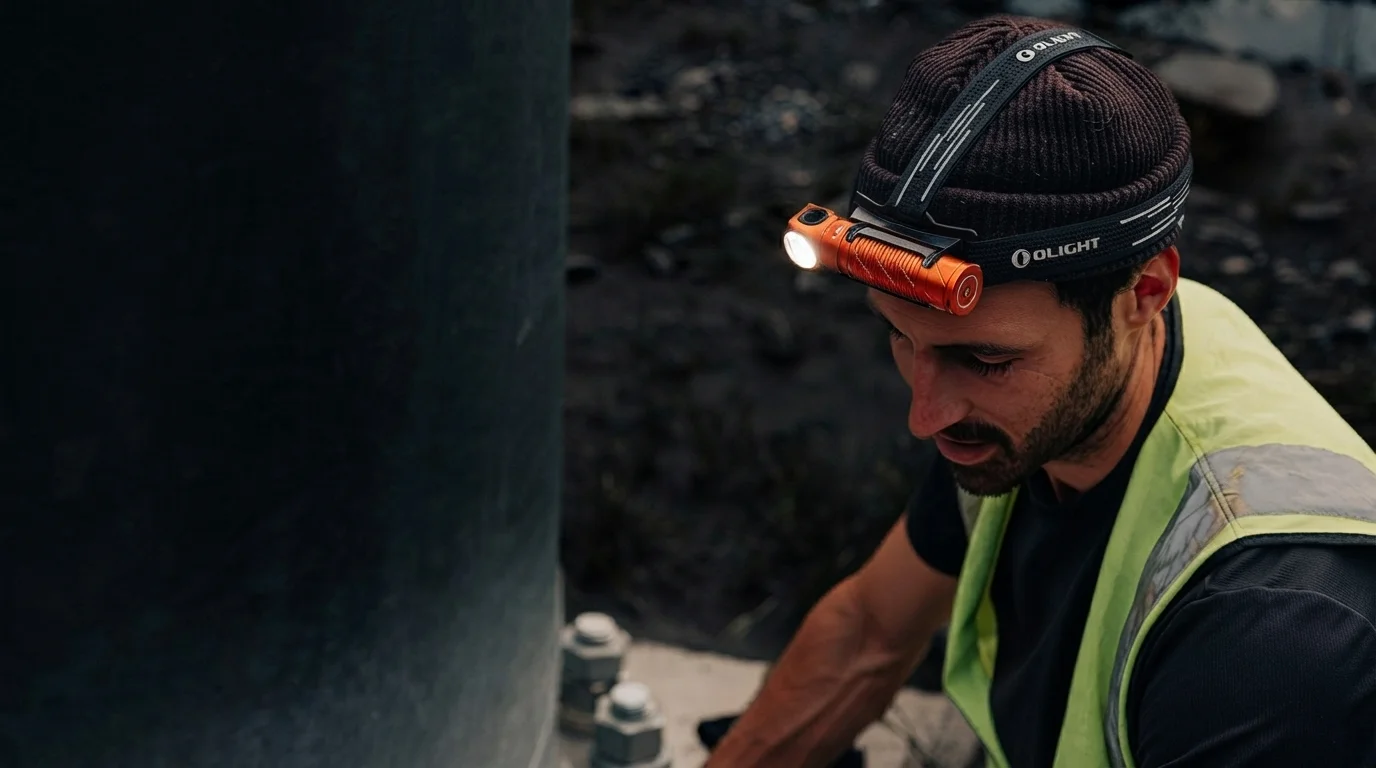
1. Primary Illumination (Head Torch): Perun 3
Engineered for complex outdoor environments with an ergonomic lightweight structure and a high-strength alloy body to completely free your hands, providing stable, high-output, and versatile flood-and-throw illumination across rugged trails.

Olight Perun 3
Your ultimate hands-free companion on the trail. Combines a powerful floodlight with professional-grade reliability, comfortable headband integration, and multi-functional white & red lighting modes.
Buy Now2. Handheld Backup Light (Torch): Warrior 3S
Featuring exceptional beam throw and an intuitive tactical two-way clip, ideal for long-distance path-finding, scanning distant cliff edges or trail markers, or delivering high-intensity visual signaling in emergencies.

Olight Warrior 3S
Delivers robust throw performance and tactical versatility. Perfect for scanning uneven terrain ahead, identifying distant markers, and handling rugged backcountry conditions.
Buy Now3. Compact Emergency Micro-Light: i3E
Exceptionally compact and virtually weightless for everyday carry, serving as an absolute safety net if your primary light fails or suffers physical damage.

Olight i3E EOS
A featherlight keychain backup that ensures you are never left completely in the dark. Simple twist-operation and reliable runtime make it an essential gear addition.
Buy NowTrack Visibility & The Science of Dark Adaptation
On authentic Australian natural tracks—such as uneven sandstone paths, loose soil slopes, root-laced trails, and undulating bushland—beam quality directly dictates your pace and personal safety. Furthermore, managing your eye health and vision adaptation in pitch darkness is a science in itself:
- Near-field Flood: The immediate foreground requires an open, uniform, and shadow-free flood beam, with its gentle wide-angle beam perfectly covering blind spots right beneath your feet to clearly spot tripping hazards, roots, and steps, preventing sprains or falls.
- Beam Throw: Mid-to-long-range navigation demands sufficient Candela (intensity) to spot distant reflective trail markers, intersections, or guideposts ahead of time, preventing you from straying off-route in the dark.
- Colour Temperature & CRI: In the Australian night, a high Color Rendering Index (CRI) source renders the true colours of bushes, rocks, and soil more accurately, preventing branches or shadows from being misconstrued as hidden obstacles.
- Preserving Night Vision: Constantly running ultra-high lumens can dilate your pupils and ruin natural dark adaptation. Utilizing lower modes or specialized red lighting allows you to check maps or navigate campsites without blinding yourself or your hiking partners.

Snakes and Wildlife: What Light Helps and What Does Not
The Australian bush boasts a rich nocturnal ecosystem, which also hosts venomous snakes (such as eastern brown snakes and tiger snakes) and other nocturnal wildlife. Consequently, night lighting requires careful attention to light colour selection and behavioral awareness:
- Light Colour and Wildlife Disturbance: Harsh cool-white light can startle wildlife or provoke certain vision-sensitive snakes at night. Utilizing a red light mode or a soft, low-output warm light allows you to see fine ground details clearly without overly disturbing local fauna.
- Official Advice and Vigilance: According to outdoor safety guidelines published by the authoritative agency Parks Victoria, maintaining high vigilance and utilizing adjustable-output illumination safely while navigating bushland is key to preventing human-wildlife conflicts (reference: Parks Victoria Safety Guidelines). State park management authorities remind night hikers to scan the path ahead early using reliable beams and maintain a safe distance from any resting wildlife.
Emergency Signalling, Redundancy & PLB Integration
When bushwalking at night in Australian backcountry areas, communication, positioning, and rescue readiness remain critical pillars of survival:
- PLB (Personal Locator Beacon): PLBs enjoy exceptionally high adoption rates across Australian outdoor culture. In the event of severe night disorientation, harsh weather entrapment, or team member injury, a PLB acts as the primary device to transmit satellite distress signals to emergency rescue services (such as the SES).
- Coordinated Lighting Guidance: When awaiting rescue or guiding search-and-rescue helicopters and ground teams, utilizing a high-lumen strobe mode or red light signal serves as an invaluable directional beacon to help rescuers quickly pinpoint your precise location in the dark.
- Battery Management & Redundancy Math: Always calculate your expected runtime with a 50% safety margin. Cold night temperatures can degrade lithium-ion battery performance, making backup lights and spare power banks indispensable.

Frequently Asked Questions
Update log:
* Version 3.3 (2026-10-08): Expanded article depth with Australian seasonal climate challenges, dark adaptation science, battery math considerations, and integrated product cards for Perun 3, Warrior 3S, and i3E with localized Australian English spelling.