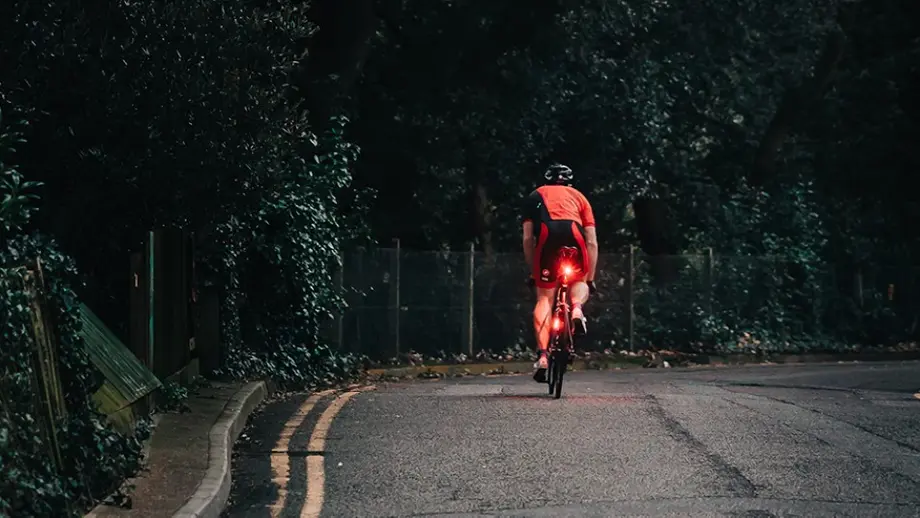
Navigating Australian roads and trails at night or during low-light conditions requires reliable visibility. Choosing the right equipment ensures safety, legal compliance, and a better riding experience. Whether you are commuting through busy city traffic or tackling unlit suburban pathways, high-performance illumination gives you total control and confidence in every environment. This guide analyzes the essential factors for selecting the best bike lights australia and highlights top-performing models for various cycling needs.
Table of Contents
Australian Road Rules for Bike Lights (What's Legal)
In Australia, cycling laws require specific lighting configurations when riding at night or in hazardous weather conditions with reduced visibility. According to official cycling safety requirements mandated under Australian Road Rules (Rule 259), riders operating in low-light environments must ensure their illumination can be seen clearly from at least 200 metres away. Under the Australian Road Rules, cyclists must equip their bicycles with:
- Front Light: A front bike light showing a visible white light from at least 200 metres.
- Rear Light: A bike back light showing a visible red light from at least 200 metres.
- Reflector: A red reflector securely fitted to the rear of the bicycle, visible from 50 metres when illuminated by a vehicle's headlights.

These requirements apply across all states, including NSW, Victoria, and Queensland. Failing to meet these standards can result in on-the-spot fines. In addition, research conducted by the Monash University Accident Research Centre (MUARC) demonstrates that active daytime flashing lights significantly enhance cyclist contrast against busy street backgrounds, reducing collision risks during daytime and twilight hours. Using a high-quality bike light set ensures you meet these legal obligations while protecting yourself on public roads.
Lumens vs Beam Pattern for Cyclists
When shopping for front bike lights and rear indicators, buyers often focus solely on the lumen count. However, the beam pattern is equally critical for effective illumination. An efficiently designed optical lens channels raw lumens onto the road ahead rather than scattering wasted light into the sky.
- Lumens (Brightness): This measures the total light output. Commuters in well-lit urban areas generally need 200 to 400 lumens. Off-road riders or those traversing unlit suburban streets require 1,000 to 2,000 lumens to spot hazards early.
- Beam Pattern: A wide, flood-style beam illuminates the sides of the path, which is helpful for spotting pedestrians or wildlife. A focused spot beam throws light further down the road, which is ideal for high-speed riding.
- Anti-Glare Technology: For road commuters, a cut-off beam pattern prevents the front bike light from blinding oncoming motorists and other cyclists on shared pathways, ensuring superior visibility without creating dangerous glare for oncoming traffic.

Top Picks by Category
Choosing the correct light depends heavily on where and how you ride. Below is our top recommendation for essential rear cycling safety.
Best Rear / Tail Light: Olight Seemee 30

Olight Seemee 30 TL Rechargeable Tail Light
Lightweight tail light with 230-degree visibility visible from up to 800 meters. Features COB LEDs and smart ambient energy-saving modes.
Shop NowThe Seemee 30 TL Rechargeable Bike Tail Light is a lightweight, high-performance bike rear light designed for maximum visibility. Tailored for urban road safety, it provides wide-angle rear protection without adding unnecessary weight to your seatpost. It utilizes COB LEDs and transparent optical fibers to ensure 230-degree side visibility up to 800 meters away, keeping you clearly visible from all side approaches at busy city intersections.
Technical Specifications
| Parameter | Specification |
|---|---|
| Max. Performance | 30 lumens |
| Compatible Batteries | 330 mAh Polymer Battery (Included) |
| Charge Type | Micro-USB Charging |
| Run-time Level 1 | 2 hours (30 lumens) |
| Run-time Level 2 | 4 hours (14 lumens) |
| Run-time Level 3 | 9.5 hours (7 lumens) |
| Waterproof Rating | IPX6 |
| Weight | 24 g (0.85 oz) |
| Dimensions | 65 mm (Length) x 15 mm (Width) x 21 mm (Height) |

The built-in memory function returns to your last-used mode instantly. Additionally, when battery levels drop to 5%, the light automatically triggers a low-power flash mode to conserve energy and get you home safely, guaranteeing that you are never left completely stranded in the dark.
Battery Life & Charging Tips
To maximize the lifespan of your rechargeable bike lights, observe the following maintenance practices:
- Avoid Complete Depletion: Lithium-ion batteries perform best when they are not repeatedly drained to 0%. Recharge your lights once the indicator shows amber or red, preventing unnecessary stress on internal cell chemistry and extending operational lifespan.
- Charge Regularly in Winter: Cold temperatures reduce battery efficiency. Expect slightly shorter runtimes during winter commutes and charge your devices more frequently.
- Store at Half Charge: If you store your lights during off-seasons, charge them to approximately 50% rather than leaving them completely full or completely empty. Technical recommendations from Battery University state that storing lithium-based batteries at around 40% to 50% capacity in cool environments minimizes capacity loss over time.